
Victorian Ceramic Urns
When you look for victorian ceramic urns, you find porcelain, earthenware and stoneware vessels shaped for display and decoration.
Victorian Ceramic Urns
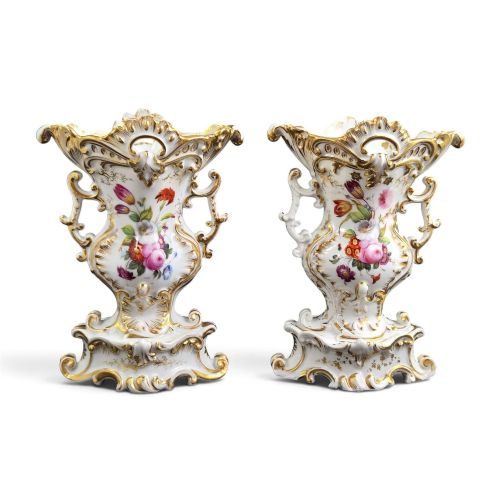
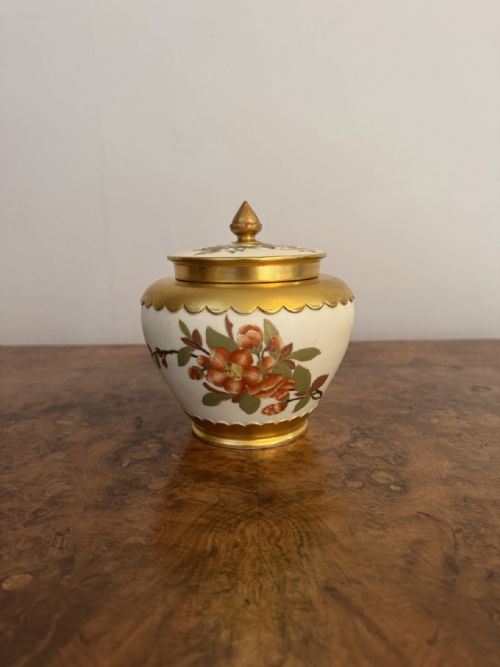
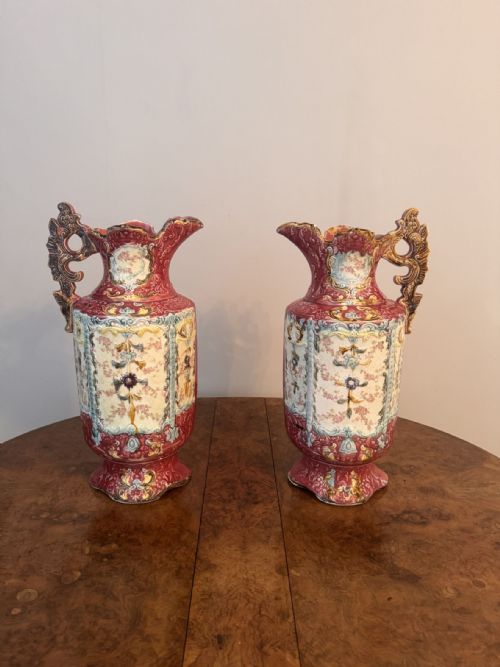
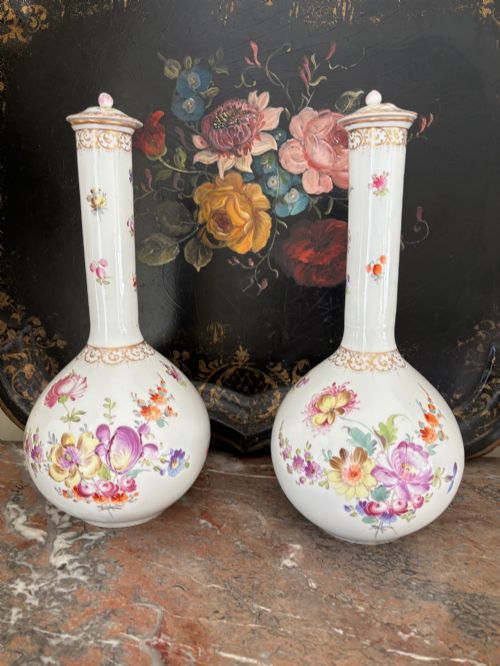
Victorian ceramic urns encompass lidded potpourri jars, campana shapes, bulbous cabinet pieces and decorative ewers produced across the nineteenth century. Makers throughout Britain, France, Germany, Austria, Italy and Japan supplied these ornamental vessels for domestic interiors.
The selections on this page span the Victorian era alongside related pieces from the Edwardian years and earlier decades, utilising styles ranging from Rococo Revival and French Rococo to the Aesthetic Movement, Arts and Crafts, and Art Nouveau.
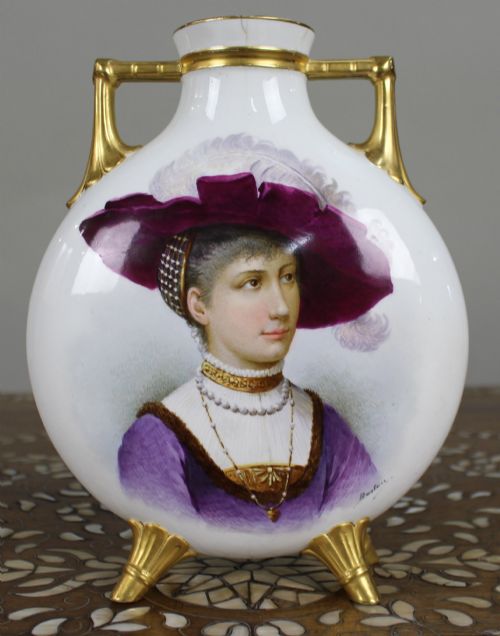
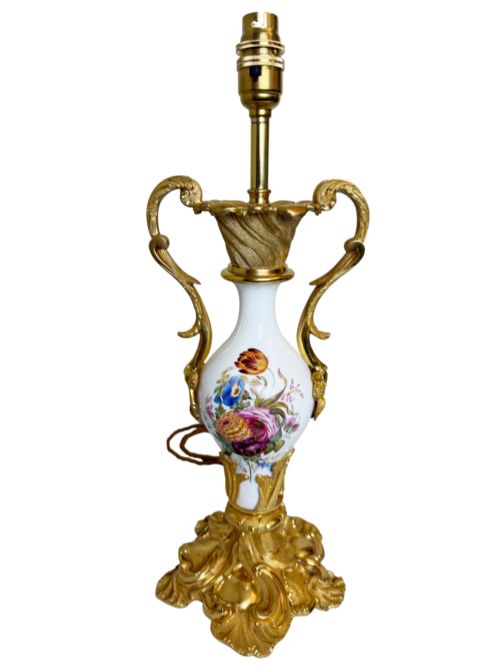
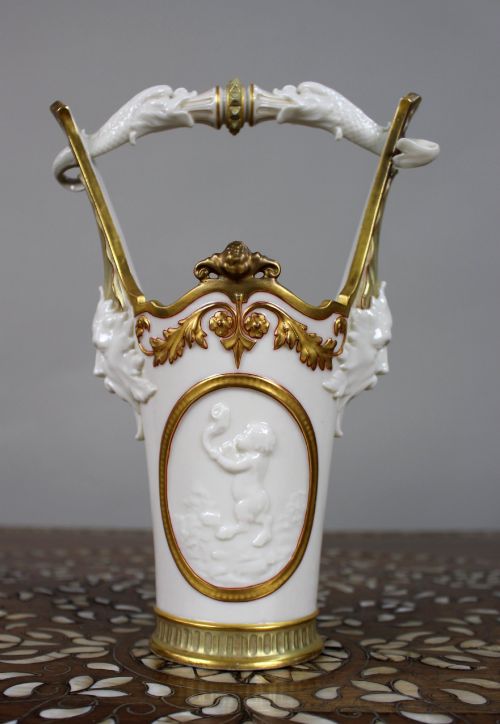
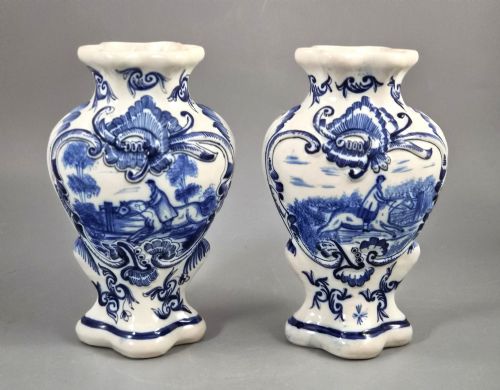
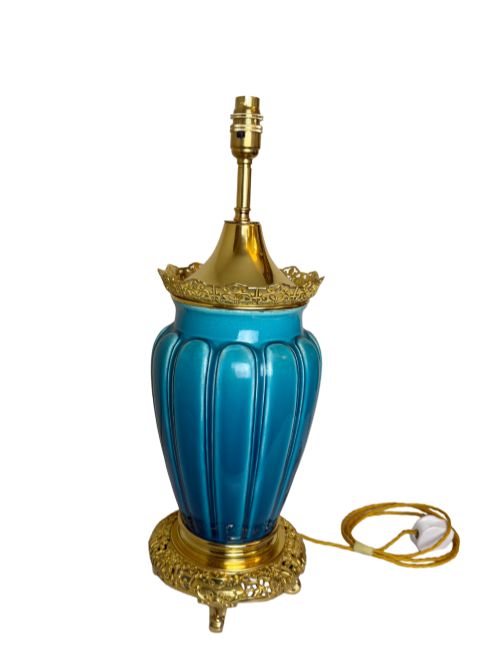
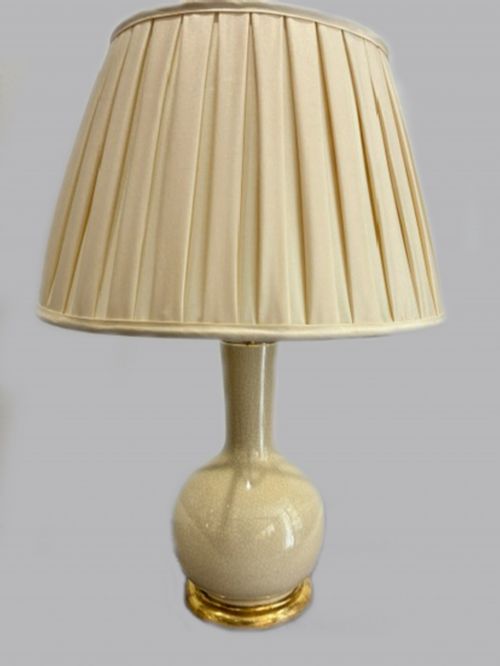
Vessels take many forms, including moon flasks, double gourde silhouettes, twin-handled urns, and centrepieces accompanied by side vases. Some items serve secondary functions as table lamps or water vessels.
Materials and Technique
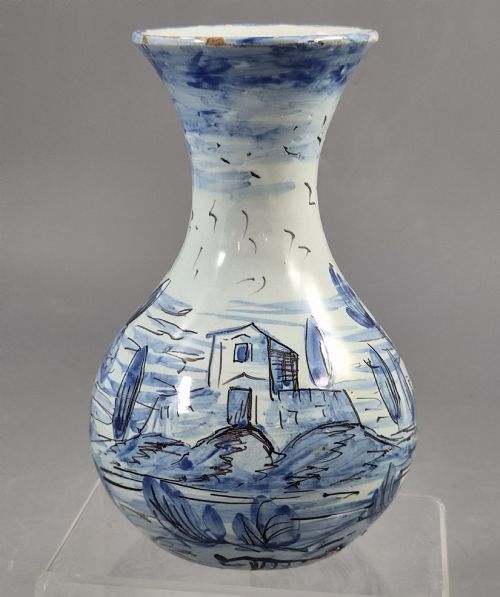
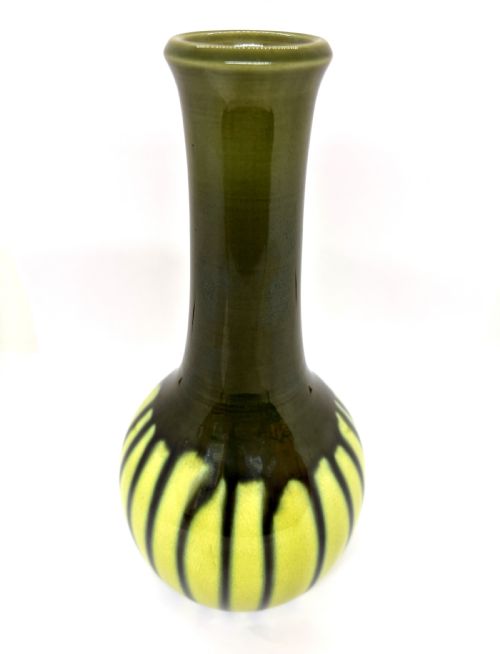
Potters shaped these objects from ceramic, porcelain, earthenware, stoneware, faience and terracotta, applying glazes, crackle effects and enamel colours to the surfaces.
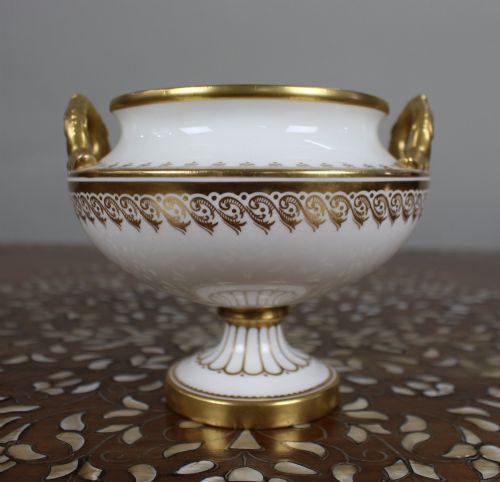
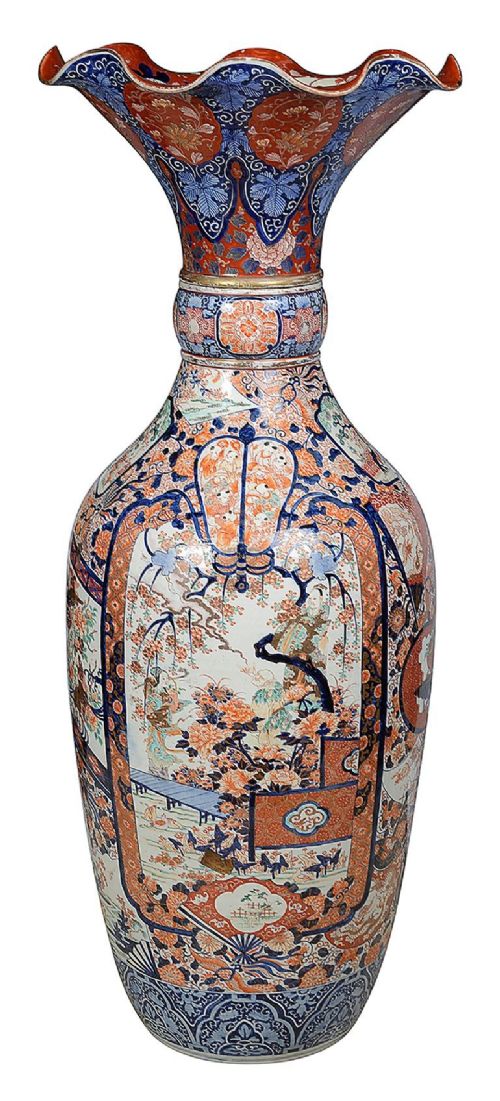
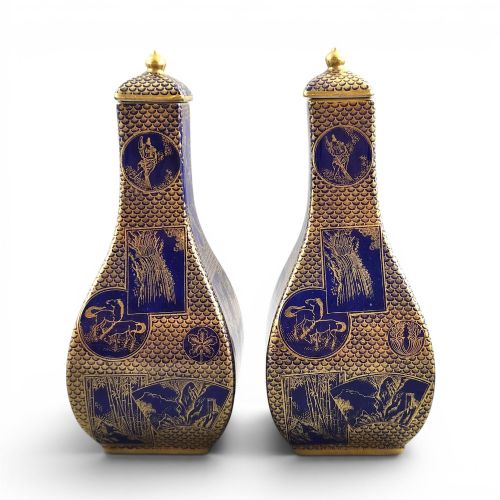
Many examples display hand-painted floral decoration, pictorial scenes, or intricate patterns enhanced with gold leaf and surface gilding.
Certain pieces incorporate metal mounts such as gilt bronze trim, while others rely purely on the potter's skill in moulding handles, covers and bulbous bodies.
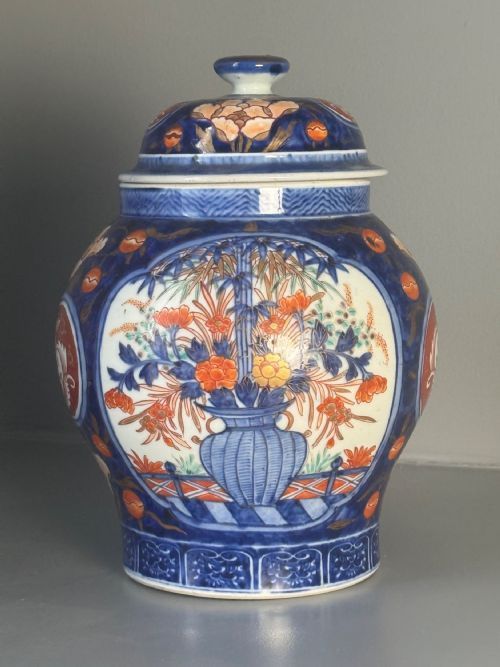
The inventory includes Japanese Imari, English bone china and continental European majolica.
Craftsmanship and Artistry
Quality rests upon the fineness of the potting, the control of the glaze and the execution of the hand-painted decoration.
Superior examples reveal precise brushwork by named artists, complex ceramic bodies such as intarsio faience, and well-balanced proportions in matching pairs.
Standard production pieces show simpler moulded forms and standard transfer or painted floral motifs without individual artistic distinction.
Royal Worcester·Doulton Lambeth·Mason's·Sitzendorf·Helena Wolfsohn·Mettlach Pottery·Cantagalli·Jacob Petit
The Victorian Ceramic Urns Glossary
- Campana
- A bell-shaped vessel with a flaring rim, often raised on a pedestal foot. This classical silhouette was popular for decorative urns.
- Ewer
- A large jug with a wide spout and a looped handle, frequently made as a decorative pair alongside matching urns.
- Maiolica
- Tin-glazed earthenware originating in Italy, known for colourful painted designs. Nineteenth-century makers revived this technique in various European centres.
- Potpourri
- A mixture of dried petals and spices kept in a lidded jar to perfume a room. These ceramic containers feature pierced lids to release the scent.
- Imari
- Japanese porcelain decorated in underglaze blue, iron red, and gold. European makers frequently copied these distinctive colour schemes.
Victorian Ceramic Urns: Frequently Asked Questions
How were victorian ceramic urns used in the home?
These vessels functioned primarily as decorative items placed on mantelpieces, sideboards and pedestals to display wealth and taste.
Some specific forms, such as potpourri jars, held dried scented petals to freshen the air in Victorian drawing rooms.
How do I tell different periods apart?
Distinguishing periods relies on observing stylistic shifts, such as heavy Rococo Revival curves versus cleaner Aesthetic Movement or Arts and Crafts lines.
Maker marks, registration dates and handwritten pattern numbers underneath the base also help pinpoint the exact decade of manufacture.
Where were these ceramic pieces made?
Production occurred across major European ceramic centres in Britain, France, Germany and Austria, alongside traditional kilns in Japan.
Each region brought distinct regional techniques and decorative traditions to their ceramic and porcelain output.
How should I care for antique ceramic urns?
Dust these decorative objects gently with a dry, soft brush to protect delicate hand-painted surfaces and gilding.
Avoid using water or chemical cleaners on antique glazes, enamels and gold leaf, particularly if the piece has minor hairline cracks or restoration.