
Antique Ceramic Mantel Urns
Antique ceramic mantel urns gather porcelain, earthenware, and faience from the eighteenth century onward, bringing hand-painted scenes and gilt mounts to a fireplace shelf.
Antique Ceramic Mantel Urns
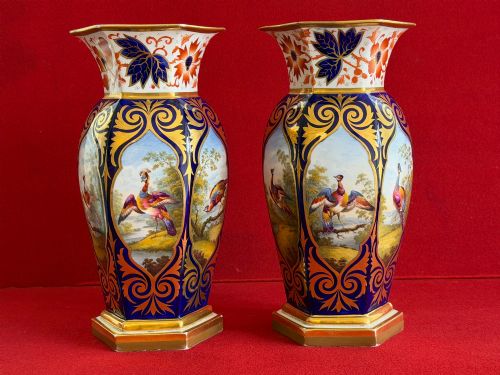
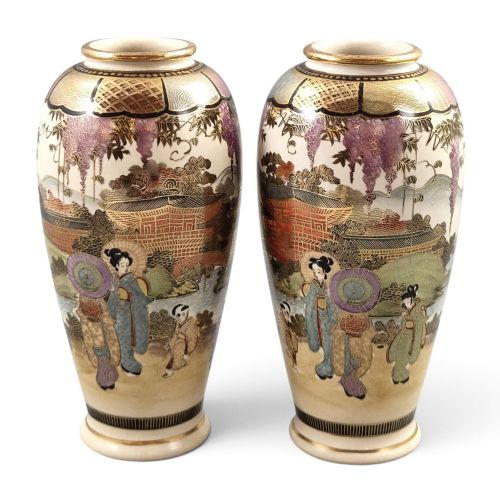
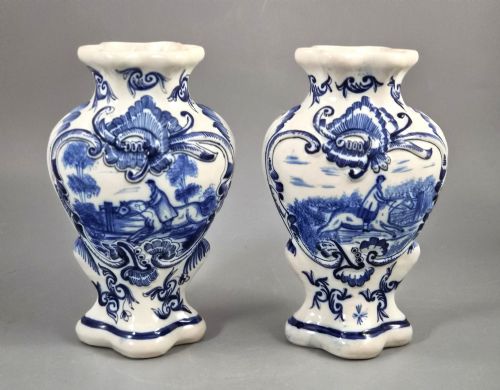
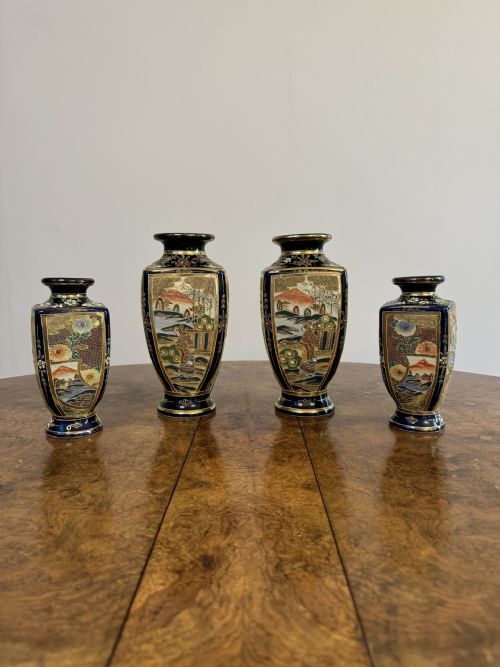
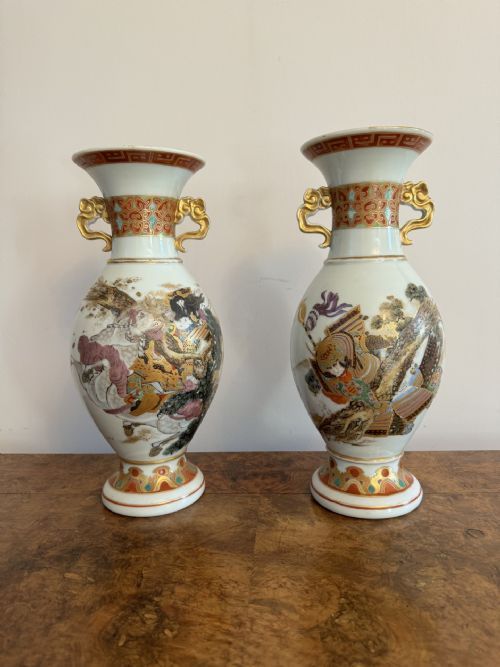
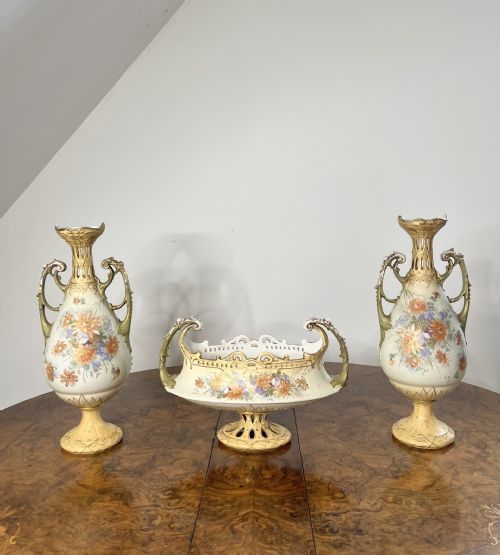
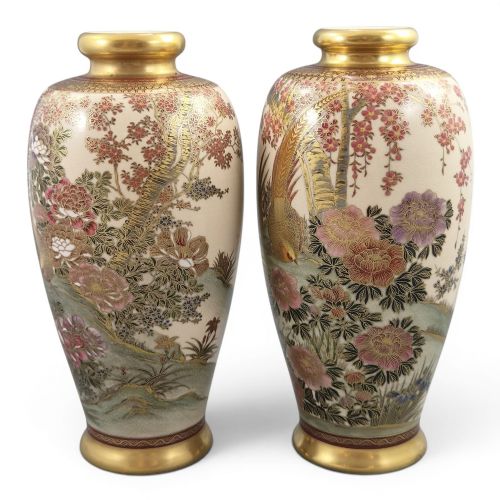
Antique ceramic mantel urns encompass decorative vases, lidded jars, and garniture sets designed to sit on a fireplace mantelpiece. The pieces span eighteenth-century English and European porcelain through to nineteenth-century Japanese Satsuma and Kutani productions.
Makers from Worcester, Sèvres, and Royal Doulton contribute heavily to the available selection, often appearing in symmetrical pairs or three-piece garnitures. Buyers frequently encounter French Old Paris porcelain alongside Chinese export wares decorated in the Imari palette.
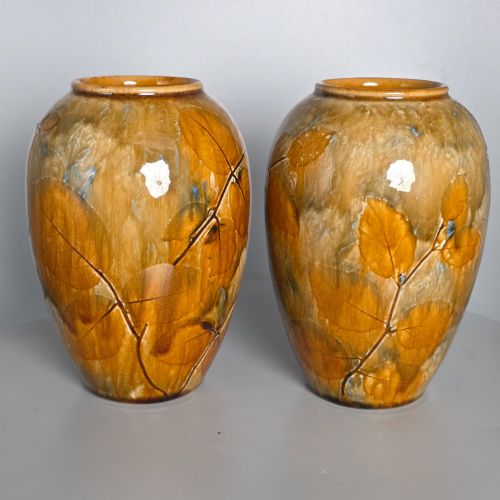
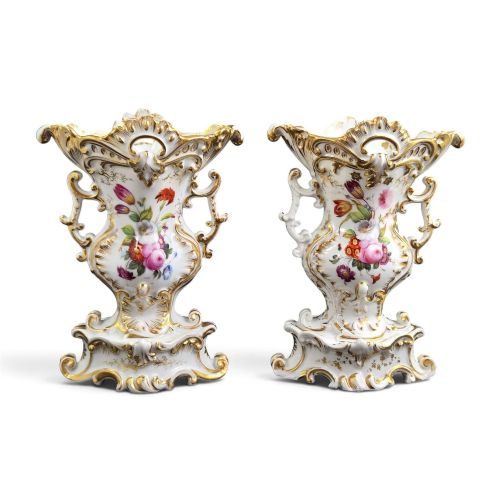
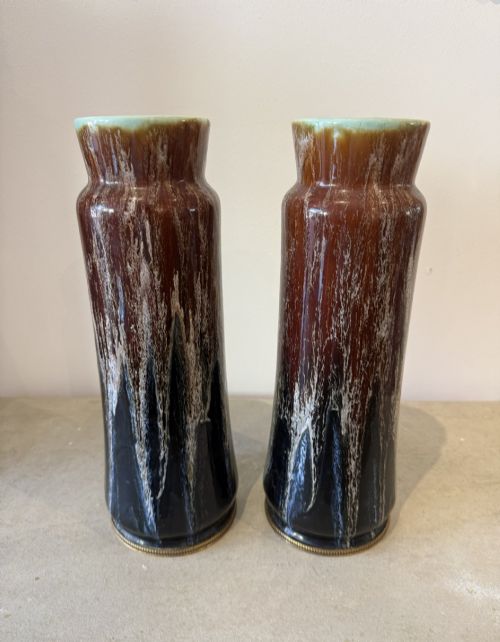
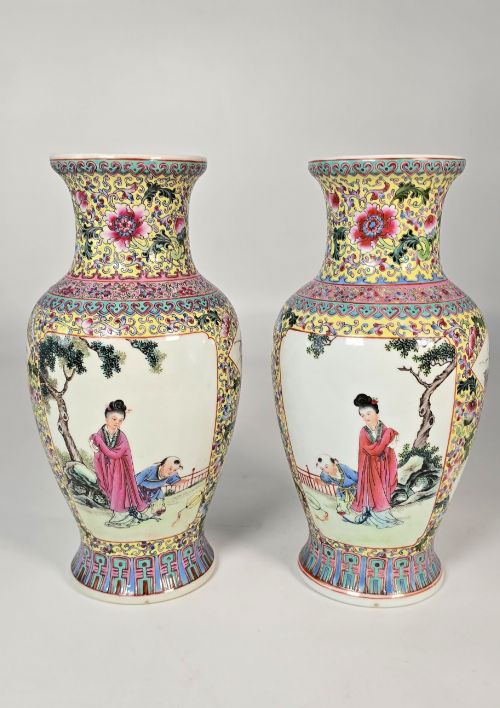
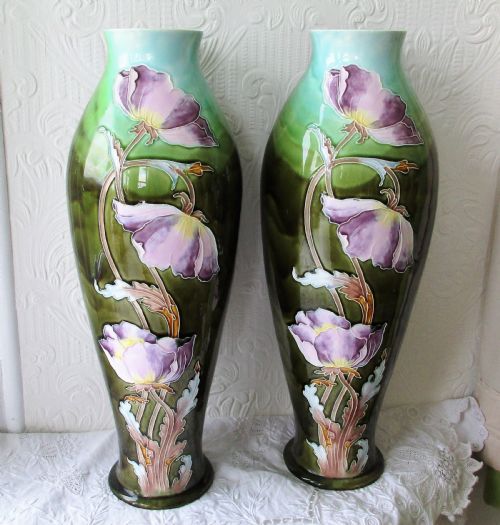
The category extends from Regency-era neoclassical forms to Art Nouveau earthenware and robust Victorian designs. Each object marries practical container forms with ornamental painting, gilding, and sculptural handles.
Materials and production methods
Potters shaped these vessels using hard-paste porcelain, soft-paste porcelain, and tin-glazed earthenware such as Dutch Delftware and French faience. Artisans applied coloured glazes, enamel decoration, and gold leaf by hand before high-temperature kiln firing.
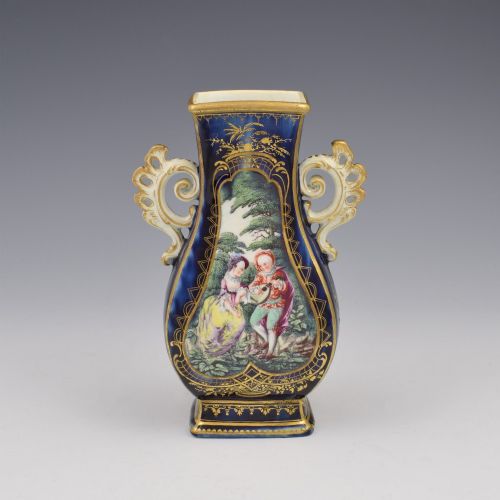
Mounts of ormolu and gilt bronze frequently frame ceramic bodies, particularly on French nineteenth-century pieces designed in revival styles. Certain items incorporate raised white enamel work and hand-painted Watteau scenes or botanical motifs.
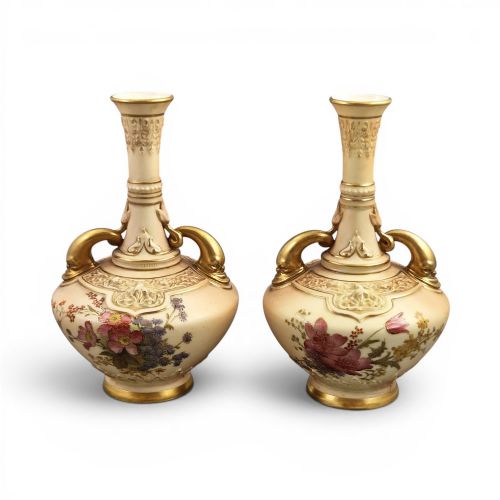
Dolphins double as handles on early twentieth-century Worcester vases, bringing marine life directly to the fireplace.
Assessing quality and execution
The refinement of secondary elements, such as bronze mounts or dolphin-shaped handles, separates standard production runs from exhibition-grade pieces. Maker marks, such as those from Flight, Barr and Barr or Samson, indicate the standard of studio execution.
Flight Barr and Barr·Royal Doulton·Jacob Petit·Fourmaintraux Courquin·Boch Freres·Samson Paris·Royal Vienna·Royal Worcester·Manpei·Robert T Lallement·Wolfsohn Dresden
The Antique Ceramic Mantel Urns Glossary
- Garniture
- A set of three or more matching vases or urns designed to be displayed together on a mantelpiece.
- Imari palette
- A traditional Japanese decorative scheme utilising underglaze blue, iron red, and gilt on a white porcelain ground.
- Faience
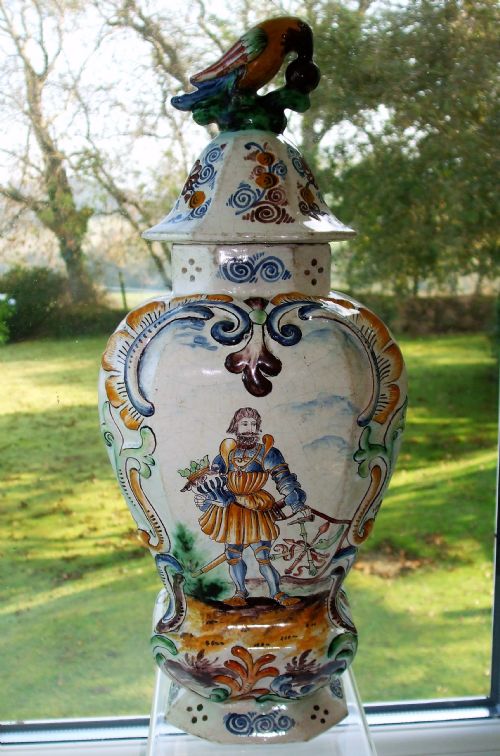
- European tin-glazed earthenware, frequently associated with French production centres like Desvres.
- Bleu céleste
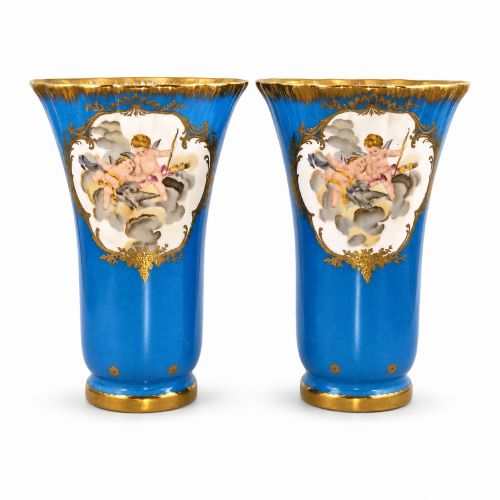
- A bright turquoise blue ground colour popularized by the Sèvres porcelain factory.
- Blush ivory
- A cream-coloured porcelain body with soft peach and gold tinted shading, perfected by Royal Worcester.
Antique Ceramic Mantel Urns: Frequently Asked Questions
How do I display mantel urns?
Place pairs symmetrically at either end of a fireplace shelf to balance the visual weight of the room.
Three-piece garnitures work best when the central urn is flanked by smaller matching vessels.
What is a garniture set?
A garniture set consists of matching vases or urns manufactured to be displayed together as a unified decorative scheme.
These sets usually contain three or more pieces sharing identical motifs and colour palettes.
How do I identify Satsuma ware?
Satsuma ceramics feature an earthenware body covered with a finely crackled ivory glaze.
Decoration typically incorporates detailed enamel painting and heavy gilding depicting figures and floral patterns.
Are these urns waterproof?
Most antique ceramic urns and decorative vases were intended strictly for display rather than holding water and fresh flowers.
Using them as functional vessels can moisture-damage porous earthenware bodies and historic glazes.