


Victorian Blue Floral Vase
A victorian blue floral vase brings rich nineteenth-century colour and botanical motifs into a room through decorative ceramic and glass forms.
Victorian Blue Floral Vase
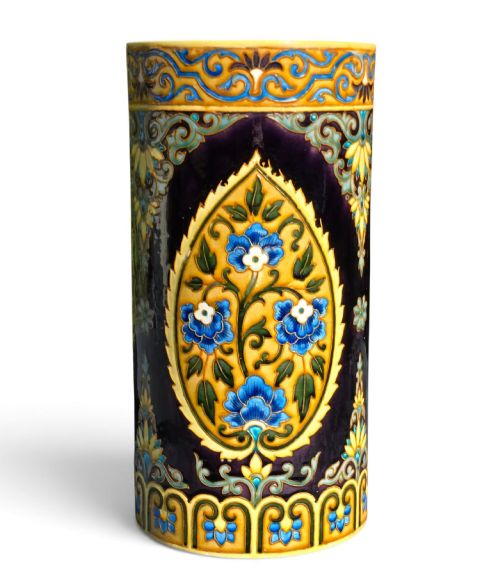
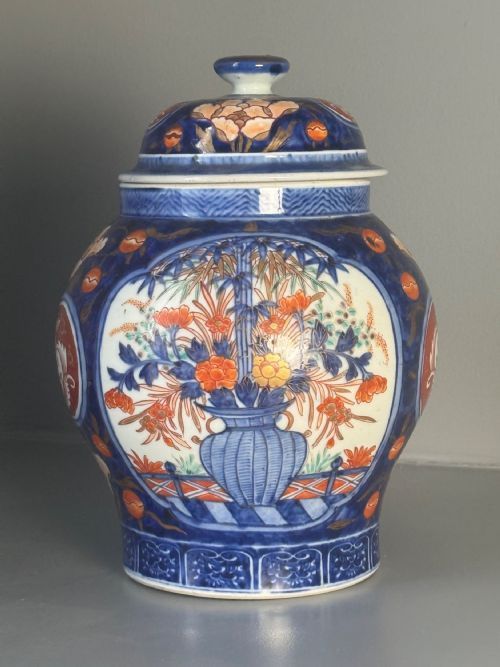
A victorian blue floral vase encompasses nineteenth-century ceramics, glass and porcelain decorated with botanical and floral motifs against blue grounds. Buyers find standard decorative vessels alongside larger umbrella stands, lidded jars and clock garniture components.
The most common examples on this page are earthenware and porcelain productions from British potteries like Doulton, alongside continental porcelain and pressed glass vessels. These pieces date from the middle decades of the nineteenth century through to the early twentieth century.
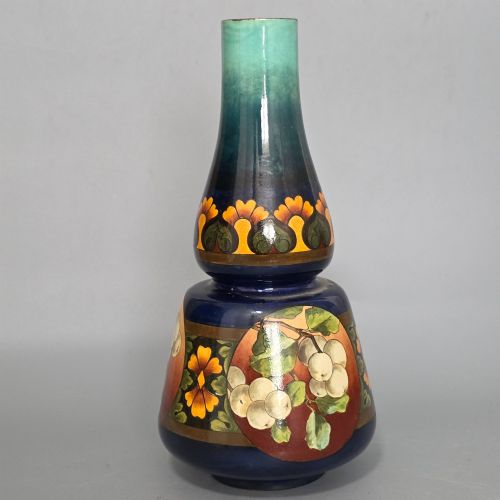
Forms range from small cabinet pieces and double gourd shapes to substantial pedestal urns. Many incorporate stylised plant patterns, hand-painted blossoms or transfer-printed botanical designs typical of the Victorian decorative arts.
How they were made
Potters and glassmakers utilised ceramic bodies, porcelain and opaline glass shaped by hand casting, turning on a wheel or press-moulding. Artisans applied cobalt blue glazes, enamels and slip to form the primary background before adding detailed floral decoration.
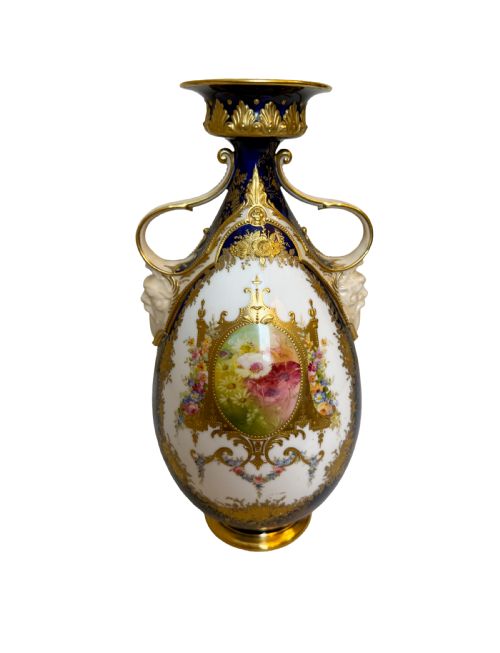
Decoration involved hand-painted pigments, underglaze printing and raised enamel work, often finished with gold leaf or gilding applied to rims and handles. Firing took place in kilns at high temperatures to vitrify the glazes and fix the metallic leaf.
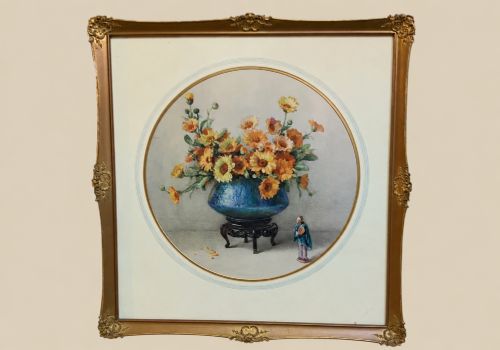
Object forms recorded in the inventory range from standard vases and urns to umbrella stands, clock garnitures, lidded vessels and framed paintings.
What varies in quality
The distinction between standard commercial output and superior examples lies in the execution of the hand-painting and the crispness of the moulded relief. Finer pieces display delicate brushwork, precise enamel layering and deeply saturated cobalt grounds without firing blemishes.
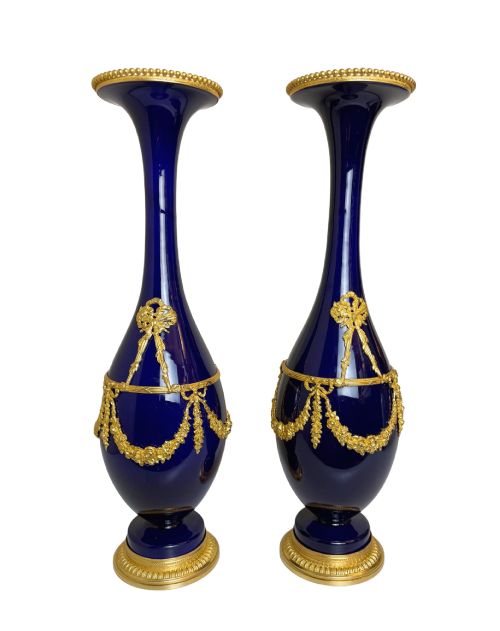
Materials and mounts also determine standard, with top-tier examples featuring applied gilt bronze trim, intricate hand-tooled gilding or complex multi-tier glazing techniques like intarsio faience rather than simple transfer prints.
Théodore Deck·Doulton Lambeth·Royal Doulton·Samuel Alcock·George Tye·Ernst Wahliss·Staffordshire Adams·Moorcroft Macintyre·Minton·Hadley’s & Sons Worcester·Royal Crown Derby·Mason's
The Victorian Blue Floral Vase Glossary
- Enamel
- Opaque glass-based pigment fused to ceramic or glass surfaces by heat. It creates raised, brightly coloured floral patterns.
- Gilt
- A thin layer of gold applied to the surface of porcelain, ceramic or metal mounts. It highlights rims, handles and decorative borders.
- Opaline
- A type of semi-translucent glass popular in the nineteenth century. It often appears in pastel or bright blue shades as a base for enamel flowers.
Victorian Blue Floral Vase: Frequently Asked Questions
How do I date a victorian blue floral vase?
Dating relies on maker marks, registration diamonds and stylistic indicators such as the shift from mid-century moulded glass to later art nouveau ceramic forms.
The evidence on this page spans from the eighteen-fifties to the early twentieth century, showing distinct shifts in pottery techniques and decorative tastes.
Were these vases used for fresh flowers?
Many larger vessels served primarily as decorative garniture sets, mantel ornaments or umbrella stands rather than functional holders for water.
Smaller examples with glazed interiors accommodated cut blooms, though delicate enamel work often required careful handling during use.
What is the difference between porcelain and earthenware here?
Porcelain is a vitrified, translucent ceramic fired at high temperatures, while earthenware is a porous clay body requiring an impermeable glaze to hold water.
Listings include both ceramic types, alongside glass vessels finished with applied enamel and gilt details.
How should I clean antique glass and ceramic vases?
Dusting with a dry, soft cloth preserves delicate enamel and gilt surfaces without risking abrasion to the nineteenth-century materials.
Water and harsh detergents should be avoided on pieces with external hand-painting or metallic leaf that sits above the glaze.