


Royal Doulton Vase Pair
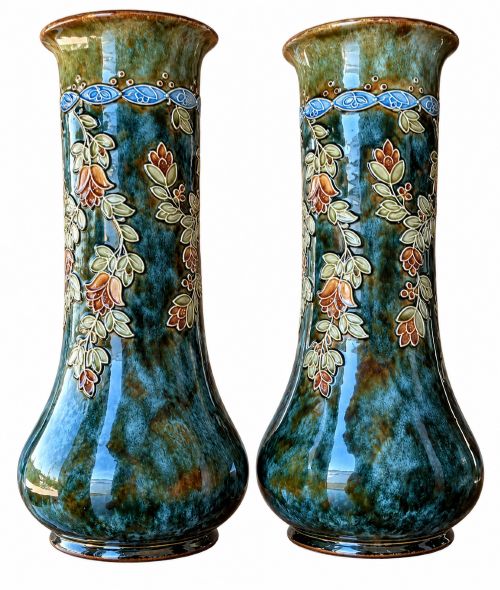
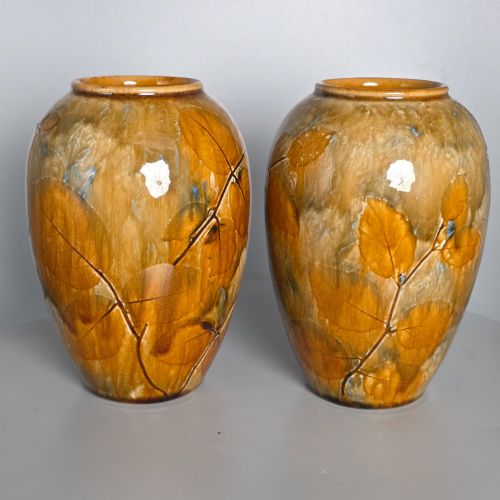
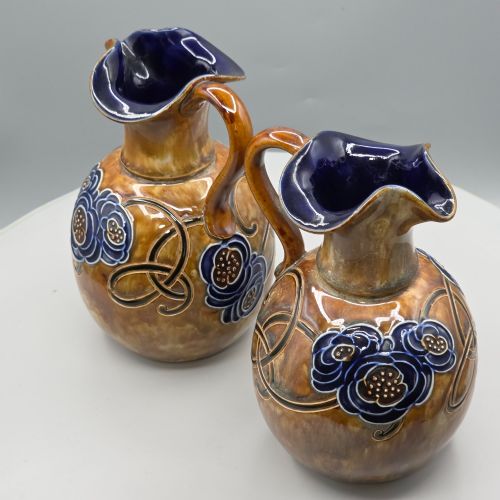
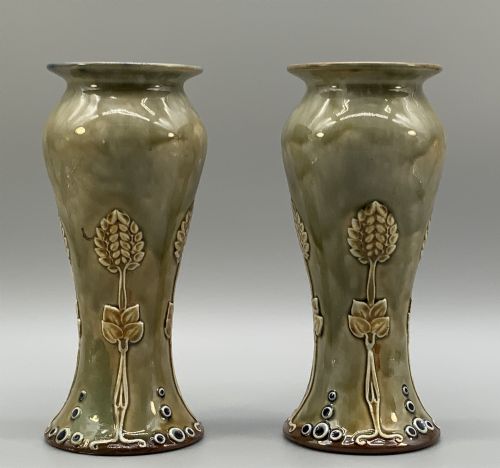
A royal doulton vase pair brings together matched ceramics shaped by historic studio potters, offering symmetrical symmetry and striking mantle presence.
Royal Doulton Vase Pair
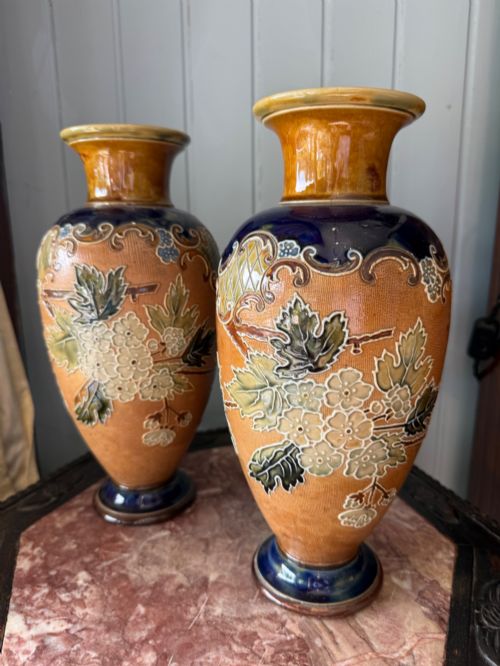
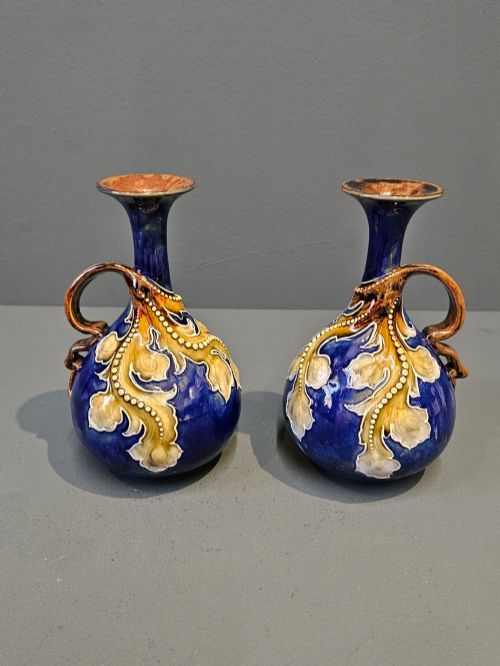
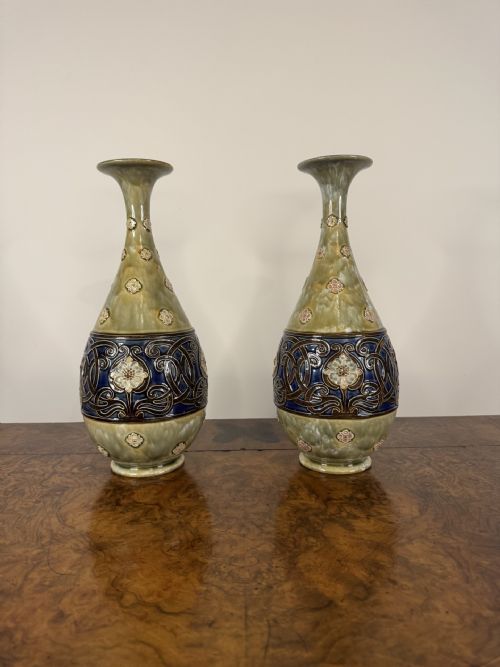
A royal doulton vase pair consists of twin ceramic vessels created mostly during the late nineteenth and early twentieth centuries. These matching pieces range from sturdy stoneware forms to delicate porcelain vessels, reflecting the varied output of British potteries.
Buyers frequently encounter stoneware items originating from the Lambeth studios alongside earthenware and porcelain bodies from Burslem. Art Nouveau and Arts and Crafts designs dominate the selection, often displaying flowing plant motifs or distinct geometric patterns.
The objects span periods from the Victorian era through the Edwardian years up to the 1920s. Matching pairs include baluster shapes, beaker forms, and cylindrical vessels created for domestic display.
Materials and production methods
Makers utilised heavy salt-glazed stoneware and fine ceramic bodies moulded into balanced vessel shapes. Glazes were applied by hand, incorporating rich enamel colours and slip decoration directly onto the clay body.
Surface ornamentation often involved intricate incising, pate-sur-pate technique, and applied gilding. Many stoneware pieces utilised Slater's patent lace-impressed texturing to create distinctive patterned backgrounds beneath floral enamel work.
Listings feature stoneware, ceramic, and porcelain materials spanning the Victorian era through the 1920s.
Distinctions in craftsmanship
The finest examples display the distinct monogram or signature of master studio artists such as Ethel Beard, Frank Butler, or Louisa Wakely. These hand-decorated pieces exhibit superior control over glaze reactions and depth of carved detail compared to standard factory production.
Proportion and symmetry define the upper tier of pairs, where matching vessels share identical height, weight, and tonal balance. The crispness of applied enamel decoration and the precision of incised patterns separate accomplished studio work from simpler commercial outputs.
Louisa Wakely·Ethel Beard·Frank Butler·Christine Abbot·Annie Partridge·Emily J Gilman
The Royal Doulton Vase Pair Glossary
- Stoneware
- A robust, vitrified ceramic fired at high temperatures until impermeable to liquids. It forms the heavy, durable body characteristic of Lambeth studio vessels.
- Baluster
- A architectural vase shape featuring a rounded body that tapers toward the neck and stands upon a wider base. This profile supports flowing Art Nouveau ornamentation.
- Slater's Patent
- A specific decorative technique involving lace or fabric pressed directly into damp clay to create textured backgrounds. These textured areas were frequently finished with coloured enamels and gold gilding.
- Faience
- Earthenware decorated with opaque coloured glazes before firing. This technique allowed artists to paint detailed floral and figurative scenes directly onto the ceramic surface.
Royal Doulton Vase Pair: Frequently Asked Questions
How were these vases displayed?
Matched pairs were traditionally positioned symmetrically on mantelpieces, sideboards, or piano tops within Victorian and Edwardian drawing rooms. Their balanced forms provided a sense of formal order and architectural structure to domestic interiors.
Today, owners continue this tradition by placing matching vessels on opposite ends of a shelf or console table to frame mirrors, paintings, or other decorative objects.
How do I identify the period?
Stylistic clues such as flowing organic lines indicate Art Nouveau influences typical of the late Victorian and Edwardian eras. Factory stamps, impressed monograms, and specific glaze types provide further chronological markers.
Heavier salt-glazed stoneware bodies with incised decoration generally point toward the earlier Lambeth output, while later pieces from the 1920s embrace smoother geometric profiles and brighter enamel palettes.
Can I use them for flowers?
Many of these vessels are fully waterproof stoneware or glazed ceramics intended to hold cut flowers. However, historical studio pieces with delicate enamel or gilt decoration require careful handling when filled with water.
Collectors often display them empty as sculptural art objects rather than functional floristry containers to preserve their historic surfaces.
What makes a pair matched?
A true matched pair shares identical clay bodies, matching dimensions, and corresponding decorative motifs executed by the same period studio. Individual artists painted or carved the twin vessels concurrently to ensure visual harmony.
Slight variations in hand-painted enamel colours or incised lines often confirm authentic hand-crafting rather than mass-produced uniformity.