

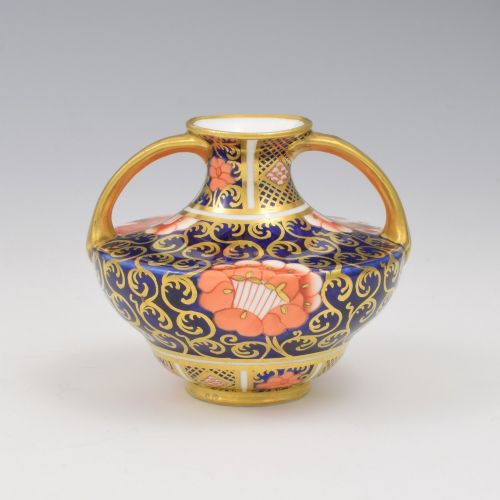


Small Cobalt Urns
Small cobalt urns, appearing here as miniature and small vases, bring rich blue ceramic colour and delicate form into any room.
Small Cobalt Urns
When you search for small cobalt urns, you encounter miniature and small vases shaped from porcelain, earthenware, bone china, and ceramic. These pieces emerge from periods including the late nineteenth century, the Edwardian era, nineteen-twenty, and nineteen-thirty.
The versions you are most likely to meet on this page span Edwardian Imari, Japanese Imari, Art Nouveau, Meiji, Rococo Revival, Arts and Crafts, and Victorian styles. Makers such as Royal Crown Derby, Meissen, Moorcroft, and Doulton shape these vessels into twin-handled, bud, and flower forms.
Moorcroft Macintyre Aurelian and William Moorcroft examples sit alongside Royal Crown Derby miniature porcelain and Doulton items. Each piece demonstrates how small vases serve as decorative vessels across different ceramic traditions.
How they were made
Potters shape porcelain, bone china, earthenware, and ceramic before applying glaze and cobalt decoration. Many pieces incorporate gold gilding or gold leaf alongside the deep blue pigment.
Japanese Satsuma and Imari pieces utilise traditional firing and painting techniques, while European factories like Meissen and Royal Crown Derby apply enamel and pattern numbers such as twenty-four forty-four and sixty-two ninety-nine.
Small Cobalt Urns Retail Price Guide 2026
Typical asking prices for small cobalt urns among the pieces listed under this phrase on Sellingantiques today, from the lower quarter to the upper quarter. They describe what is for sale here now, not the wider market.
Listings span porcelain, earthenware, bone china, and ceramic materials decorated with glaze, enamel, and gold leaf.
What varies in quality
Quality rests in the precision of the hand-painted enamel and the clarity of the cobalt glaze against the white ceramic body. Crisp application of gold leaf and gold gilding separates finer miniature vases from simpler production.
The complexity of the style, whether intricate Japanese Imari or Moorcroft tube-lined decoration, defines the visual depth of each vessel.
Royal Crown Derby·Meissen·William Moorcroft·Doulton
The Small Cobalt Urns Glossary
- Cobalt
- A deep blue mineral pigment used to glaze ceramics and porcelain. It maintains its intense hue through high-temperature firing.
- Imari
- A style of Japanese decorative ceramic featuring cobalt blue, iron red, and gold. European factories frequently copied these distinctive patterns.
- Enamel
- Opaque glass fused to ceramic surfaces by heat. It provides vibrant surface colour on porcelain and earthenware.
- Gilding
- The application of gold leaf or gold powder to ceramic highlights and handles. It adds reflective contrast to the cobalt ground.
- Miniature
- A descriptor for small-scale vases and vessels designed for cabinet display. These pieces replicate the proportions of larger decorative urns.
Small Cobalt Urns: Frequently Asked Questions
What periods do these small cobalt vases come from?
The pieces span the late nineteenth century, eighteen-eighty, the Edwardian era, nineteen-twenty, and nineteen-thirty. Different makers produced miniature vases throughout these decades.
European factories and Japanese workshops each contributed distinct stylistic elements during these periods.
How were these small vases used originally?
They functioned as decorative mantelpiece or cabinet ornaments rather than functional flower holders. Their small scale suited intimate Victorian and Edwardian interiors.
Collectors grouped miniature vases in cabinets to display varied patterns and glazes.
What materials make up these small vessels?
Makers utilised porcelain, bone china, earthenware, and standard ceramic bodies. Glazes seal the clay, while enamel and gold leaf provide surface ornament.
Cobalt pigment forms the primary blue ground across most examples.
How do Imari styles differ from other designs?
Imari pieces combine cobalt blue underglaze with iron red and gold overglaze decoration. This palette originated in Japan before influencing European makers.
Other styles on this page include Art Nouveau, Arts and Crafts, and Rococo Revival forms.