
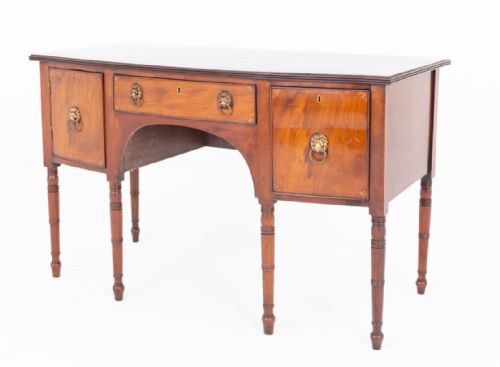
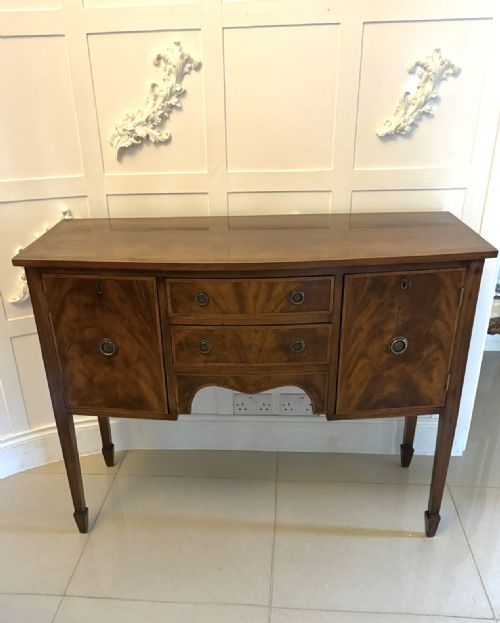

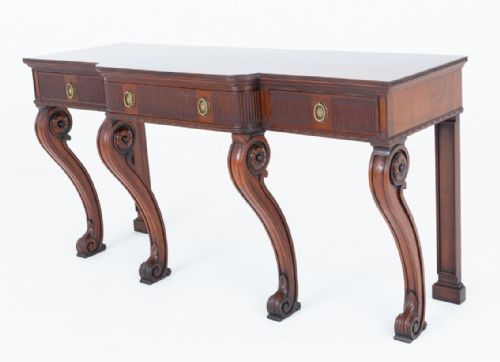


Traditional Mahogany Dining Server
A traditional mahogany dining server anchors a formal room with architectural timber and practical surface space for grand meals.
Traditional Mahogany Dining Server
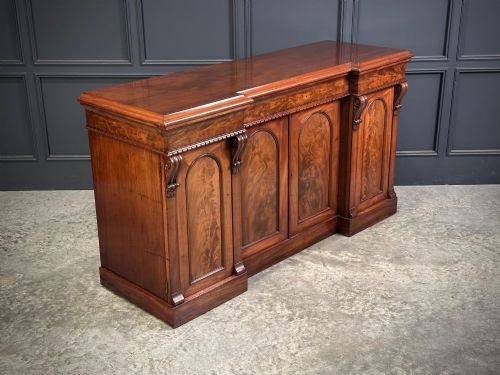
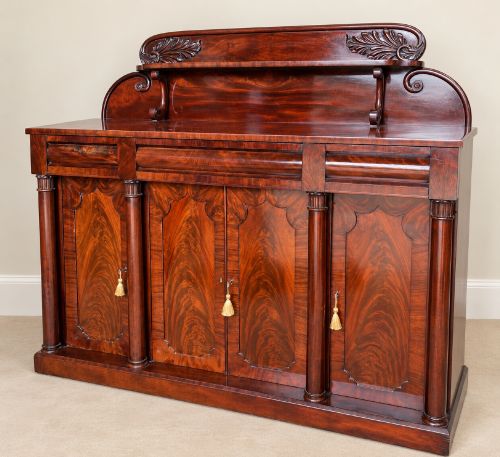
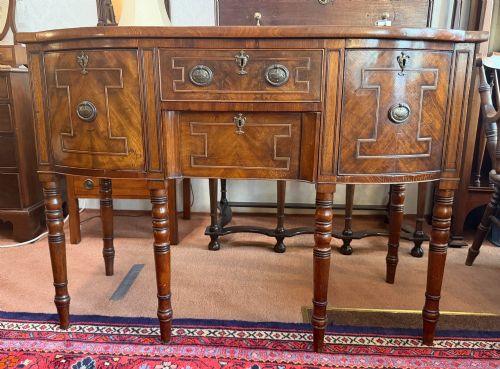
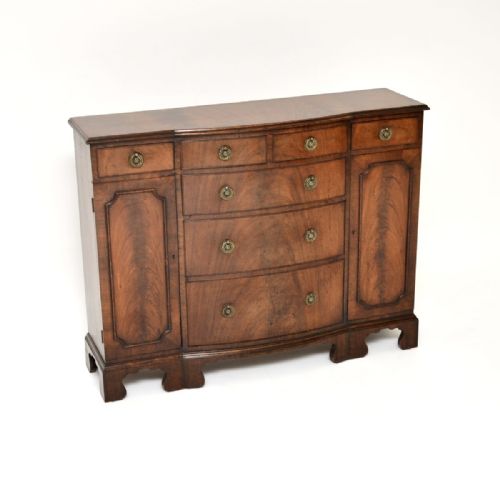
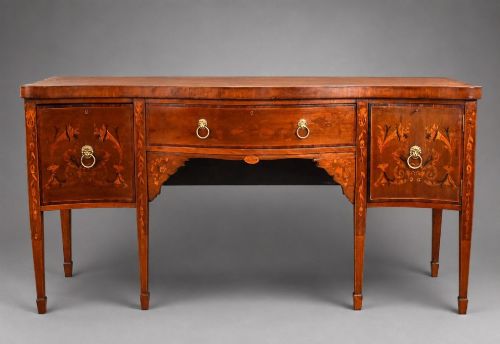
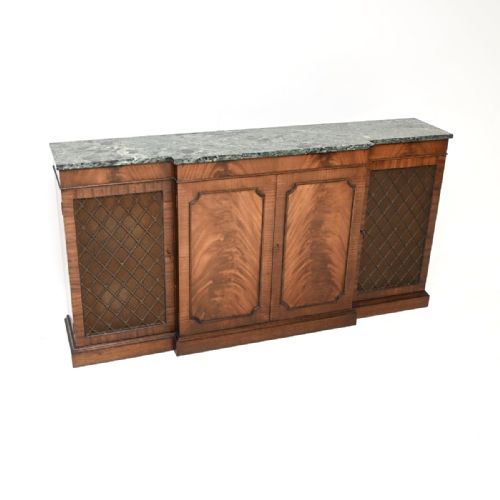
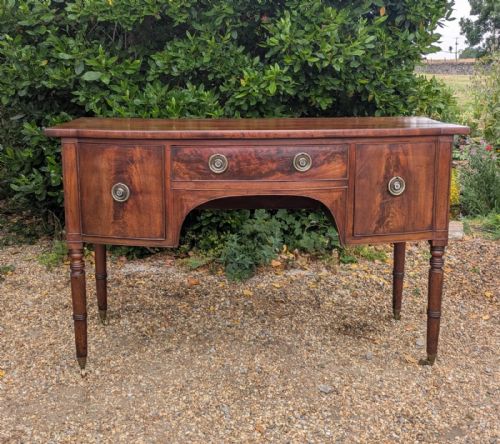
A traditional mahogany dining server provides long, low storage and serving space for the dining room. These pieces appear in forms such as sideboards, buffets, serving tables, and chiffoniers, dating from the eighteenth century through the Edwardian era.
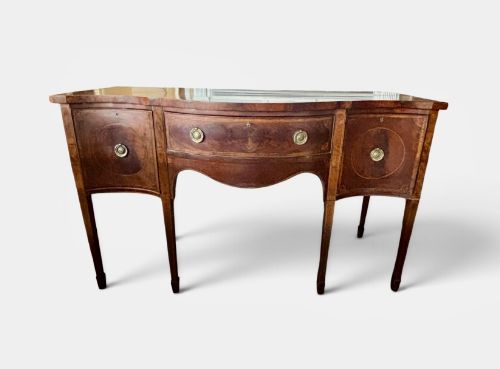
Georgian and Regency examples show clean architectural lines, often with bow-fronts or serpentine shapes, while Victorian and Edwardian versions introduce heavier proportions, mirror backs, and multiple doors. Buyers frequently encounter nineteenth-century pieces built with generous cupboard space and deep cutlery drawers.
Makers designed these items to stand against dining room walls to hold heavy dishes, silver, and wine. The construction ranges from simple serving tables to large breakfront cabinets fitted with internal shelving and compartment trays.
How they were made
Cabinet makers built these servers using solid mahogany and flame mahogany veneer laid over secondary timbers. They applied decorative stringing in boxwood and satinwood to accent drawer fronts and borders.
Hardware typically consists of cast brass handles and escutcheons, while some later Victorian examples incorporate mirror glass backs and marble tops. Structural stability relied on dovetailed drawer construction and sturdy corner blocking beneath heavy top boards.
Some servers include hidden cellaret drawers designed to keep your best claret cool against the floorboards.
What varies in quality
The choice of timber creates the primary distinction between standard examples and top-tier pieces. Flame mahogany veneer with strong, active figure commands greater attention than plain stock, especially when matched symmetrically across multiple cabinet doors.
Refinement of detail marks the better workshops. Crisp edge moulding, finely fitted brass hardware, and precise inlay work separate ambitious cabinet work from utility dining furniture.
Whytock & Reid
The Traditional Mahogany Dining Server Glossary
- Serpentine
- A front profile that curves outward in the centre and inward toward the ends, creating a flowing undulating shape. This design requires advanced woodworking skill to fit drawers and doors precisely.
- Bow-front
- A convex, outwardly curved front elevation popular in Georgian and nineteenth-century case furniture. It softens the hard corners of a dining room while maximising internal storage depth.
- Breakfront
- A large cabinet form where the central section projects forward from the flanking side cupboards. This layout breaks up the long horizontal line and emphasises the piece's architecture.
- Chiffonier
- A compact sideboard or low cabinet, often fitted with shelves or a mirror back above the main surface. Originating in the nineteenth century, it served smaller dining spaces.
- Inlay
- The technique of embedding contrasting woods like boxwood or satinwood into the primary mahogany surface to form decorative borders. It requires meticulous hand-cutting and fitting.
Traditional Mahogany Dining Server: Frequently Asked Questions
What is a traditional mahogany dining server used for?
These pieces function as stationary sideboards in dining rooms to hold serving platters, glassware, and tableware during meals. The wide top surface provides a convenient station for laying out food and drinks before guests.
Interior compartments, drawers, and cellaret drawers were originally engineered to organise cutlery, linens, and wine bottles safely out of sight.
How do I distinguish a Georgian server from a Victorian one?
Georgian servers generally display lighter proportions, elegant tapering legs, and restrained satinwood inlay. Their profiles lean toward clean architectural lines and balanced symmetry.
Victorian pieces tend to be heavier and larger, frequently incorporating four doors, bold carving, mirror backs, or figured mahogany veneers that project a more imposing presence.
How do I care for a mahogany server surface?
Maintain the wood by dusting regularly with a soft, dry cloth and applying natural beeswax polish sparingly to nourish the grain. Avoid silicone sprays which build up and dull the antique finish over time.
Keep the piece away from direct sunlight and heat radiators to prevent the mahogany timber and delicate veneers from drying out and splitting.
Where should I place a large breakfront server?
Position the server against a long, uninterrupted dining room wall where its full width and projecting central section can be appreciated without crowding. Ensure there is enough clearance in front for drawers and doors to open fully.
Keep the room's humidity stable to protect large-scale antique case furniture from timber movement.