
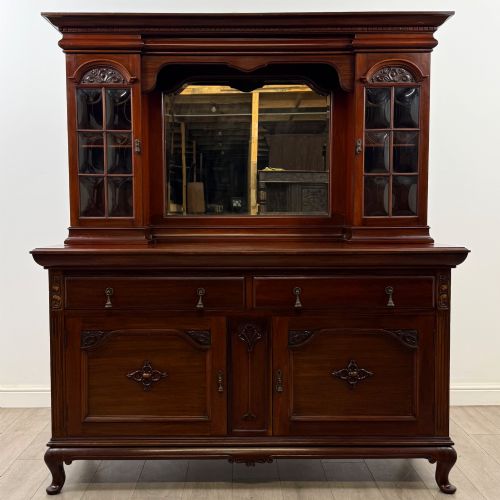
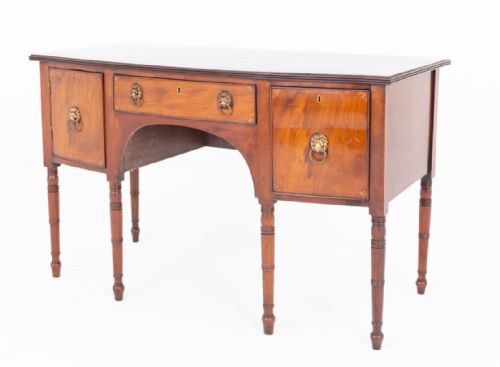
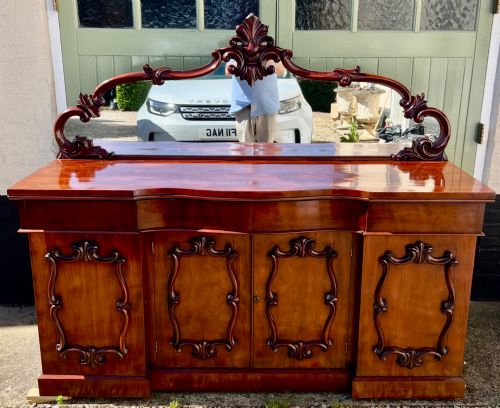
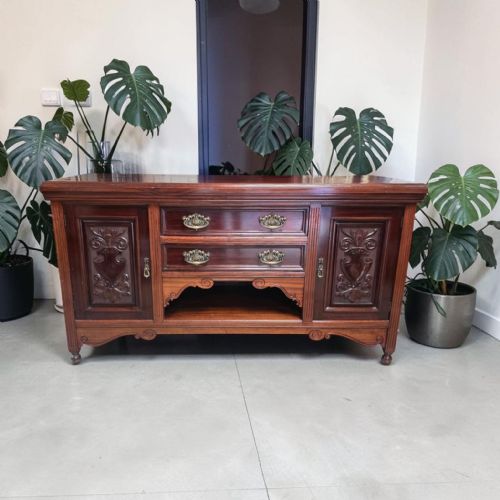
Brown Mahogany Buffet Cabinet
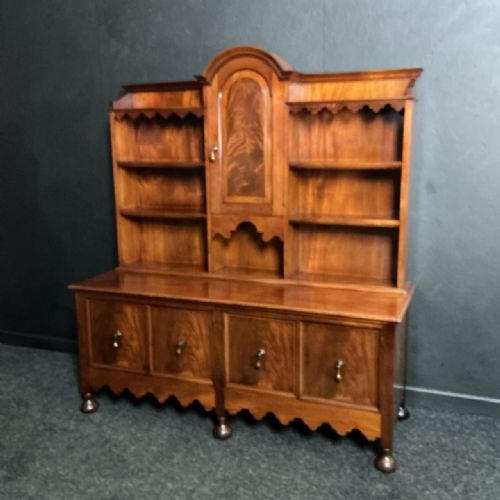
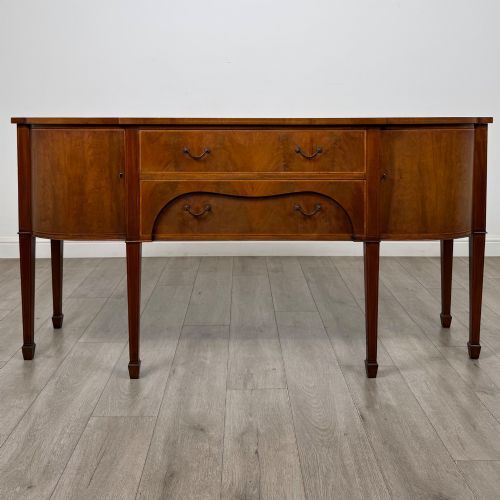
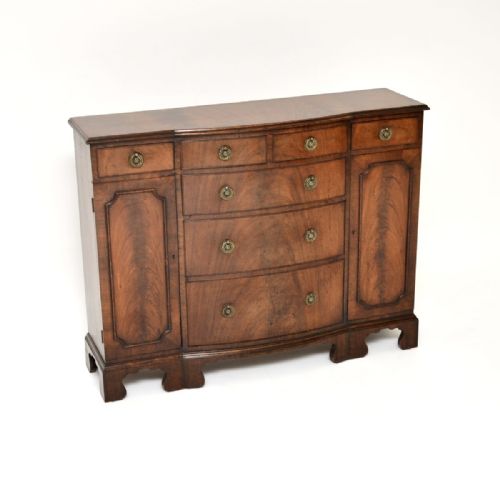
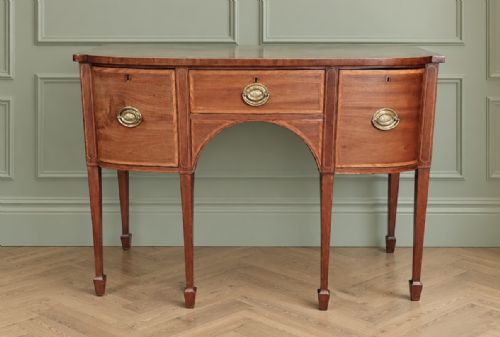
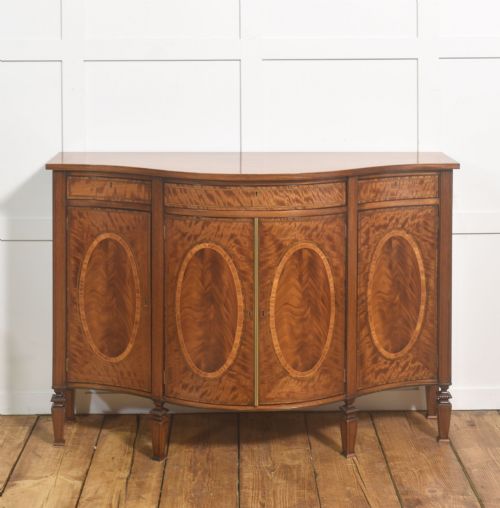
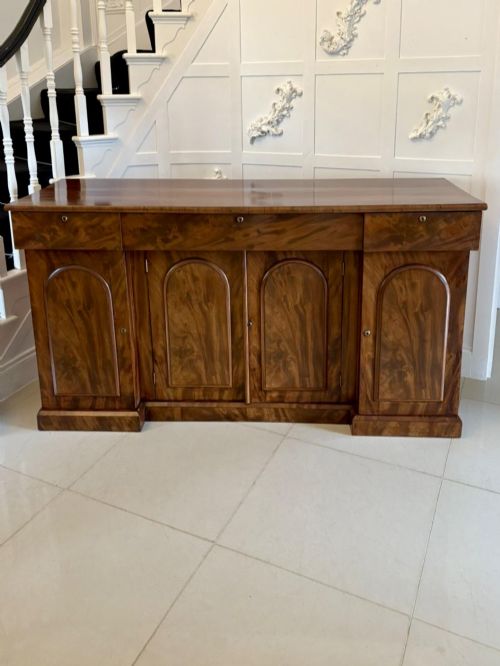
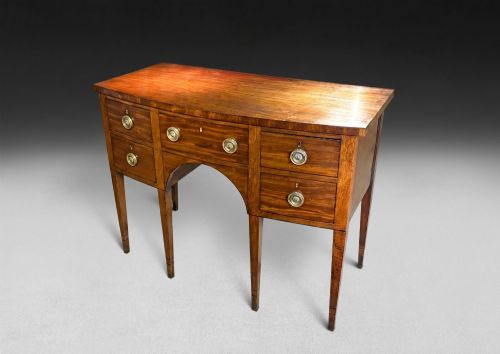
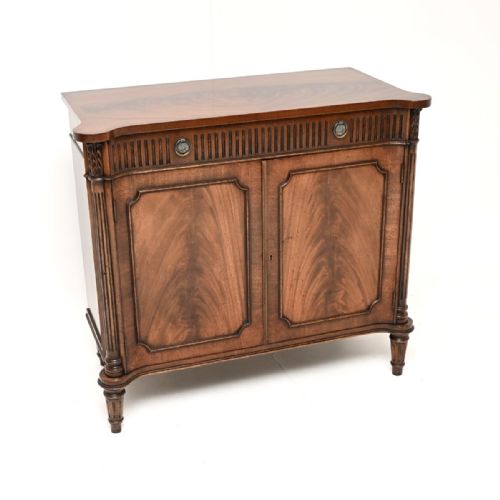
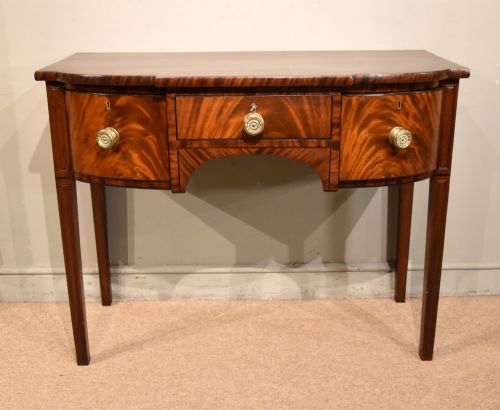
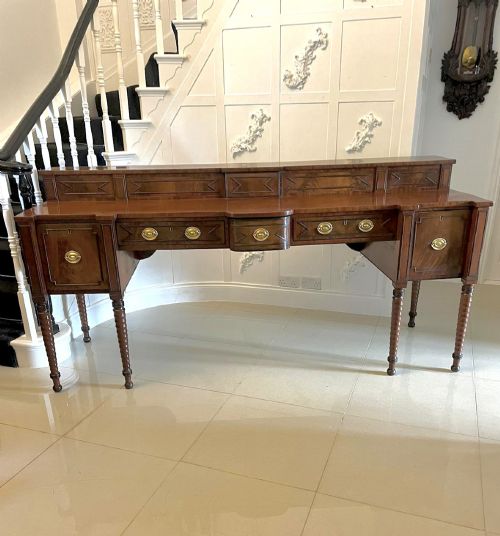
These brown mahogany buffet cabinet examples span Georgian, Regency, and Edwardian periods, offering refined storage for the dining room.
Brown Mahogany Buffet Cabinet
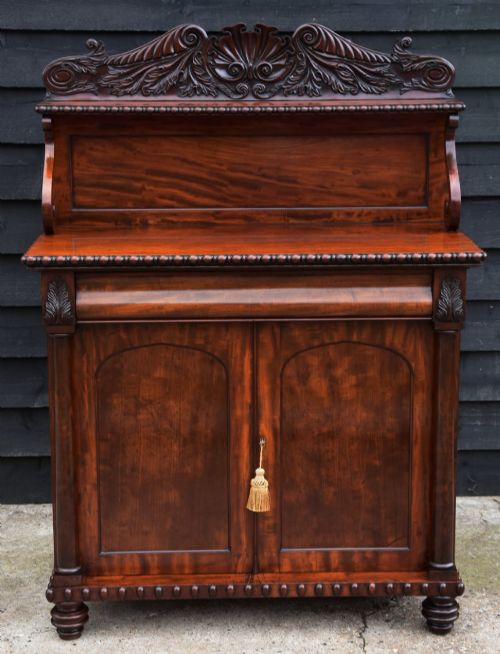
A brown mahogany buffet cabinet serves as a formal dining room storage piece, encompassing sideboards, servers, and chiffoniers. These items appear across Georgian, Victorian, Regency, and Edwardian eras, uniting utility with decorative presence.
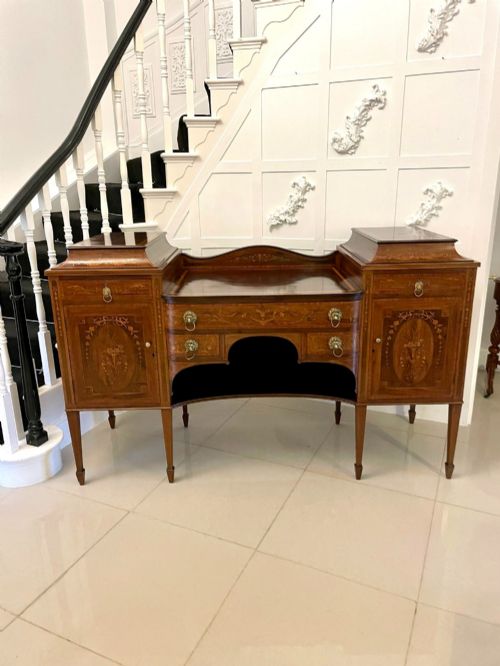
Georgian and Regency pieces emphasise clean architectural lines and bow fronts, while Edwardian examples often introduce lighter satinwood inlays and marquetry. Buyers most frequently encounter nineteenth-century adaptations and Edwardian interpretations alongside eighteenth-century originals.
How they were made
Cabinetmakers utilised solid mahogany and flame mahogany veneers over secondary timbers, often embellishing surfaces with satinwood crossbanding and boxwood stringing. Brass hardware, including handles and occasional inlay strips, provides structural accenting.
Surface decoration relies on precision marquetry and polished timber finishes that highlight natural grain patterns. Construction methods range from traditional hand-dovetailed drawer boxes to turn-of-the-century cabinet assembly.
Listings feature mahogany, satinwood, and brass materials across Georgian, Victorian, Regency, and Edwardian periods.
What varies in quality
Quality rests upon the selection of timber figures, where matched flame mahogany veneers and crisp satinwood inlay create visual depth. Superior craftsmanship shows in the precision of cabinet joinery and the integrity of original brass fittings.
Proportion and decorative restraint distinguish finer examples from standard production pieces. Pieces exhibiting balanced bow fronts and deliberate marquetry reflect higher workshop standards.
Hewetsons London·M D Miller and Sons·Bowman Brothers
The Brown Mahogany Buffet Cabinet Glossary
- Mahogany
- A durable tropical hardwood prized for its rich brown colour and stability in furniture construction. It forms the primary structural and visual body for these cabinets.
- Bow front
- A convex, curved front profile popular in Georgian and Regency cabinet design. This shape softens the room presence of large storage pieces.
- Crossbanding
- A decorative border of veneer laid with the grain running perpendicular to the central panel. It frames drawer fronts and table tops on refined cabinets.
- Marquetry
- The art of applying pieces of veneer to a structure to form decorative patterns. Craftsmen use contrasting timbers like satinwood and boxwood for detail.
- Chiffonier
- A small sideboard or low cabinet equipped with doors and shelves. These pieces gained popularity during the Victorian era for compact dining storage.
Brown Mahogany Buffet Cabinet: Frequently Asked Questions
What is a brown mahogany buffet cabinet?
A brown mahogany buffet cabinet is a dining room storage piece designed for serving food and storing tableware. These items range from Georgian sideboards to Edwardian servers.
They combine enclosed cupboard space with drawer storage, finished in rich mahogany timbers with occasional decorative inlay work.
How do I date a brown mahogany buffet cabinet?
Dating relies on stylistic markers, construction techniques, and timber choices specific to each period. Georgian pieces typically display architectural restraint, while Regency items feature bold brass details.
Edwardian examples often incorporate lighter satinwood crossbanding and revival styles reflecting earlier centuries.
Where were these cabinets placed?
These cabinets traditionally stood against dining room walls to hold serving dishes, cutlery, and glassware during meals. Their finished backs and polished tops allowed them to serve as display surfaces.
Today, they function similarly in dining spaces or serve as credenzas in larger living areas.
What is flame mahogany?
Flame mahogany is a veneer cut from the fork of the mahogany tree where branches meet the main trunk. This produces a distinctive, fiery grain pattern with exceptional visual depth.
Cabinetmakers applied these choice veneers to the most prominent surfaces, such as drawer fronts and cupboard doors.