



Nineteenth Century Pedestal Sideboard
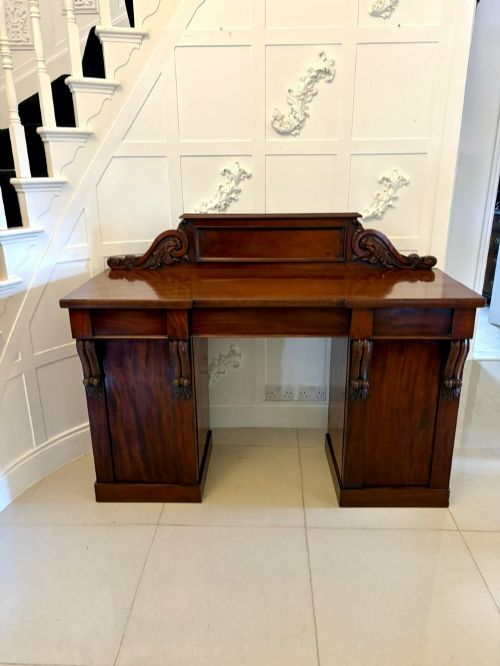
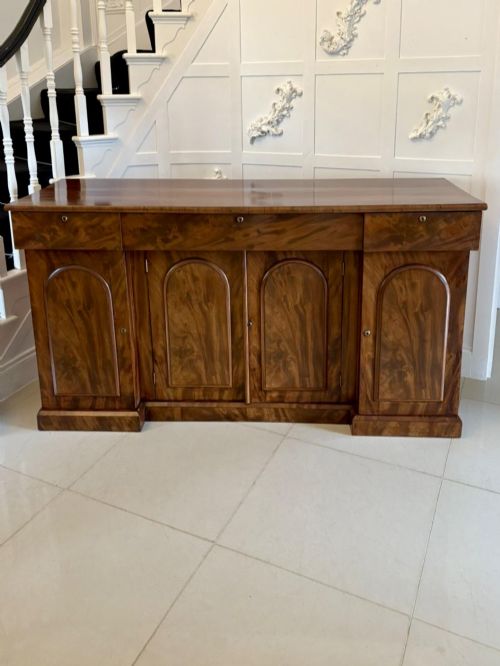
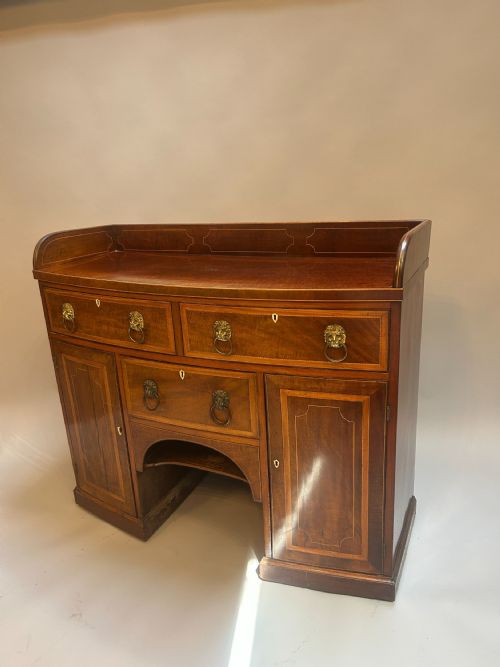
A nineteenth century pedestal sideboard stands as a substantial dining room centrepiece, offering heavy timber construction and generous storage.

Nineteenth Century Pedestal Sideboard
A nineteenth century pedestal sideboard provides a commanding architectural presence in a dining room, designed to hold plate and silver. Buyers seeking this form encounter substantial timber cabinets featuring flanking pedestals and central serving surfaces.
The selections on this page span Victorian, Regency, and William IV eras, alongside George IV and Anglo-Indian variants. These pieces frequently appear in rich mahogany, flame mahogany veneer, and occasionally oak or burr walnut.
Many examples incorporate carved details, mirrored backs, or boxwood and satinwood inlays. Forms range from twin pedestal layouts to inverted breakfront cupboards and side cabinets.
How they were made
Cabinet makers utilised solid mahogany and applied flame mahogany veneers over secondary timbers to achieve deep figure and grain movement. Details often included boxwood and satinwood stringing or inlay work.
Construction relied on heavy timber carcases supporting flanking pedestals, sometimes paired with large glass mirror backs or brass gallery mounts. Carving was executed by hand to panel moulds and scrollwork.
Several sideboards hide entire cellarette drawers inside their pedestals, originally lined to keep vintage wine cool on ice.
What varies in quality
The depth of timber figuring and the choice of veneer dictate much of the visual weight, with select pieces utilising matched flame mahogany or burr walnut. Finer examples display crisp, hand-carved ornamentation rather than mechanical or shallow relief.
Structural integrity rests on the stability of the large pedestal carcases and the precision of the joinery. Attribution to known makers or recorded workshops elevates a piece above standard workshop production.
John Gregory London·S Jamar London·Holland and Sons
The Nineteenth Century Pedestal Sideboard Glossary
- Pedestal sideboard
- A large dining room cabinet featuring flanking end cupboards connected by a central drawer or serving table. This form dominates the nineteenth century examples on this page.
- Flame mahogany veneer
- Thin slices of mahogany cut to reveal a distinctive undulating grain pattern resembling flickering flames. Cabinet makers laid these veneers over solid wood carcases.
- Inverted breakfront
- A furniture facade where the central section projects forward while the outer sections recess, or vice versa. This layout creates depth and shadow across the front of the sideboard.
- Stringing
- Thin inlay lines of contrasting wood, such as boxwood or satinwood, used to outline panels and drawers. It provides a sharp decorative border against darker mahogany surfaces.
Nineteenth Century Pedestal Sideboard: Frequently Asked Questions
What is a nineteenth century pedestal sideboard?
A nineteenth century pedestal sideboard is a large dining room storage cabinet featuring two flanking cupboards beneath a long serving surface. These pieces were built to store heavy dining china, silver, and linens.
Most examples discovered here date from the Victorian, Regency, and William IV periods. They are constructed primarily from mahogany with various carved or inlaid details.
How were pedestal sideboards used?
These sideboards served as practical dining room furniture for displaying silver platters and pouring drinks during large meals. The enclosed pedestals held bottles, serving dishes, and cutlery out of sight.
Some designs incorporated tall mirror backs to reflect candlelight and brighten nineteenth century dining rooms. The central section often provided a flat surface for carving meats or setting out dishes.
How do I style a pedestal sideboard today?
A pedestal sideboard works best in a spacious dining room or large hallway where its heavy proportions can breathe. It provides substantial surface area for lamps, serving trays, or decorative ceramics.
Pairing the dark mahogany tones with lighter walls allows the wood grain and carved details to stand out. Ensure the room has adequate clearance for the wide pedestal doors to open fully.
How do I tell Victorian from Regency sideboards?
Regency and early nineteenth century sideboards often lean towards classical restraint, clean architectural lines, and subtle brass mounts. They frequently employ symmetrical flame mahogany veneers without heavy relief carving.
Victorian pieces tend to introduce bolder ornamentation, including elaborate carved scrollwork, mirrored upper backs, and gothic revival influences. Examining the timber selection and carving style usually reveals the period.