
Carved Mahogany Buffet Server
A carved mahogany buffet server brings robust timber and formal presence into a dining room, offering substantial surface space and deep storage.
Carved Mahogany Buffet Server
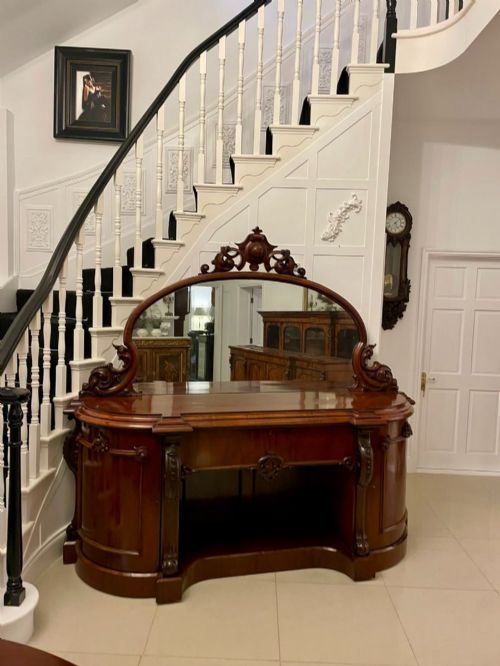
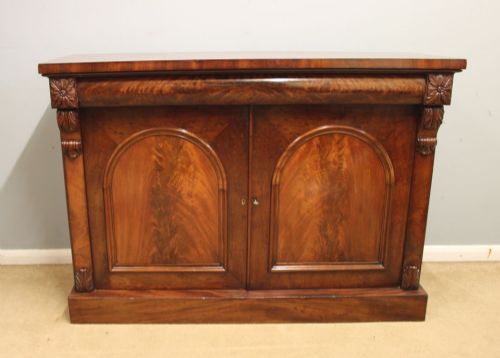
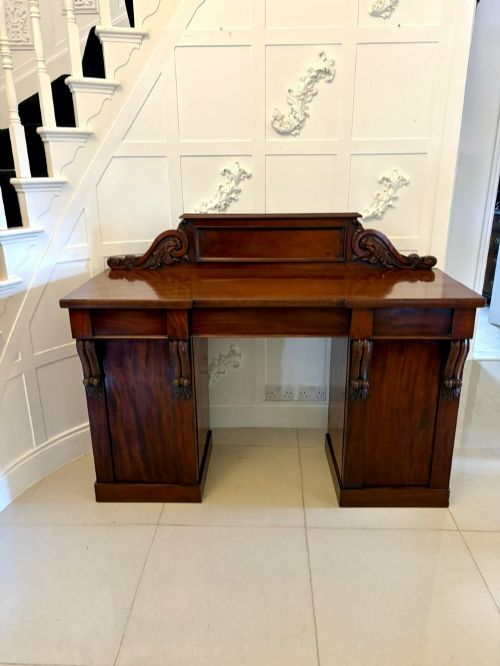
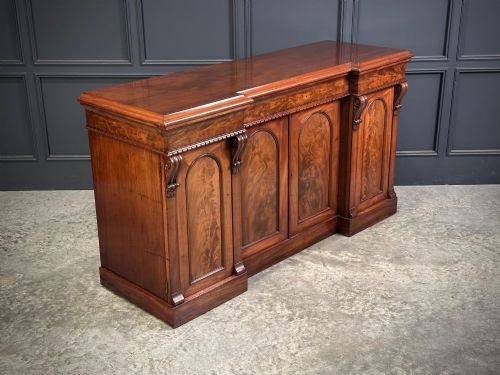
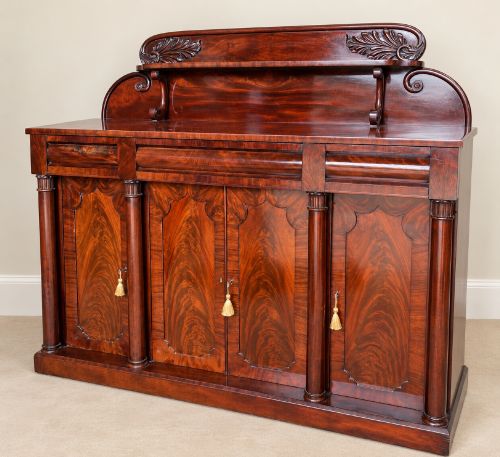
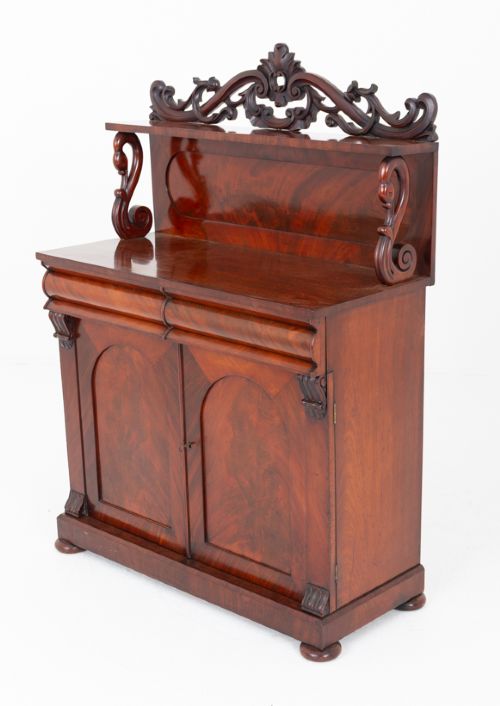
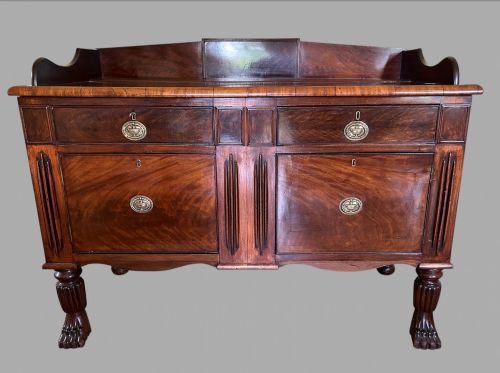
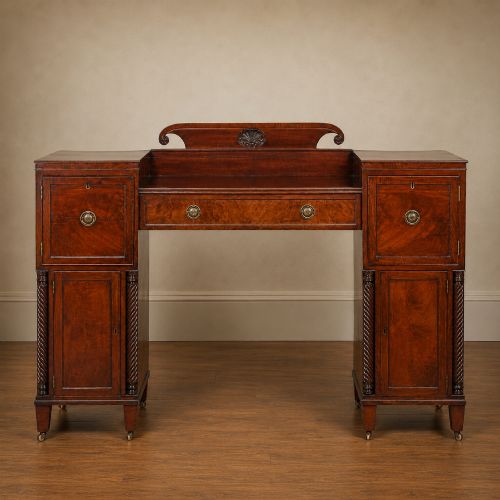
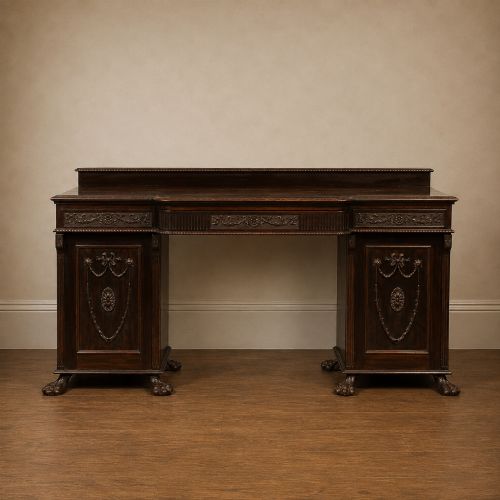
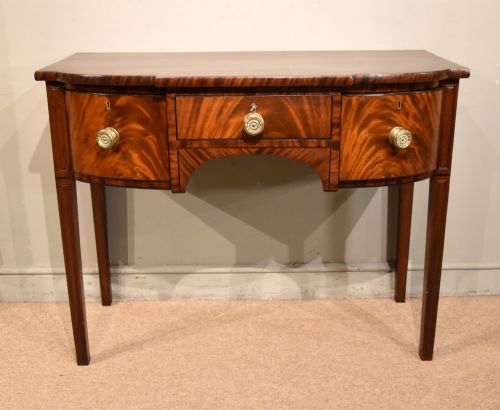
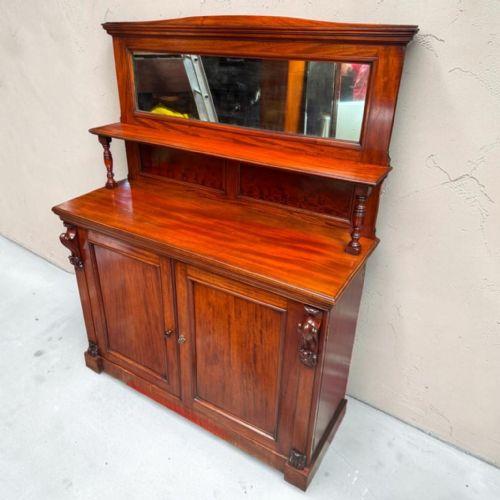
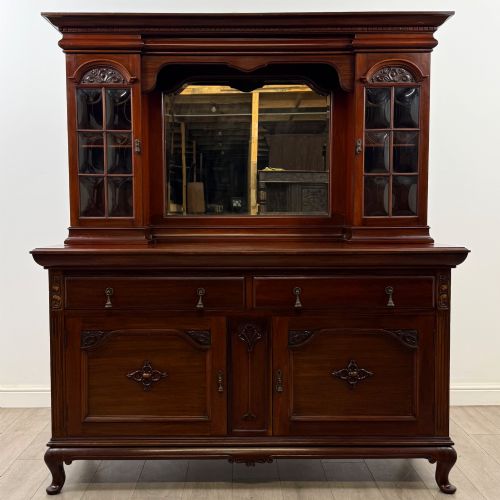
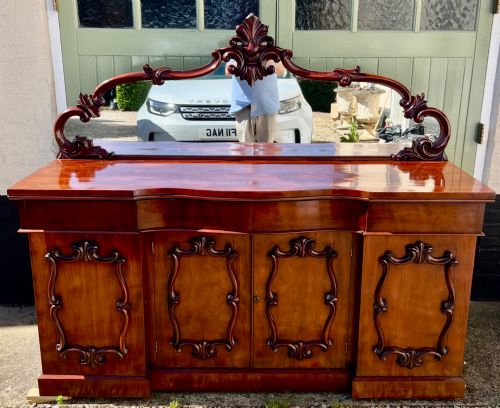
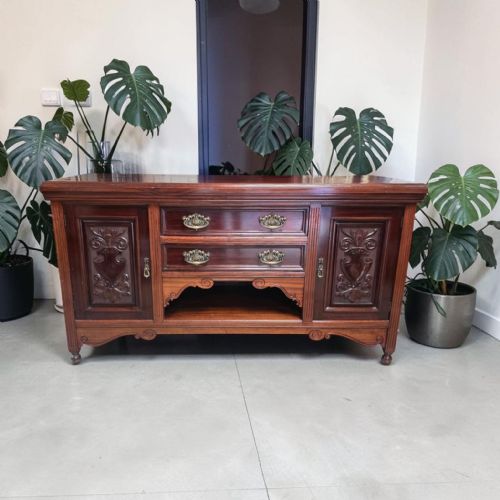
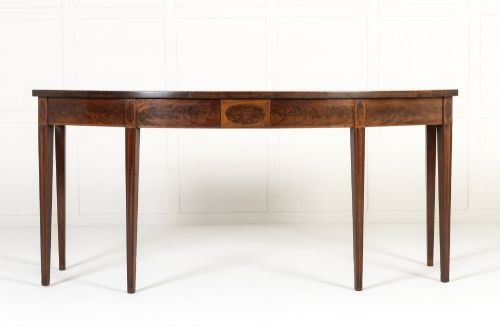
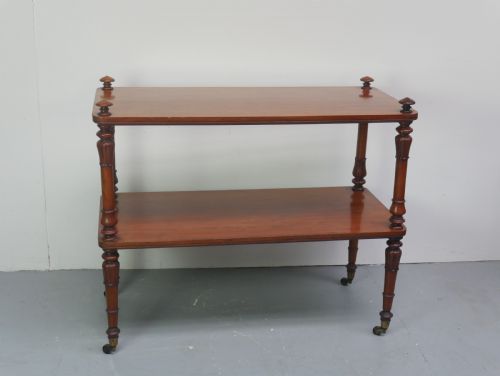
A carved mahogany buffet server encompasses heavy dining room furniture designed for serving food and storing tableware, spanning the eighteenth, nineteenth, and early twentieth centuries. When searching for a carved mahogany buffet server, buyers encounter forms ranging from simple serving tables and chiffoniers to massive breakfront sideboards and pedestal sideboards.
The material vocabulary of these items leans heavily on dense tropical hardwoods, often enhanced by decorative veneers and secondary timbers. Most examples on this page date from the Victorian and Edwardian eras, alongside Regency and Georgian pieces showing carved details and architectural proportions.
Materials and construction
Cabinet makers utilised solid mahogany and applied flame mahogany veneer over foundational timbers to create rich, figured grain patterns on cupboard doors and drawer fronts. Structural enrichment relied on hand carving, brass mounts, mirror glass, and subtle stringing of satinwood or ebony.
Joinery techniques matched the weight of the timber, employing sturdy frame and panel construction for large breakfront carcasses and pedestal bases. Surfaces were finished to highlight the deep red-brown natural colour of the wood through traditional polishing methods.
Several dining servers include revolving dumb waiter tiers on tripod bases, designed to rotate dishes quietly out of arm's reach during private conversations.
Judging quality and craftsmanship
Distinctions in quality rest upon the selection of figured timber, the depth and crispness of the hand carving, and the integrity of the underlying structure. Pieces featuring book-matched flame mahogany veneer or substantial carved paw feet demonstrate higher craftsmanship than plain utility versions.
Proportion and decorative restraint dictate the aesthetic tier of a server, with balanced proportions and well-integrated mirror backs or pedestals marking superior workshop production.
M. D. Miller & Sons·Gillows
The Carved Mahogany Buffet Server Glossary
- Mahogany
- A durable tropical hardwood known for its deep reddish-brown colour and stable grain, forming the primary structural and visual material for these pieces.
- Flame mahogany veneer
- A thin slice of wood cut from fork joints of the tree, displaying a dramatic flickering flame pattern applied to primary surfaces.
- Breakfront
- A cabinet design where the central section projects forward from the flanking outer cupboards, creating architectural depth.
- Chiffonier
- A compact sideboard or low cabinet typically fitted with shelves and enclosed by doors, popular during the nineteenth century.
- Pedestal sideboard
- A heavy dining room server featuring a central table section flanked by two substantial enclosed pedestals, often resting on plinth or paw feet.
Carved Mahogany Buffet Server: Frequently Asked Questions
How do I date a mahogany sideboard?
Dating a mahogany sideboard involves examining its overall style, construction methods, and secondary woods. Pieces from the Georgian and Regency periods generally display cleaner classical lines, whereas Victorian examples often incorporate heavier carving and mirror backs.
Edwardian and later pieces frequently revive earlier Sheraton or Chippendale styles while utilising machine-assisted elements alongside hand finishing. Comparing the hardware, mirror glass thickness, and drawer linings provides further chronological clues.
Where were serving tables placed?
Serving tables and sideboards were traditionally positioned against the dining room wall to hold platters and dishes before they were brought to the main table. Their placement allowed servants to plate food efficiently without crowding the dining space.
In modern homes, they occupy similar wall positions in dining rooms, living spaces, or hallways, functioning as display surfaces and storage credenzas.
How do I care for antique mahogany?
Maintaining antique mahogany requires keeping the timber away from direct sunlight and extreme humidity fluctuations, which can dry out the wood and crack veneers. Regular dusting with a soft, dry cloth prevents particulate accumulation.
Applying a traditional beeswax polish occasionally helps nourish the polished surface and preserve the deep colour of the mahogany without building up heavy chemical residues.