
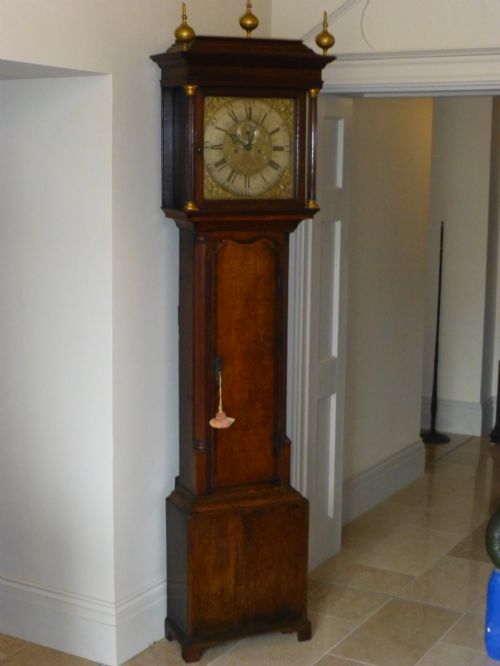
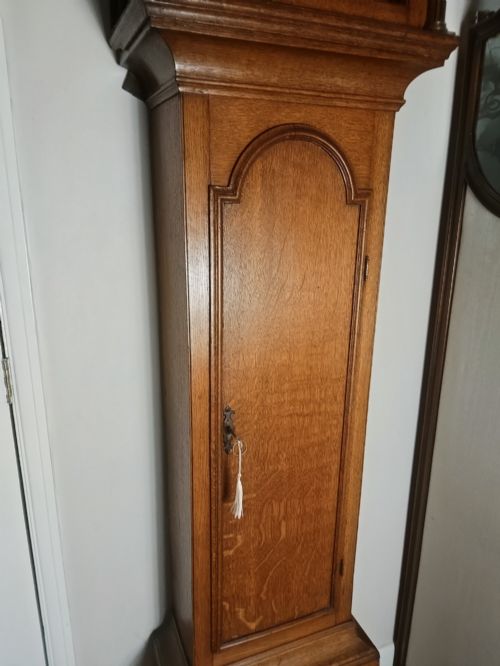
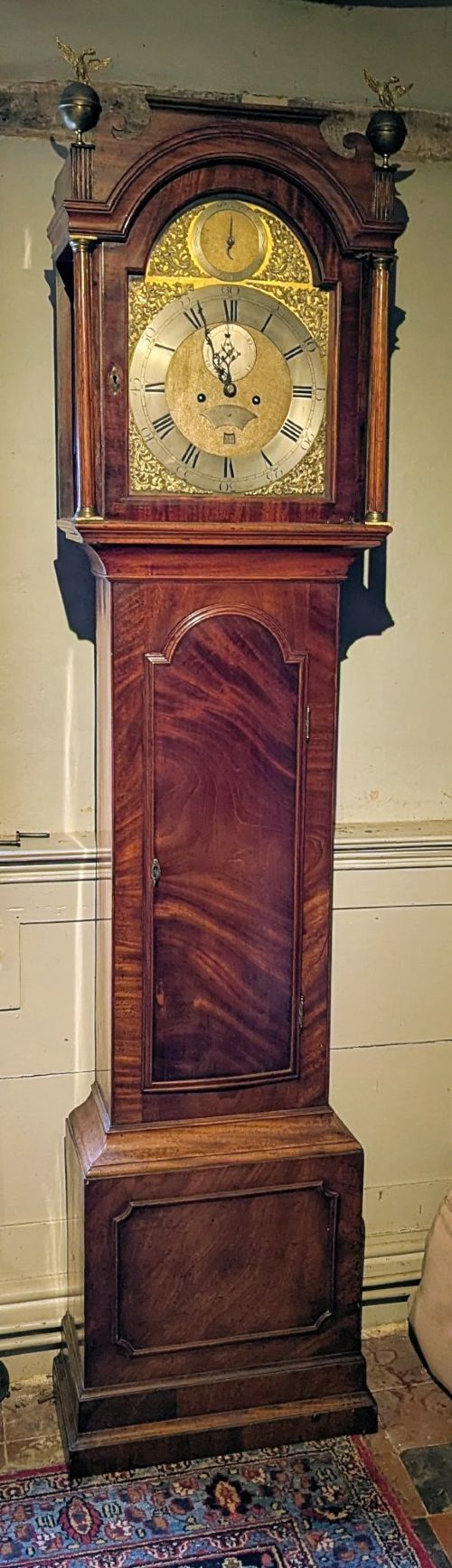
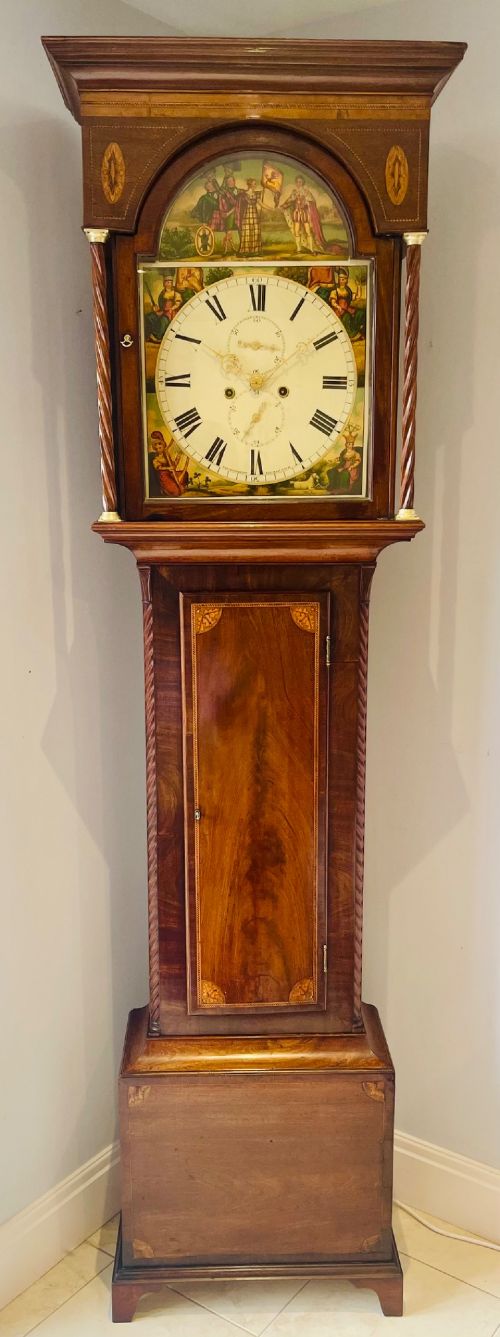
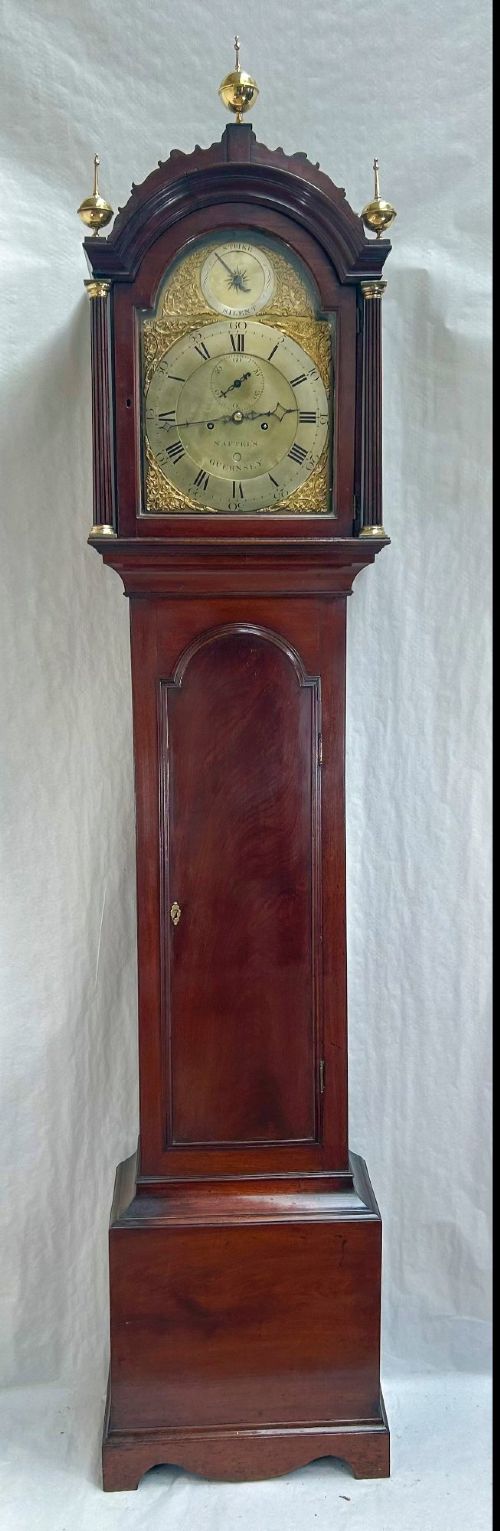
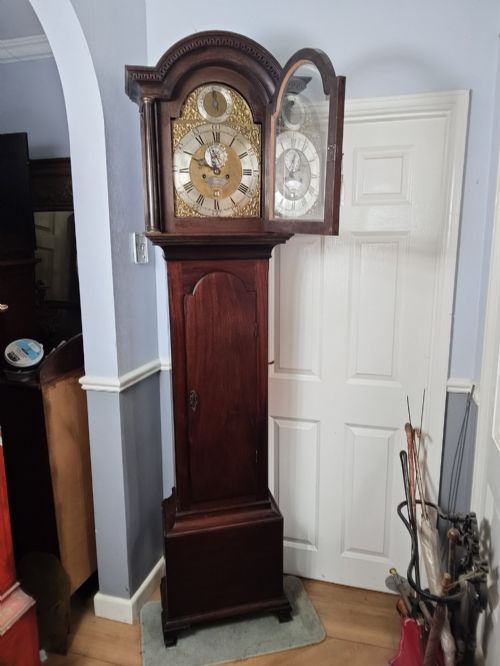
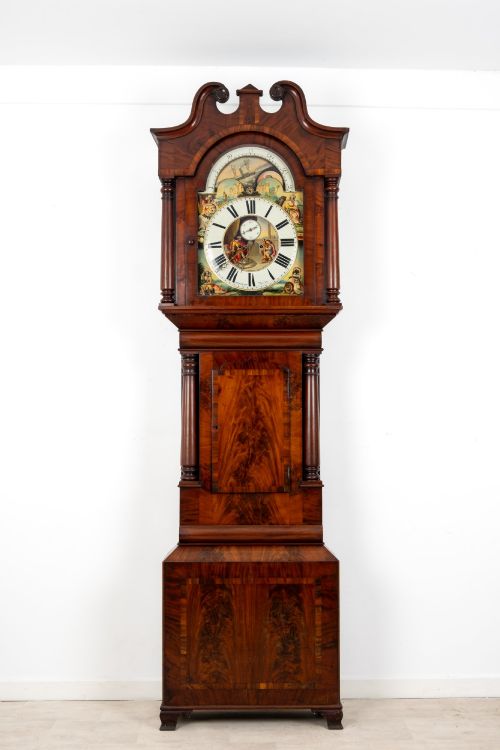
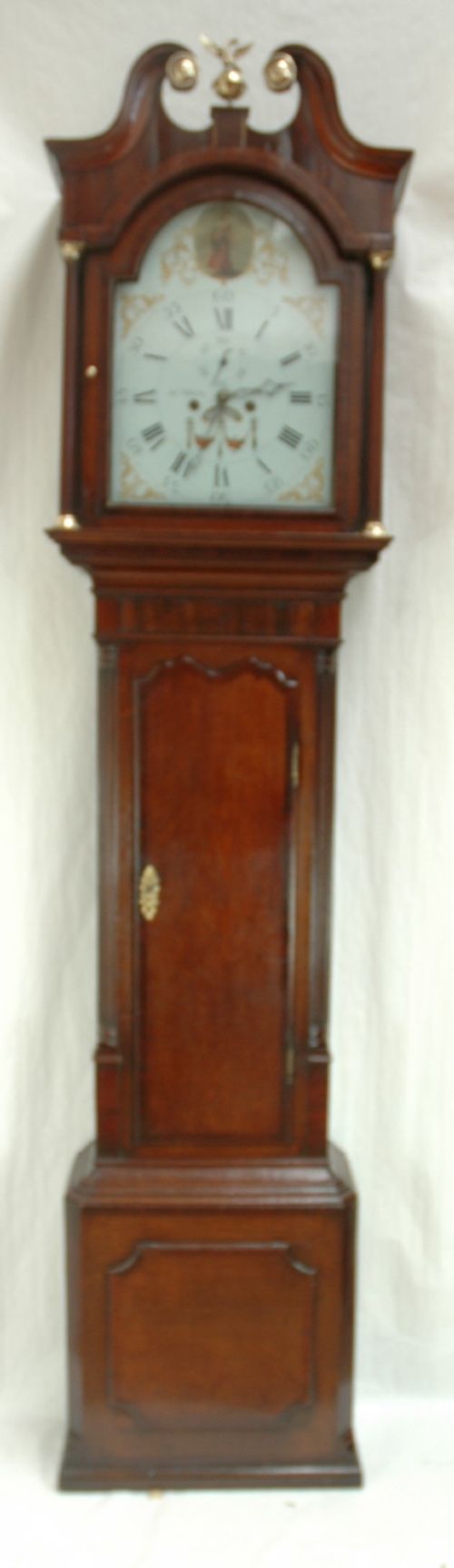
Tallcase Pendulum Clock
A tallcase pendulum clock marks the passing hours inside a tall wooden trunk, bringing mechanical precision and architectural presence to a room.
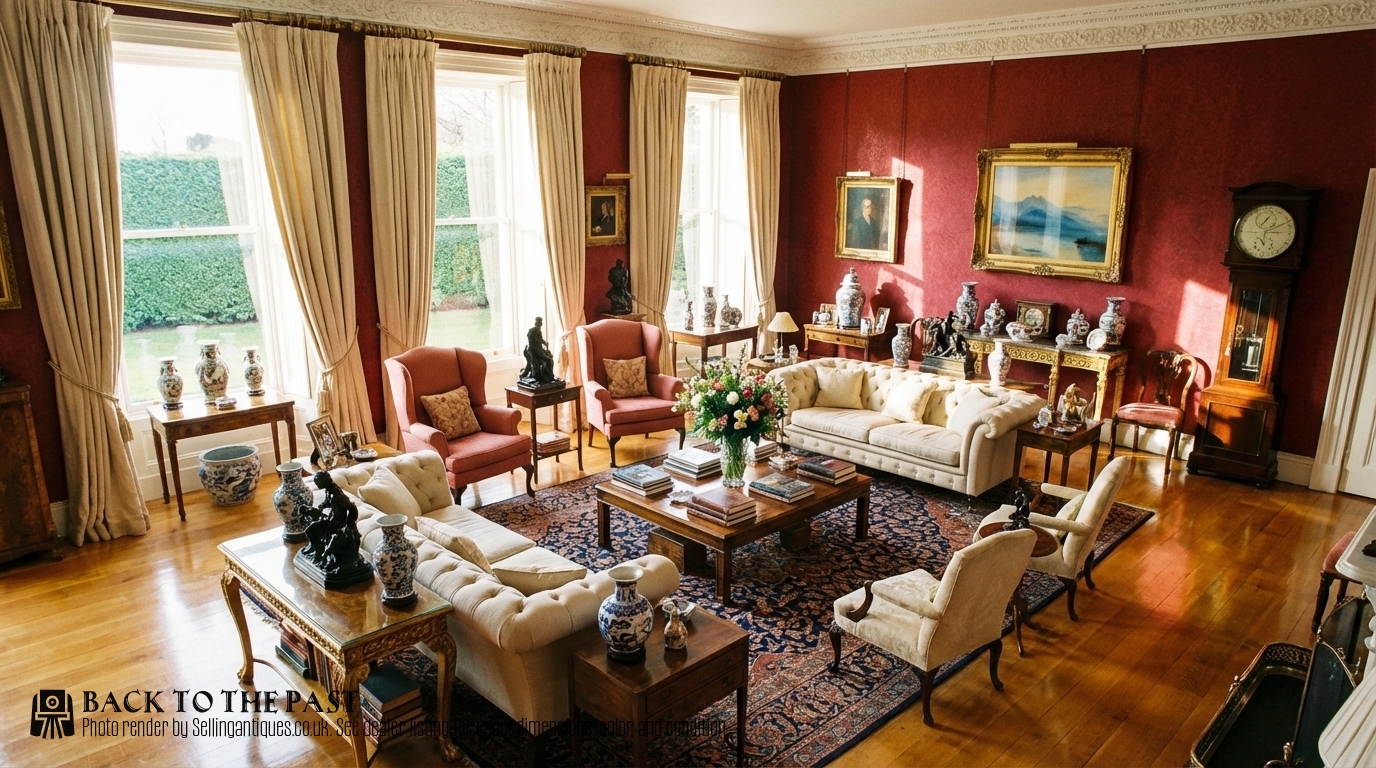
Tallcase Pendulum Clock
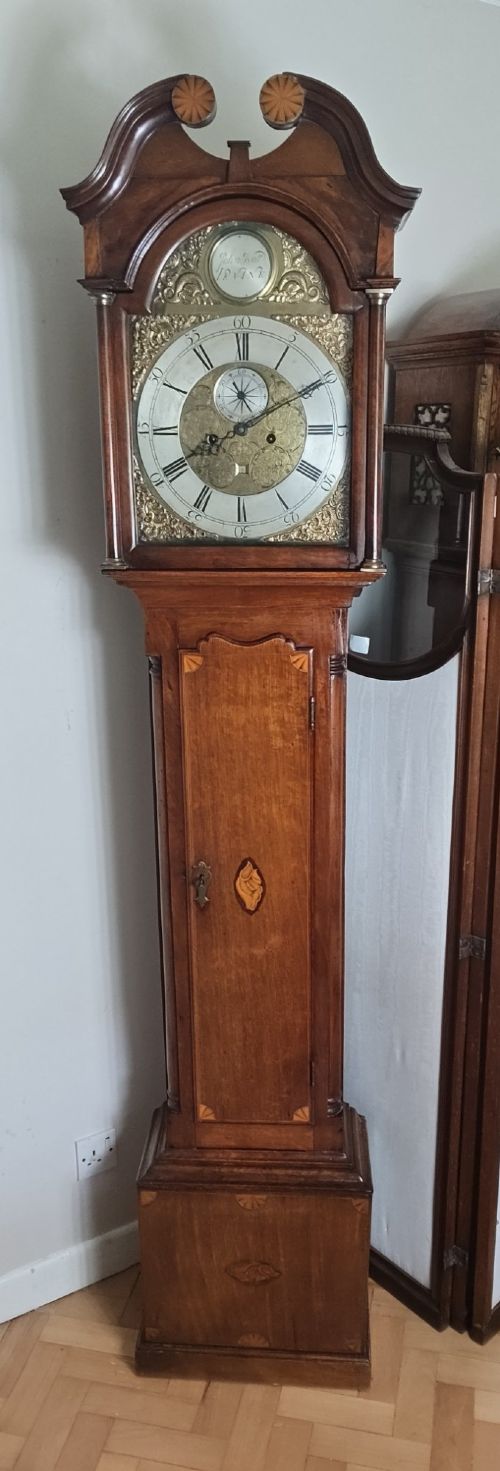
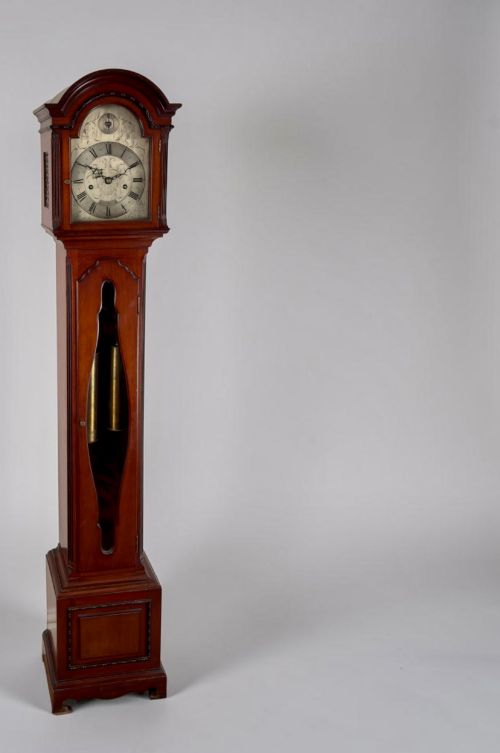
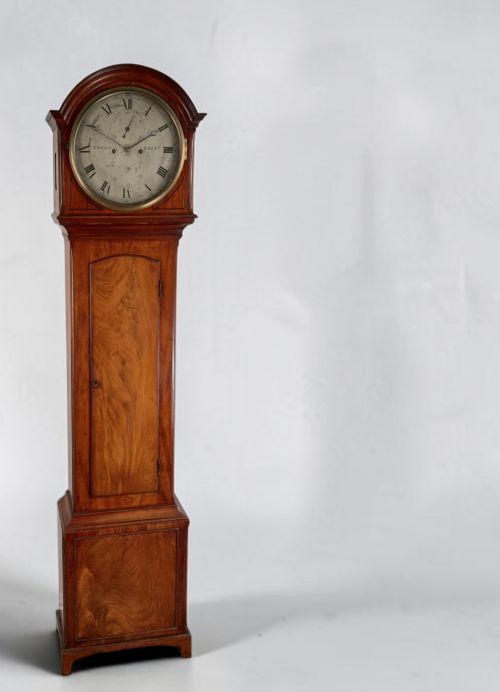
A tallcase pendulum clock, often known as a grandfather, grandmother, or longcase clock, stands upright to house a weight-driven movement and swinging pendulum. These pieces appear in forms ranging from full-sized floor-standing clocks to smaller grandmother and granddaughter variations.
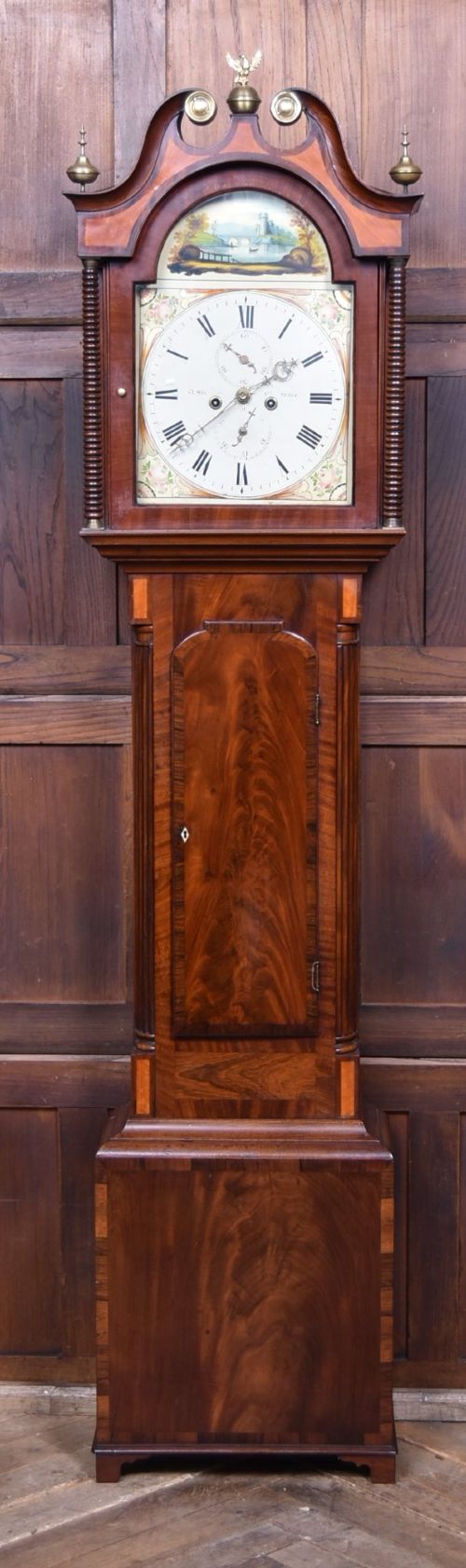
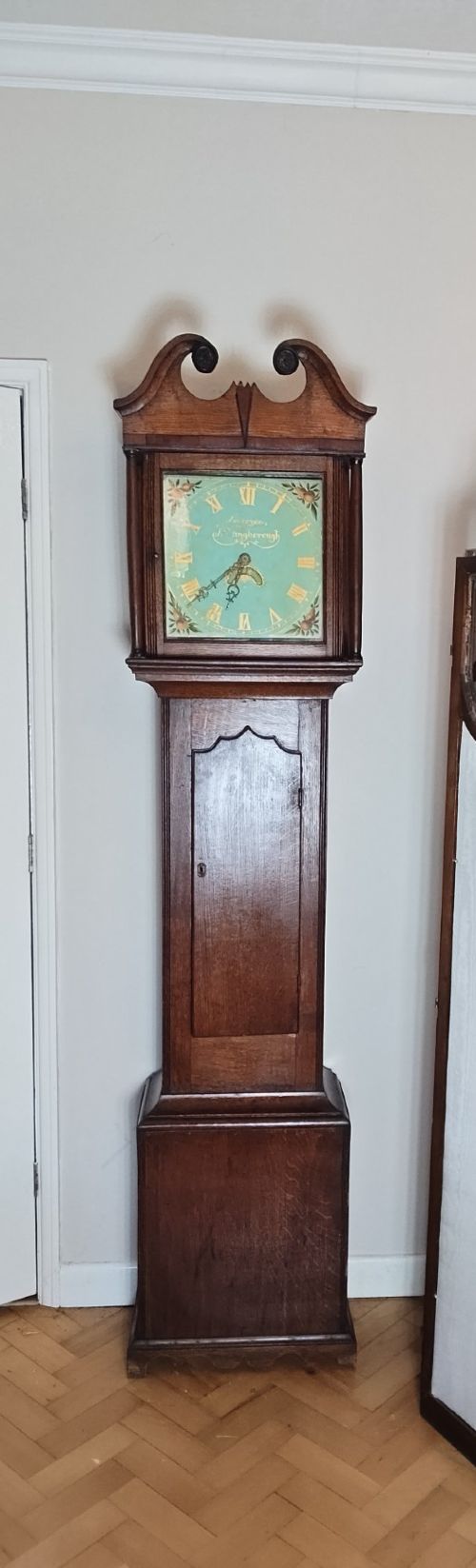
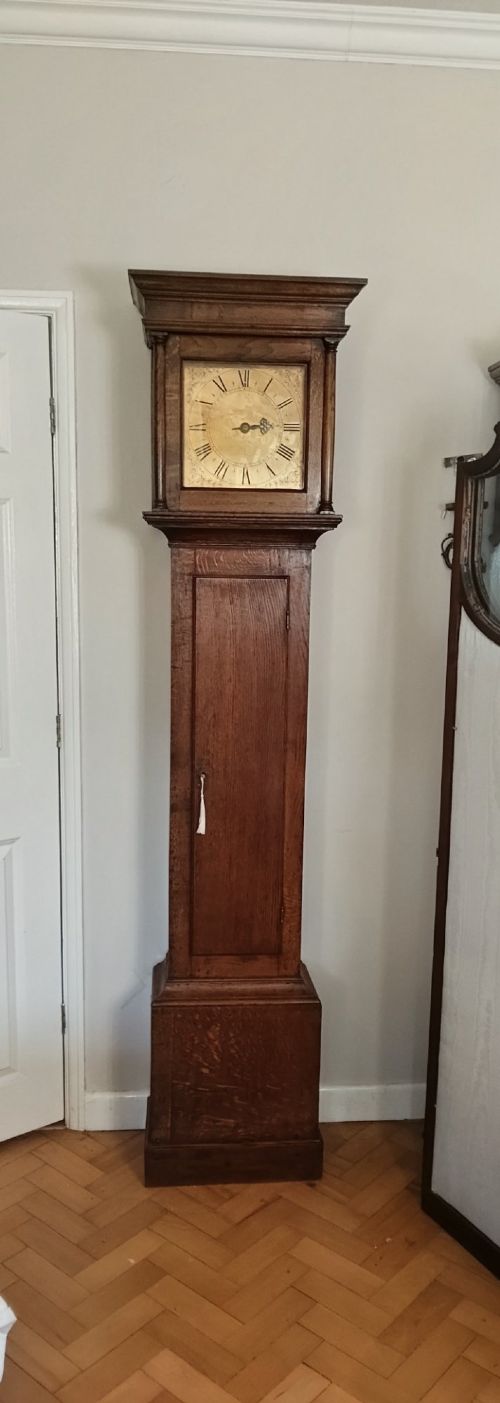
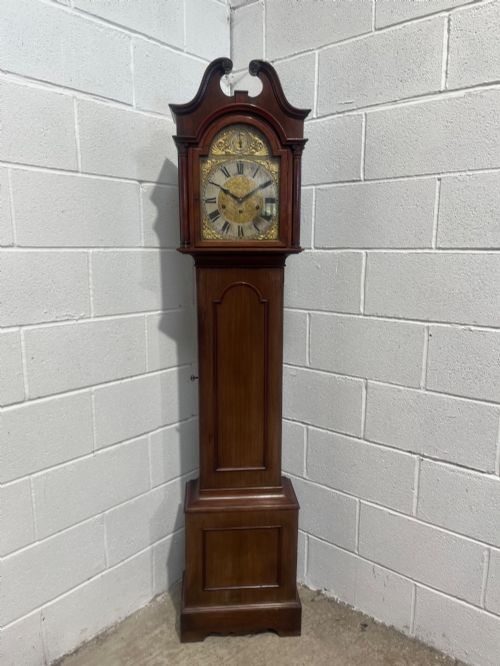
The selections span Georgian, 18th century, Victorian, Edwardian, and 1930 periods, reflecting shifts in domestic scale and cabinetmaking tastes over centuries. Oak and mahogany dominate the architectural cases, occasionally finished with flame veneers, walnut, or lacquer.
Regional British makers from London to Scotland signed these dials, producing robust provincial oak examples alongside sophisticated London mahogany and walnut timepieces. Buyers encounter everything from simple time-and-strike movements to complex examples featuring moon rollers and musical chimes.

Materials and construction
Cabinetmakers built these tall cases primarily using solid and veneered timbers such as oak, mahogany, and walnut, frequently incorporating flame mahogany or burr walnut for decorative grain patterns. Glass panels protect the dial face, while brass and painted iron form the clock faces themselves.
Movements combine brass gears, steel arbors, and lead or iron driving weights suspended by cords or chains. Provincial and metropolitan workshops housed these intricate mechanical gear trains inside tall wooden trunks designed to stabilize the long pendulum.
Some provincial dials include painted horses that trot across the face as the mechanism ticks.
Assessing craftsmanship
Regional variations show distinct character, but the separation between ordinary and exceptional work lies in the crispness of brass casting, the depth of dial painting, and the precision of the joinery in the trunk.
Gillett and Johnston of Croydon·Green of Edinburgh·D. Straiton, Montrose·Smith of Chester·Parkinson Bros, Batley·Benjamin Taylor·Windmills and Wightman, London·D Williams of Crickhowell·George Hallifax Of Doncaster·Edward Shepley of Manchester·Henry Weedon London
The Tallcase Pendulum Clock Glossary
- Grandfather clock
- A tall floor-standing pendulum clock, typically exceeding six feet in height and housing an eight-day or thirty-hour movement.
- Grandmother clock
- A smaller, more slender version of the longcase clock, usually produced during the Edwardian period or the 1930s.
- Moon roller
- A rotating disc behind the dial that tracks the phases of the lunar cycle over a lunar month.
- Strike-silent
- A mechanical lever that allows the owner to silence the hour-striking train without stopping the clock's timekeeping.
Tallcase Pendulum Clock: Frequently Asked Questions
What is a tallcase pendulum clock?
A tallcase pendulum clock is a weight-driven timepiece housed inside a tall wooden cabinet that protects the movement and suspends the pendulum.
These pieces combine furniture making with horology, serving as both timekeepers and architectural focal points in a home.
How do I wind an 8 day clock?
An eight-day clock requires winding every week by pulling up the weights or using a key to wind the springs depending on the specific movement.
Careful handling ensures the internal brass gears and escapement remain aligned during the winding process.
Where should I place a longcase clock?
Place the clock against a sturdy interior wall away from direct sunlight, drafts, and heavy vibrations that might disrupt the pendulum.
Ensuring the floor is level helps the pendulum swing evenly and keeps the clock ticking accurately.
How can I tell the period of a clock?
The period is identified through a combination of case wood, dial style, regional cabinetmaking techniques, and the maker's signature.
Earlier Georgian pieces often feature square brass dials and oak or walnut cases, while later Victorian and Edwardian examples utilise mahogany and different dial treatments.