


Antique Timber Clock
An antique timber clock brings the warmth of carved linden wood, rich mahogany and figured walnut into a room.
Antique Timber Clock
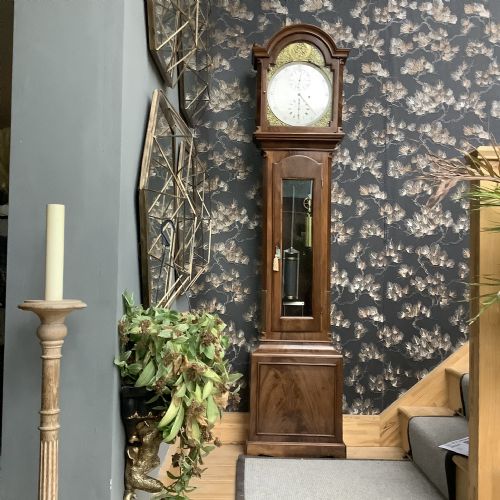
An antique timber clock encompasses wall regulators, mantel pieces, and tall longcase timepieces housed in wooden cases. These objects span periods from the Georgian era through the Victorian age up to the 1920s, reflecting changing domestic tastes in timekeeping.
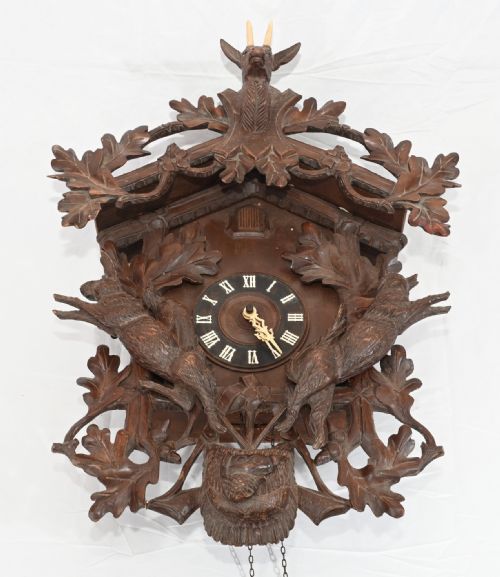
The version most commonly met on this page is the nineteenth century Black Forest carved wood clock, alongside English dial and bracket clocks. Walnut and mahogany feature frequently in the regional British pieces, while linden wood dominates the Swiss and German carved examples.
Buyers choose an antique timber clock both for its mechanical movement and for the sculptural presence of the wooden case. Whether wall-mounted or resting on a bracket, each clock serves as a functional centrepiece driven by weights or springs.
Materials and construction
Cabinetmakers utilised solid timbers such as oak, mahogany and walnut for the structural cases, often selecting figured veneers to display decorative grain patterns. Carved wood works, particularly in Black Forest pieces, relied on linden wood shaped with hand gouges.
Movements incorporate brass gears and wheels, sometimes paired with copper elements and glass protective doors or bezels. Fusee movements and anchor escapements regulate the power delivered from the driving weights or mainsprings.
Distinctions in quality
The refinement of the carving separates standard production from superior examples, particularly in Black Forest animal and foliage motifs where depth and undercut detail demonstrate the carver's skill. Movement complexity also determines status, with twin fusee or striking trains commanding greater attention than simple time-only mechanisms.
Proportion and timber selection dictate the overall visual success of a clock case, from the crisp inlay on Edwardian mahogany mantel pieces to the stately architectural presence of eighteenth century oak longcase enclosures.
Bergen & Co·Connell of London·John Wylde·Beha
The Antique Timber Clock Glossary
- Fusee
- A conical pulley used in better quality clocks to maintain an even pull on the movement as the mainspring unwinds. This mechanism ensures more accurate timekeeping throughout the duration of the wind.
- Longcase clock
- A tall pendulum clock enclosed in a wooden case that rests on the floor, commonly referred to as a grandfather clock. These housing structures protect the weighted movement and pendulum swing.
- Bracket clock
- A portable table or mantel clock designed to sit on a matching wall bracket or shelf. Originally built with handles for transport between rooms.
- Aneroid barometer
- An instrument for measuring atmospheric pressure without liquid, frequently housed in carved wooden barometer cases matching contemporary clock styles. The dial registers weather changes through the expansion of a sealed metal box.
- Dial clock
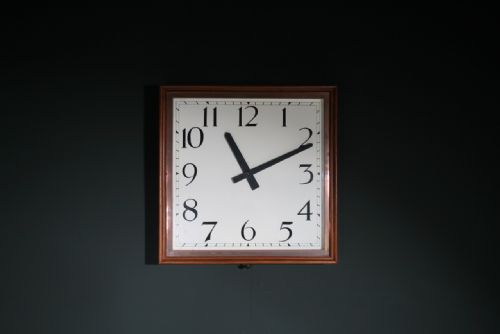
- A wall clock featuring a prominent circular face, often with a fusee movement enclosed in a circular wooden surround. These functional timepieces hung in offices, stations and domestic halls.
Antique Timber Clock: Frequently Asked Questions
What is a fusee clock movement?
A fusee movement uses a conical drum to equalise the declining power of the mainspring as it unwinds.
This clever mechanical addition helps the clock maintain consistent accuracy over the full running period between winds.
How do I wind a mechanical timber clock?
Winding requires inserting the appropriate key into the dial winding holes and turning gently until resistance is felt.
Care must be taken not to overwind the spring, which can damage the internal mechanism.
Where should I place a wall clock?
Wall clocks need a secure fixing point directly into wall studs or solid masonry to support their weight.
Positioning them away from direct sunlight and damp areas protects the wooden case and movement.
How do I identify a Black Forest clock?
Black Forest clocks are distinguished by their richly carved wooden cases featuring leaves, animals or human figures.
Originating from the mountain region in Germany, these pieces often incorporate cuckoo calls and intricate wooden movement plates.