



Red Chinoiserie Table
A red chinoiserie table brings vibrant lacquer and intricate hand-painted motifs into a room, offering both practical surface space and a distinct decorative focus.
Red Chinoiserie Table
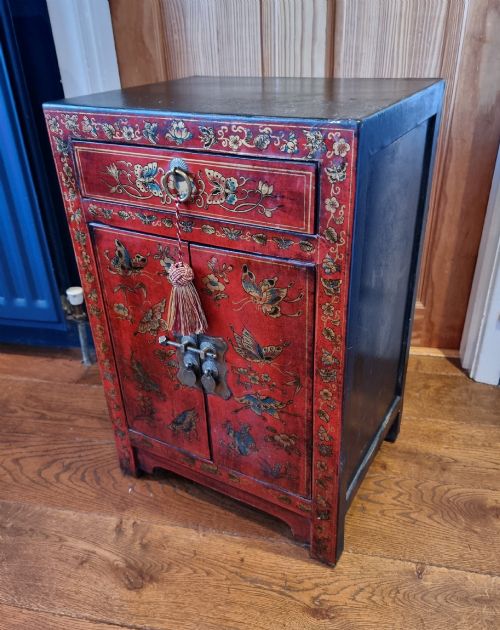
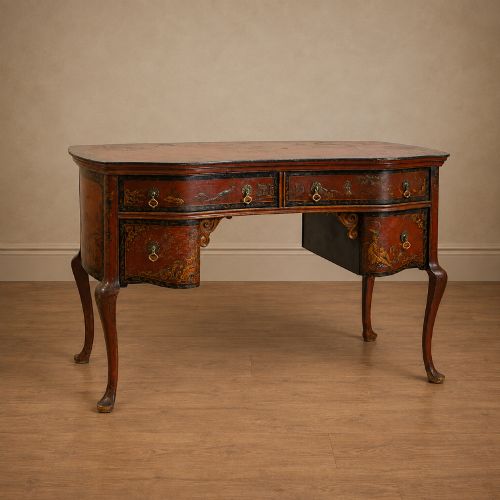
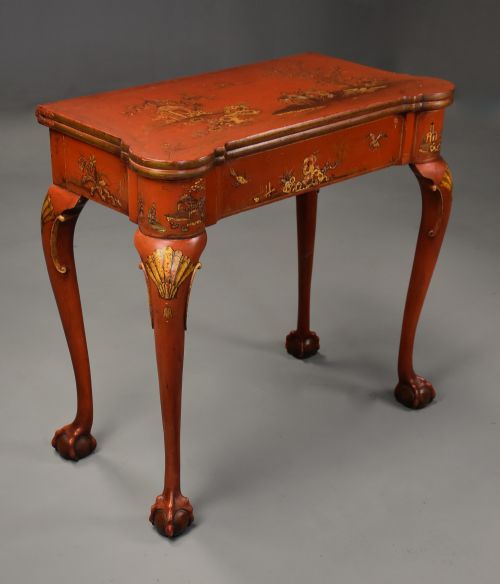
A red chinoiserie table encompasses forms such as side tables, nests of tables, dressing tables, and occasional tables finished with lacquer, paint, or gilt ornamentation. These pieces draw on styles ranging from the Regency period through to the early 20th century, reflecting European interpretations of Asian design.
The versions most commonly met on this page span the 19th and early 20th centuries, including compact coffee tables, occasional stands, and games tables. Makers often utilised traditional wood structures as a base for layered lacquer work and pictorial scenes depicting figures, landscapes, and floral motifs.
Originating from a long tradition of decorative furniture, these items serve as focal points in modern interiors. Buyers encounter both English and French interpretations, alongside occasional pieces produced during the Edwardian and Art Deco eras.
How they were made
Makers constructed the foundational frames from hardwoods, bamboo, or papier-mâché, preparing the surface to receive multiple layers of lacquer or paint. This coating provided a smooth ground for subsequent decoration in red, black, or gilt pigments.
Artisans applied hand-painted details, floral motifs, and figurative scenes, frequently incorporating gilt highlights to create depth against the red background. Brass mounts and handles were sometimes added to drawers and corners on larger items such as cabinets and bureau platts desks.
Several pieces preserve original alarm clocks and delicate silk screens, proving past owners took their morning waking very seriously indeed.
What varies in quality
The distinction between tiers of quality rests on the depth of the lacquer work and the execution of the hand-painted details. Finer examples display crisp, deliberate brushwork and layered built-up surfaces rather than flat, modern prints.
Structural integrity also defines the standard of the piece, including the stability of joints in nests of tables and the retention of original brass hardware or gilt highlights. Pieces that preserve their early decorative schemes without extensive repainting hold greater interest for collectors.
James Smith·Charles Tozer·Heals
The Red Chinoiserie Table Glossary
- Lacquer
- A durable resin finish applied in multiple layers to wood or papier-mâché, then polished to a smooth sheen. It provides the characteristic glossy red or black surface seen on Asian and European decorative pieces.
- Gilt
- Gold leaf or powdered gold applied to surfaces to create decorative highlights. On these pieces, it frequently outlines panels or emphasises architectural details.
- Nest of tables
- A set of graduated tables designed to fit neatly beneath one another when not in use. They became particularly popular during the Victorian and Edwardian periods.
- Occasional table
- A small, versatile table intended for specific, minor uses rather than central dining. These often take the form of tripod stands, wine tables, or low coffee tables.
Red Chinoiserie Table: Frequently Asked Questions
Where should I place a red chinoiserie table?
These tables work well as accent pieces in living rooms, hallways, or bedrooms where their vibrant colour can stand out against neutral walls. Their compact forms, such as side tables or nests, allow them to function beside seating or as display surfaces.
Because the lacquered finishes can be sensitive to direct sunlight and extreme temperature changes, placing them away from windows helps preserve the painted details and overall condition.
How do I clean a lacquered table?
Maintenance requires only a soft, dry cloth to remove dust from the surface. Avoid using chemical polishes, abrasive cloths, or excessive water, which can damage the delicate lacquer and gilt layers.
Careful handling ensures the hand-painted motifs and original varnish remain protected over years of daily use.
Are these tables sturdy enough for daily use?
Most occasional tables, nests, and side tables are built from hardwoods and solid construction methods designed to support everyday items like lamps and books. However, delicate surfaces require coasters and placemats to prevent scratches to the lacquer.
Heavier pieces like games tables and cabinets offer more substantial frames suited to regular interaction.
How can I tell the period of a chinoiserie table?
Dating relies on examining the timber construction, the characteristics of the lacquer, and the style of the painted decoration. 19th-century and Regency examples often feature hand-carved wood frames and traditional joinery, while early 20th-century pieces may show different internal woods and varying degrees of wear.
Comparing the motifs to known decorative arts of the Georgian, Victorian, and Edwardian eras provides further context for a piece's origin.