




Edwardian Bamboo Table
An edwardian bamboo table brings a light, exotic touch to an interior, combining natural cane frames with lacquered panels or oriental motifs.
Edwardian Bamboo Table
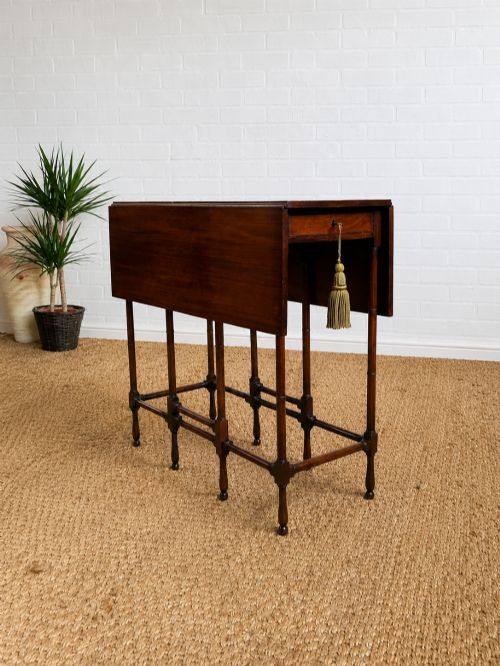
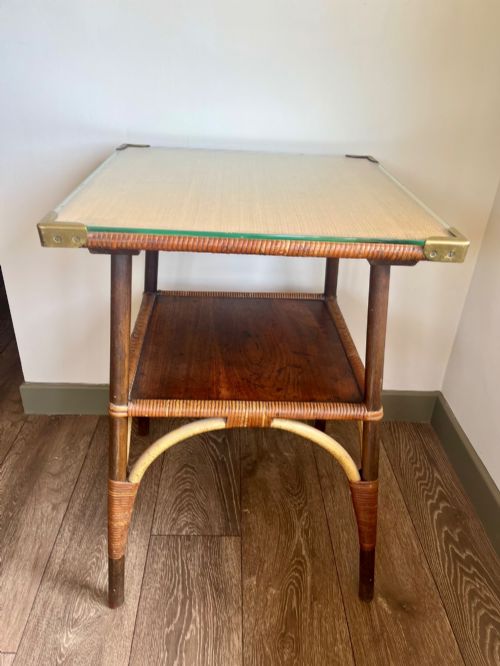
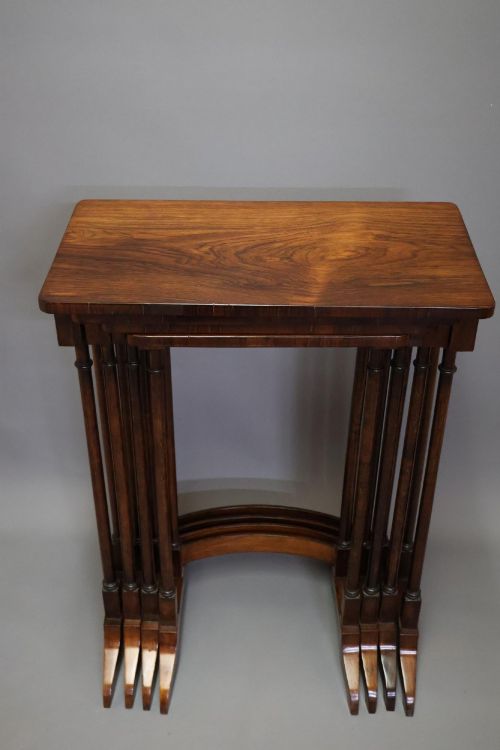
When searching for an edwardian bamboo table, buyers encounter a variety of lightweight occasional furniture designed for drawing rooms and parlours. The selection spans distinct forms, including two-tier side tables, nests of tables, and display pieces featuring intricate cane structures.
The practical nature of these pieces makes them versatile additions to modern interiors, serving as compact lamp tables or bedside stands. Buyers will find both natural cane frames and painted or polished timber alternatives that mimic the distinctive segmented look of bamboo.
Materials and Construction
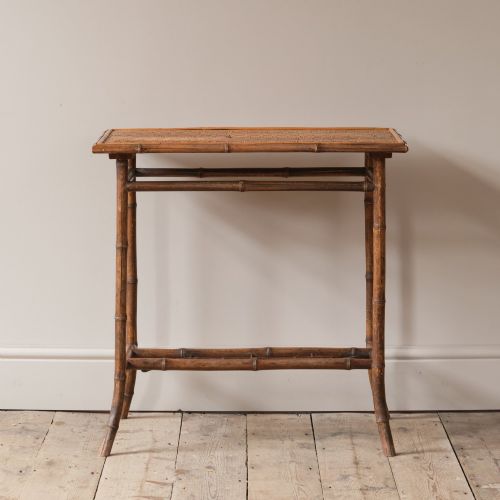
Construction relies heavily on natural bamboo canes joined with internal wooden dowels and secured through binding with split cane or cord. Artisans bent and shaped the lightweight material to form stable frames for side tables, nests, and multi-tiered stands.
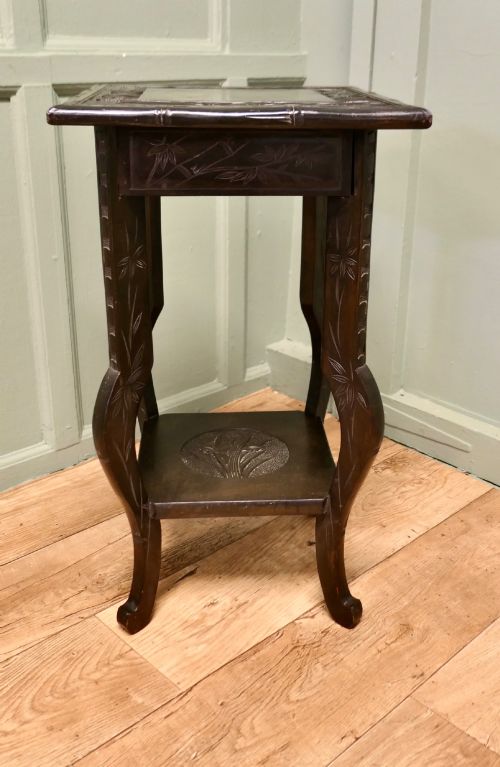
Surface decoration frequently involves Japanese-inspired lacquer work, depicting landscapes and floral motifs on panels inset into the table tops. Alternatively, turned hardwoods serve to create simulated bamboo furniture, painted or finished to replicate the natural joints and texture of actual cane.
Edwardian Bamboo Table Retail Price Guide 2026
Typical asking prices for edwardian bamboo table among the pieces listed under this phrase on Sellingantiques today, from the lower quarter to the upper quarter. They describe what is for sale here now, not the wider market.
Some tables hid four miniature companions inside, proving that Victorians loved clever space-saving tricks as much as we do.
Evaluating Quality and Craftsmanship
Quality in these tables rests on the rigidity of the frame and the tightness of the cane bindings, which should remain secure without excessive movement. Superior examples exhibit precise joinery where the curved sections meet, ensuring the lightweight structure holds firm over decades of use.
The finish of the inlaid panels and lacquered surfaces also distinguishes finer pieces, showing detailed hand-painted or gilt decoration rather than plain surfaces. Similarly, simulated bamboo made from solid mahogany or rosewood demonstrates higher levels of cabinet-making skill than standard softwood alternatives.
Dryad Leicester·Liberty of London
The Edwardian Bamboo Table Glossary
- Bamboo
- A fast-growing woody grass utilised for its lightweight yet sturdy properties in frame construction. It forms the primary structural material for much of the inventory.
- Simulated bamboo
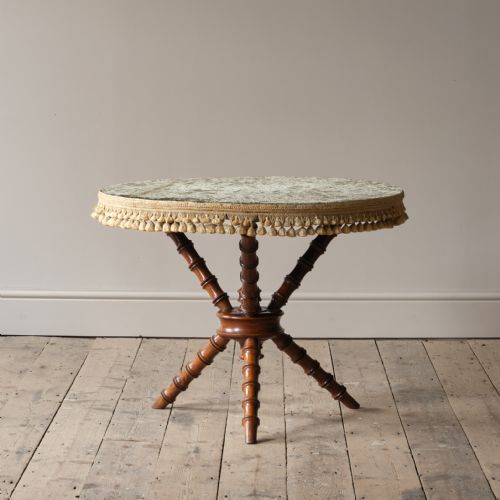
- Wood turned and painted to mimic the segmented appearance of natural cane. This technique appears on various side tables and occasional furniture.
- Quartetto of tables
- A nested set of four tables designed to slide neatly beneath one another. They provide versatile surface space while occupying a minimal footprint.
- Lacquered panel
- A decorative wooden insert finished with multiple layers of resin-based coating, often featuring oriental designs. These panels frequently form the tops of two-tier side tables.
- Bijouterie table
- A glass-topped display table intended for showcasing small ornaments and curiosities. They combine bamboo or timber framing with glazed compartments.
Edwardian Bamboo Table: Frequently Asked Questions
How do I clean a bamboo table?
Dust the cane structure regularly with a soft brush to prevent dirt accumulation in the joints. Avoid harsh chemical cleaners that can dry out the natural material.
For lacquered panels, use a slightly damp cloth followed by a dry cloth. Keep the furniture away from direct heat sources to prevent the cane from splitting.
Are these tables sturdy enough for daily use?
While lightweight by design, well-constructed pieces easily support daily items like lamps and books. The cross-bracing and multi-tier designs add significant stability to the frame.
Avoid placing excessive heavy weight on older cane joints. Placing them on even flooring prevents unnecessary twisting of the frame.
What is simulated bamboo?
Simulated bamboo is solid wood, such as mahogany, turned on a lathe to replicate the rings and nodes of natural cane. Craftsmen painted or finished these timbers to look like real bamboo.
This technique offered greater structural strength for specific table designs while retaining the popular exotic aesthetic. It appears frequently in late nineteenth-century and Edwardian furniture.
How do I date a bamboo table?
Dating relies on construction methods, materials, and stylistic cues such as Aesthetic Movement influences or Chinoiserie decoration. Victorian and Edwardian examples often feature specific joinery styles and distinct lacquer techniques.
Comparing the hardware, fasteners, and secondary timbers helps narrow down the decade of production. Archive records and maker marks, when present, provide further chronological context.