

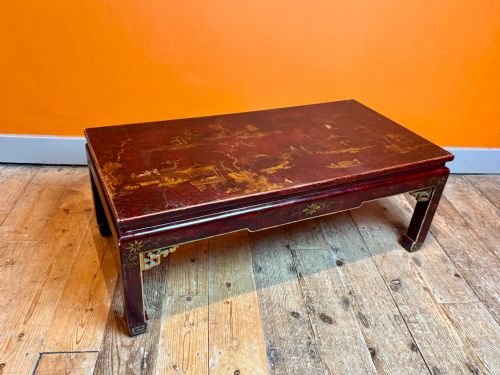
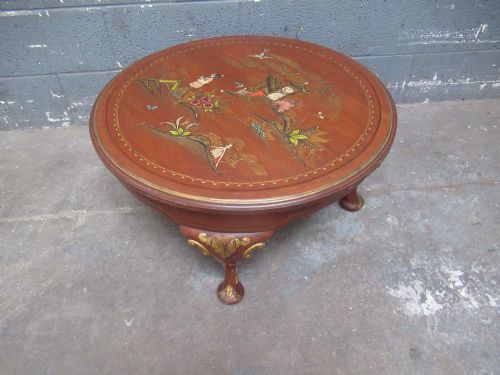


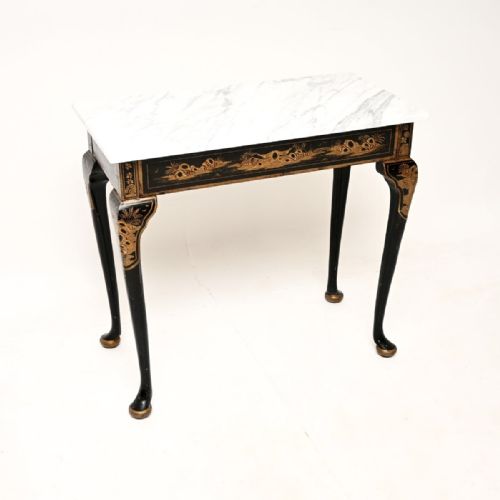
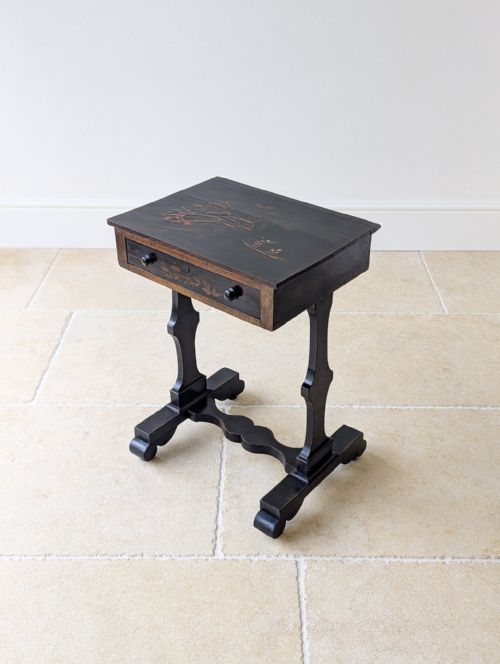
Gilt Chinoiserie Table
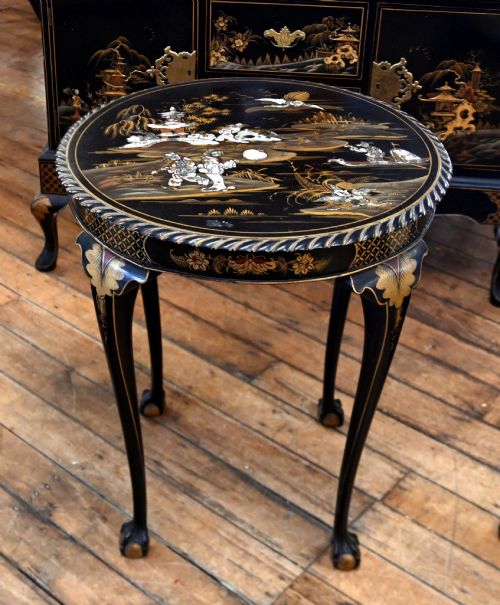
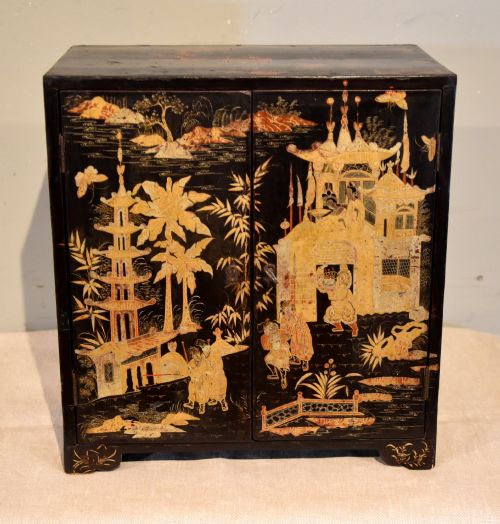
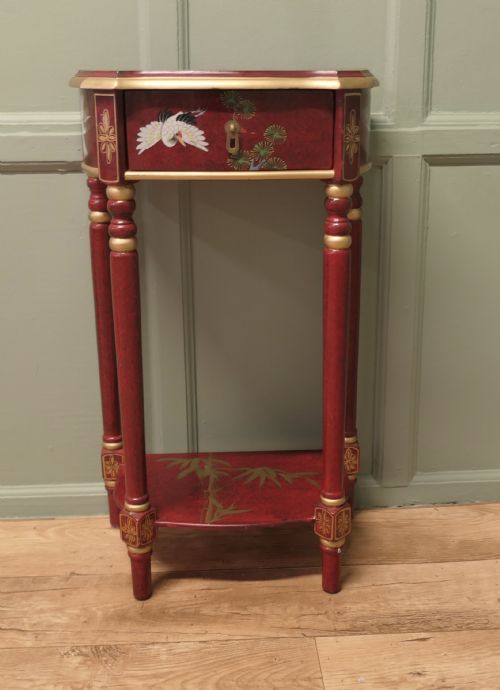
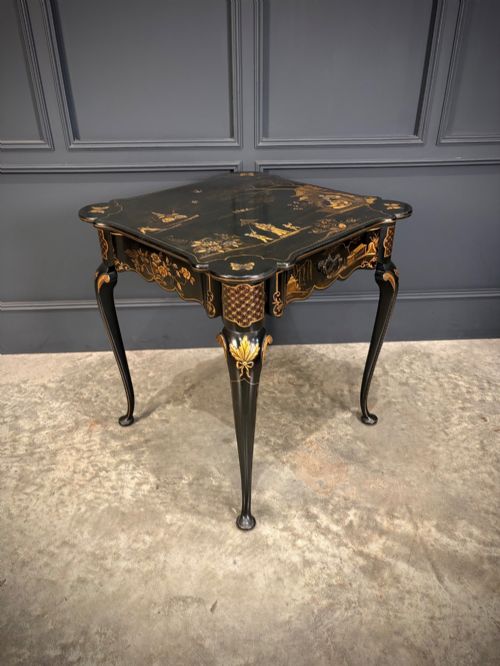
When you search for a gilt chinoiserie table, you are looking at lacquered and gilded surfaces decorated with decorative motifs derived from East Asian art.
Gilt Chinoiserie Table
A gilt chinoiserie table brings together decorative lacquerwork and gilded ornamentation across a range of domestic forms, including side tables, coffee tables, work tables, and nests of tables. These pieces span periods from the late eighteenth century through the Victorian, Edwardian, and mid-twentieth-century eras, reflecting enduring interest in European interpretations of Asian design.
The forms vary from utilitarian serving trays mounted on stands to elaborate writing desks, occasional tables, and console tables. Many examples combine black or ebonised lacquer with gilt highlights, while others incorporate French or Regency styling through painted decoration or structural mounts.
How they were made
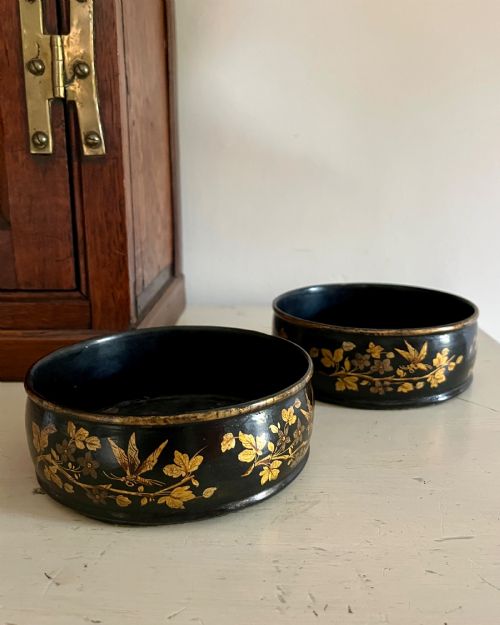
Construction relies upon wood, papier-mâché, or lacquered wood substrates built into foundational forms such as tray tables, chests, and occasional tables. Artisans applied layers of lacquer to the wooden or paper-mâché body before hand-painting and applying gold leaf or gilt decoration in distinct figurative and landscape motifs.
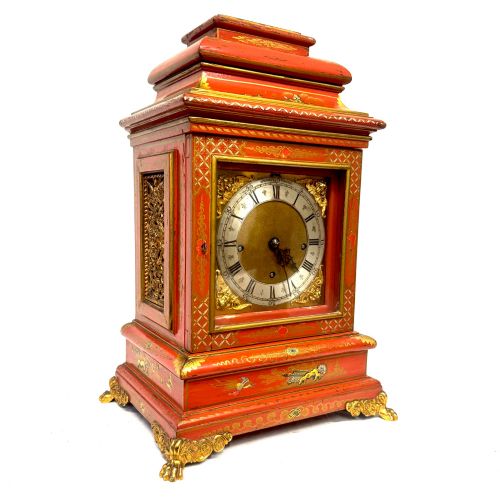
Hardware and structural framing often incorporate brass, ormolu, or gilt-bronze mounts, particularly on pieces produced in the nineteenth and early twentieth centuries. Certain items utilise ebonisation techniques to darken timber foundations in imitation of oriental lacquer.
Gilt Chinoiserie Table Retail Price Guide 2026
Typical asking prices for gilt chinoiserie table among the pieces listed under this phrase on Sellingantiques today, from the lower quarter to the upper quarter. They describe what is for sale here now, not the wider market.
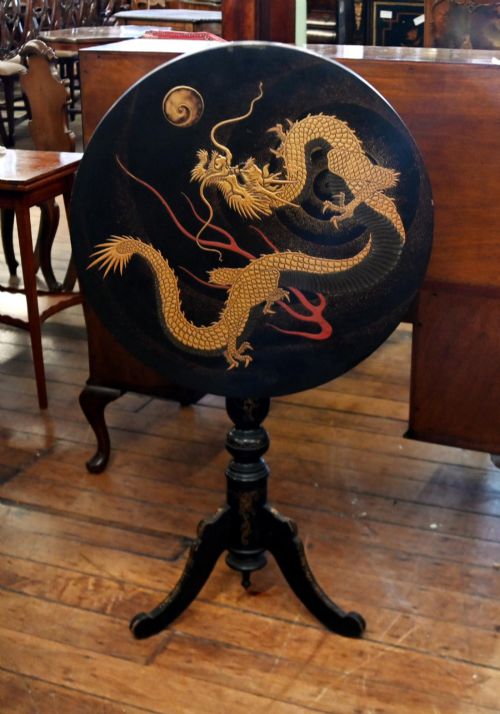
Several tables started life as tea trays before finding new careers resting permanently on folding stands.
What varies in quality
The refinement of the hand-painted gold leaf and lacquer decoration determines the visual depth of the surface, distinguishing delicate, intricate figurative scenes from simpler painted applications. The integrity of the underlying wood, papier-mâché, or lacquer finish dictates the stability of the piece over time.
Original mounts, such as brass or ormolu fixtures, and the retention of authentic structural components like unaltered tray stands or sewing table interiors separate standard production items from finer craftsmanship.
Elliott London·Maison Bagues·Hicks and Meigh
The Gilt Chinoiserie Table Glossary
- Chinoiserie
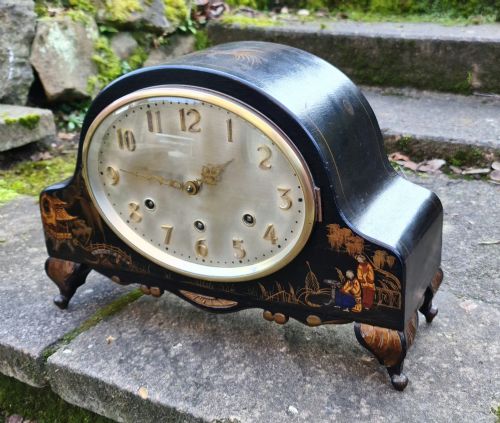
- European decorative style reflecting imaginative interpretations of Chinese and East Asian artistic traditions. It appears frequently on furniture and clocks from the eighteenth through the twentieth centuries.
- Lacquer
- A durable resin finish applied in multiple layers to wooden or papier-mâché surfaces. It provides a smooth base for subsequent gilding and painted ornamentation.
- Gilt
- Covered thinly with gold leaf or gold paint. This technique accentuates raised details and pictorial scenes on dark lacquered backgrounds.
- Papier-mâché
- A composite material made from paper pulp or layers of paper bound with adhesive, moulded, and dried. It serves as a lightweight foundation for trays and small tables.
- Ormolu
- Gilded bronze used for decorative mounts and feet on furniture and clocks. It was particularly common in French-influenced design.
Gilt Chinoiserie Table: Frequently Asked Questions
What periods do these tables come from?
The pieces span multiple eras, including Regency, Victorian, Edwardian, and mid-twentieth-century revivals. Each period brought distinct interpretations to the traditional lacquer and gilt techniques.
Craftsmen across these eras utilised wood, papier-mâché, and brass mounts while retaining the characteristic aesthetic of East Asian design motifs.
How were tray tables used historically?
Tray tables typically combined a removable serving tray with a folding or fixed wooden stand. They were utilised for serving tea or drinks in domestic entertaining.
Over time, many of these trays became permanent fixtures on dedicated stands, functioning as decorative occasional or coffee tables in sitting rooms.
How do I care for a lacquered surface?
Lacquered and gilded surfaces require gentle dusting with a soft, dry cloth to prevent abrasion. Avoid placing them in direct sunlight or near heat sources to protect the finish.
Moisture and harsh chemical cleaning products should be kept away from the lacquer and gold leaf to preserve the integrity of the decoration.
How do I distinguish Regency pieces from later revivals?
Regency examples typically date from the early nineteenth century, featuring specific proportions and construction methods aligned with the period's cabinet-making standards. Later Edwardian and twentieth-century revivals often utilise lighter internal framing while copying earlier decorative styles.
Examining the underlying timber, lacquer consistency, and mounting hardware helps clarify the manufacturing era of an individual piece.