



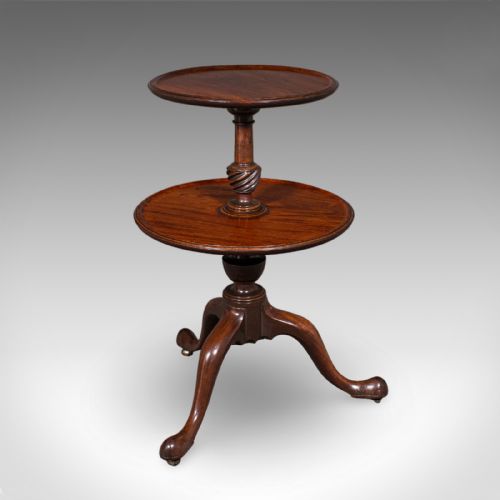
Regency Tray Table
A regency tray table combines a portable serving tray with a folding or fixed stand, offering both flexibility and elegance.
Regency Tray Table
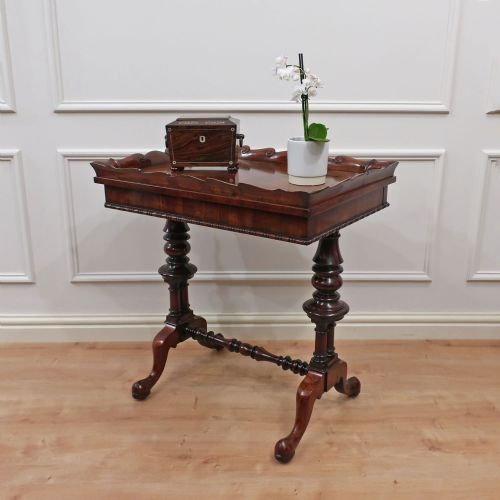
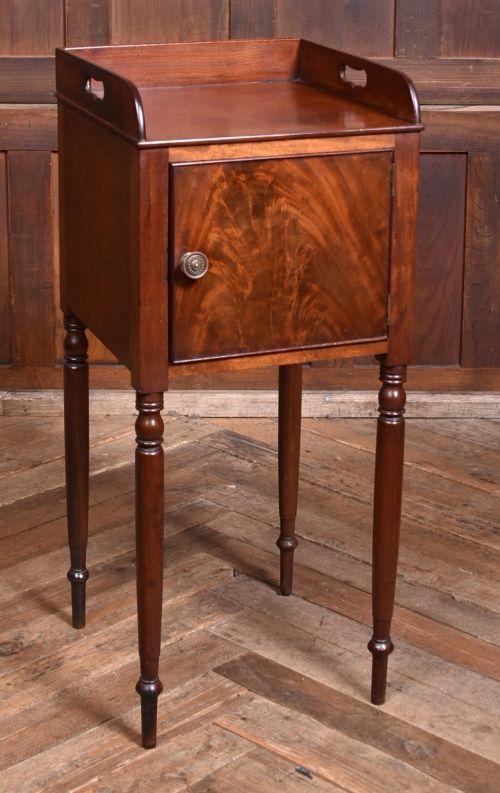
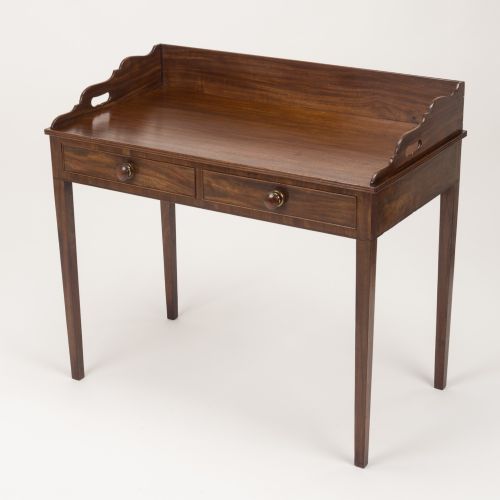
When searching for a regency tray table, you encounter pieces designed around a removable serving tray resting on a dedicated base. These utilitarian yet refined items originate primarily from the Regency, Georgian, and William IV periods, alongside later revival interpretations.
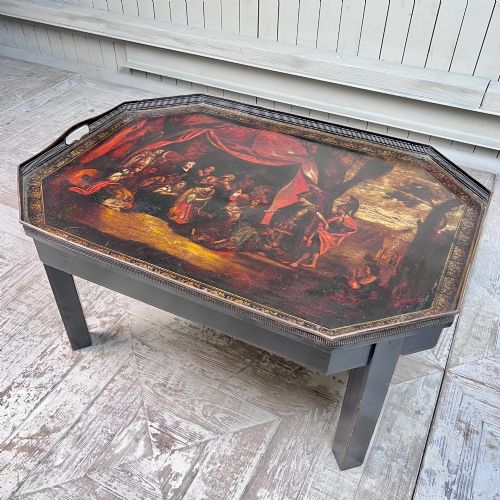
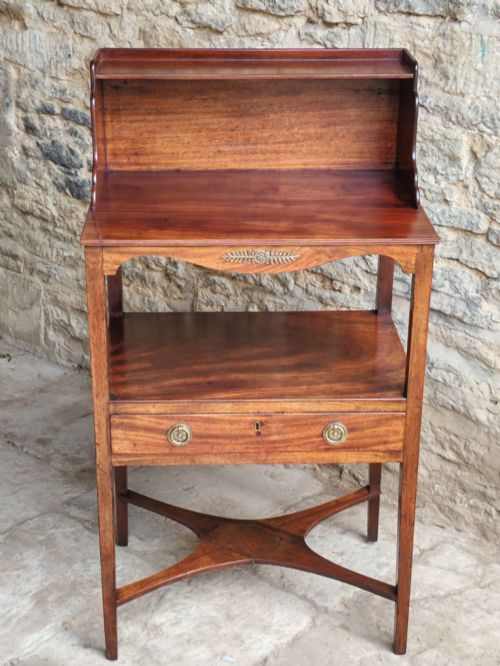
The most common formats on this page pair a mahogany or papier-mâché tray with a folding or stable stand. Many examples function as butler's trays, occasional tables, or chamber writing desks featuring raised edges to secure contents.
Makers and craftsmen of the era adapted serving trays into versatile furniture by pairing them with matching stands. This dual-purpose design allows the top to lift off entirely for serving or repositioning around a room.
Materials and construction
Makers built these pieces predominantly using timber such as mahogany, rosewood, and thuyawood, alongside papier-mâché and painted tole. Solid woods provided structural integrity for stands and tray frames, while specialised surfaces received japanning and gold leaf decoration.
Papier-mâché trays relied on compressed paper layers treated with binders and varnishes to create a smooth, durable surface suitable for lacquer and Chinoiserie artwork. Stands typically utilised tight joinery and folding mechanisms to support the weight of the removable tray.
Regency Tray Table Retail Price Guide 2026
Typical asking prices for regency tray table among the pieces listed under this phrase on Sellingantiques today, from the lower quarter to the upper quarter. They describe what is for sale here now, not the wider market.
Assessing craftsmanship and finish
Quality in a regency tray table rests upon the crispness of the carpentry and the preservation of original decorative surfaces. Finer pieces display meticulous hand-carved details, well-fitted folding stands, and intact lacquer work or gilding rather than later repainting.
The choice of primary wood grain and the articulation of the gallery edges also distinguish standard items from exceptional ones. Superior papier-mâché trays maintain deep, unblemished japanning, while timber versions showcase carefully selected mahogany figures.
Gillows·Jennens And Bettridge·Henry Clay·James Mein Of Kelso·Creswick·Ridgway
The Regency Tray Table Glossary
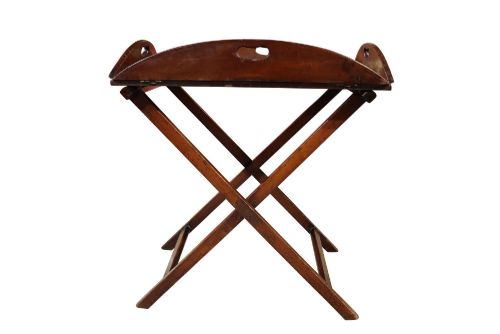
- Butler's tray
- A rectangular serving tray with hinged or fixed raised sides, designed to sit upon a folding X-frame stand.
- Papier-mâché
- A composite material made from paper pulp or layers of paper reinforced with glue, baked and varnished to form a hard surface.
- Japanning
- A European imitation of East Asian lacquerwork, created by applying layers of varnish and heat-curing the finish.
- Gallery
- A raised wooden or metal rim running along the edge of a tray or table top to prevent items from sliding off.
- Toleware
- Enamelled or japanned metalware, frequently decorated with hand-painted scenes or motifs.
Regency Tray Table: Frequently Asked Questions
What is a regency tray table?
A regency tray table is a movable piece of furniture consisting of a detachable serving tray placed upon a collapsible or fixed stand.
These tables were originally used in domestic spaces for serving meals or drinks before being set aside when not needed.
How were tray tables used historically?
Households utilised these versatile items to transport food and beverages from kitchens to reception rooms without needing permanent dining furniture.
The removable top allowed servants to clear away items quickly, leaving the stand folded or stationary.
How do I care for a papier-mâché top?
Papier-mâché surfaces require gentle cleaning with a dry or barely damp cloth, avoiding harsh chemicals that can damage the delicate lacquer.
Keeping these tables away from direct sunlight and excessive moisture preserves the original painted decoration and varnish.
Are all tray tables from the Regency period?
While the style originates from the early nineteenth century, many surviving examples date from later revival periods like the Edwardian era and the nineteen-thirties.
Examining the construction methods, materials, and wear patterns helps determine whether a piece is an original period item or a later interpretation.