




Red and Blue Imari Dishes
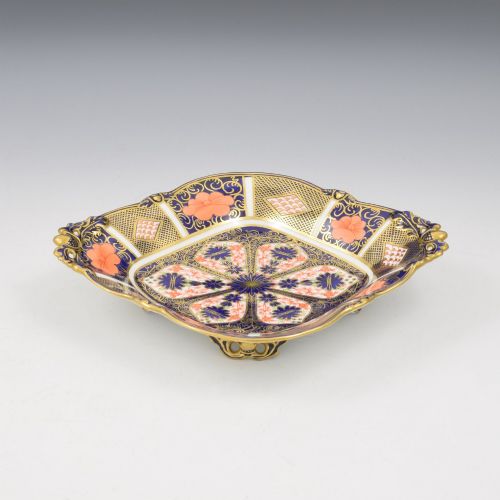
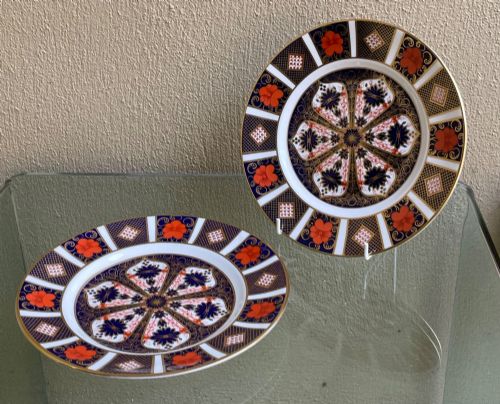
Red and blue imari dishes bring together rich cobalt and iron-red ceramic palettes from Japanese, Chinese, and English kilns.
Red and Blue Imari Dishes
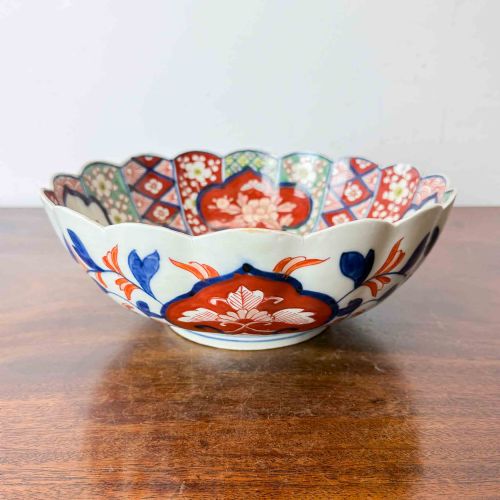
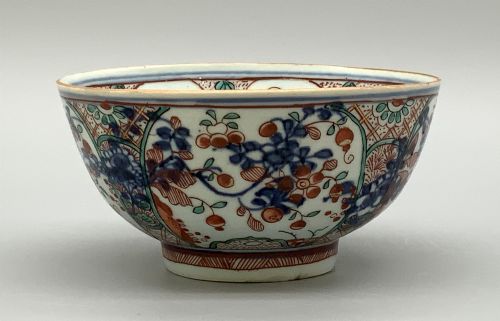
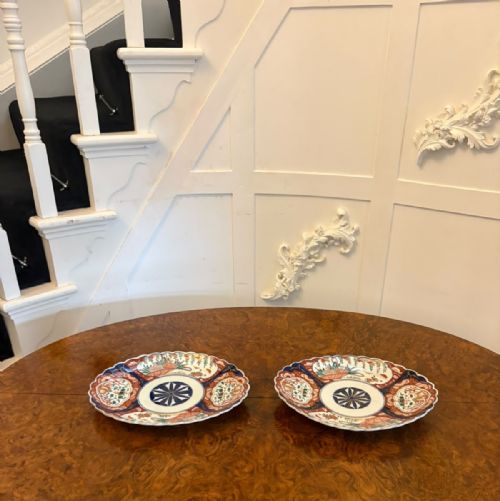
Red and blue imari dishes encompass decorative plates, bowls, chargers, and comports created across the eighteenth, nineteenth, and twentieth centuries. These ceramics trace an artistic exchange between Asian export workshops and European makers who adopted the distinctive aesthetic.
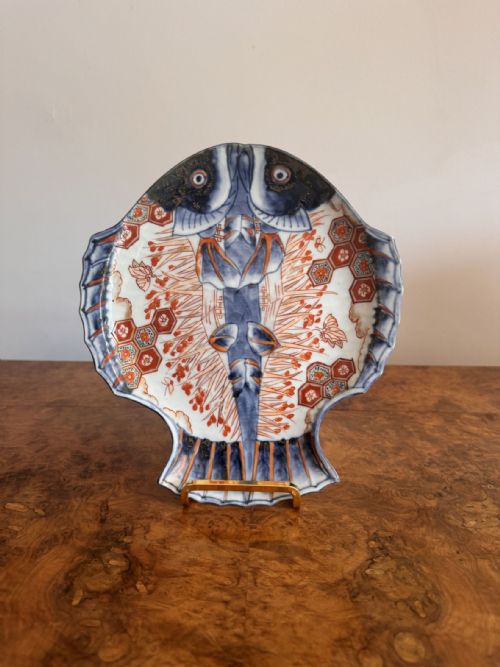
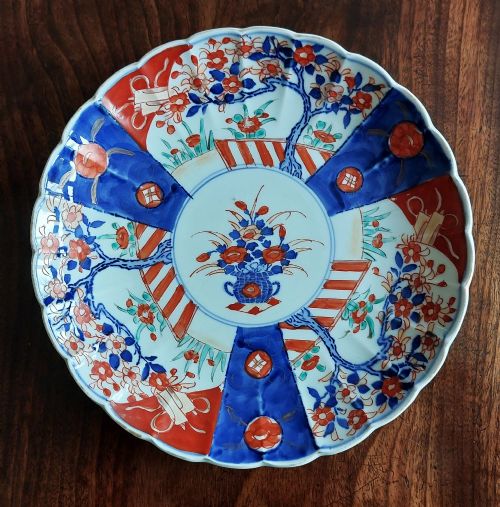
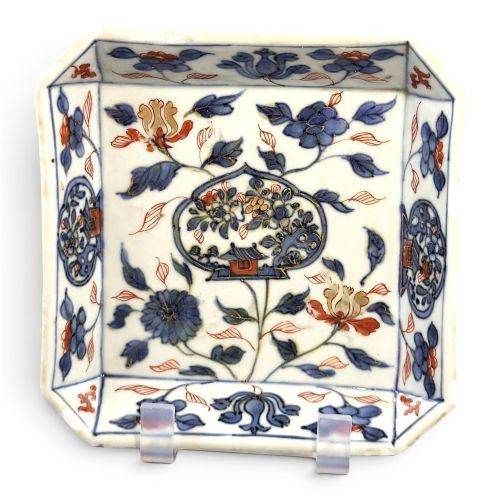
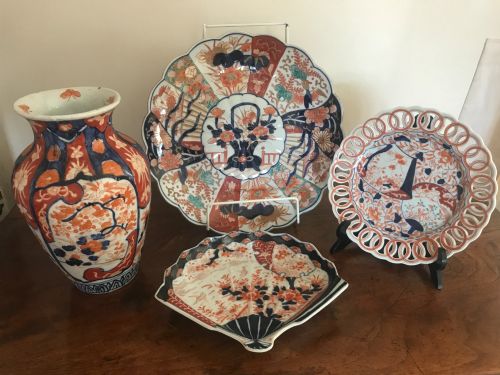
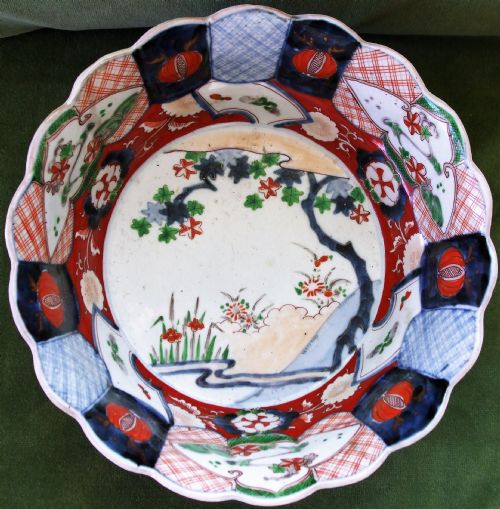
Japanese examples from the Meiji period and earlier dominate the selection, alongside Chinese Kangxi period pieces and English ironstone interpretations. Forms vary from conventional round plates to scalloped edges, hexagonal geometries, and shaped fish designs.
How they were made
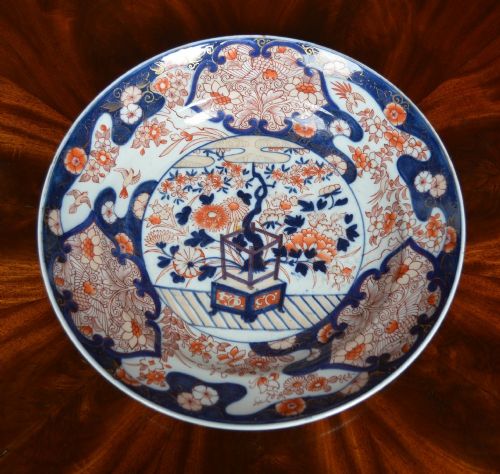
Potters shaped porcelain and ceramic bodies before applying underglaze cobalt blue and iron-red enamel pigments by hand. Many pieces incorporate gold leaf, gilt, or gilding highlights to accent the intricate floral and bird motifs.
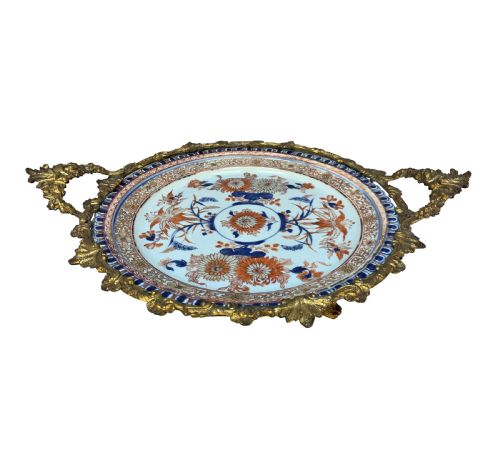
Certain porcelain chargers and plates also feature applied ormolu mounts, combining ceramic bodies with cast bronze frameworks for decorative display.
Some nineteenth-century artisans modelled ceramic plates in the exact shape of a swimming fish.
What varies in quality
The crispness and depth of the hand-painted cobalt and enamel decoration distinguish finer examples from standard production wares. Precision in the porcelain potting, especially along scalloped or shaped edges, marks the higher tiers of craftsmanship.
The preservation of gilt details and enamel vibrancy over centuries influences the visual impact of each dish or bowl.
Royal Crown Derby
The Red and Blue Imari Dishes Glossary
- Imari style
- A decorative ceramic classification originating in Japan, characterised by a palette dominated by underglaze blue, iron-red, and gold. European factories subsequently imitated this distinctive aesthetic.
- Meiji period
- A Japanese historical era spanning from eighteen sixty-eight to nineteen twelve, notable for prolific ceramic production exported globally. Pieces from this time often display intricate bird and floral designs.
- Kangxi period
- A phase of Chinese history under the Qing dynasty from sixteen sixty-two to seventeen twenty-two, renowned for fine porcelain export wares. Items from this era demonstrate exceptional potting and cobalt painting.
- Comport
- A raised decorative dish or bowl used for serving fruit or sweets on a dining table. Ironstone and ceramic examples appear in nineteenth-century English tableware.
- Charger
- A large decorative plate primarily intended for display on a wall or sideboard rather than daily dining service. These substantial ceramic pieces often showcase complex geometric or pictorial compositions.
Red and Blue Imari Dishes: Frequently Asked Questions
Are red and blue imari dishes safe for food?
Most antique pieces function primarily as decorative display items due to their age and delicate enamel or gilt surfaces. Hand-washing remains essential if utilised for dining.
Historic glazes and gold leaf can wear down with frequent culinary use and modern detergents, so collectors tend to exhibit them on walls or stands.
How do I date a Japanese imari plate?
Meiji period pieces often exhibit denser painting styles and brighter enamel colours compared to earlier Edo period items. Examining the foot ring and paste texture helps determine the approximate age.
Export regulations and trade shifts during the late nineteenth century also provide chronological markers for dating.
What is Chinese imari?
Chinese imari refers to porcelain manufactured in China during the Qing dynasty, specifically for export to European markets, copying Japanese aesthetic models. These pieces utilise similar cobalt blue and iron-red enamel schemes.
The underlying porcelain body and potting techniques often distinguish these from their Japanese counterparts.
How should I display a large charger?
Large chargers require sturdy plate hangers or dedicated display stands designed to support their substantial weight safely. Placing them away from direct sunlight preserves the iron-red enamels and gilt details.
Wall mounting offers a secure method to showcase the intricate floral and bird designs found on these ceramics.