


Japanese Porcelain Set
These Japanese porcelain set pieces bring together traditional designs, intricate hand-painted palettes and practical groupings from the eighteenth century to the twentieth century.
Japanese Porcelain Set
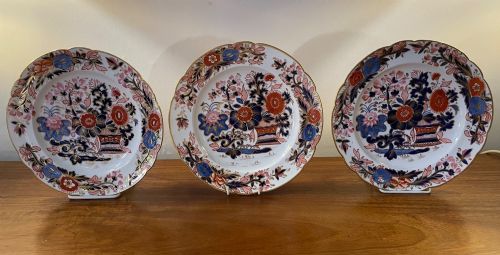
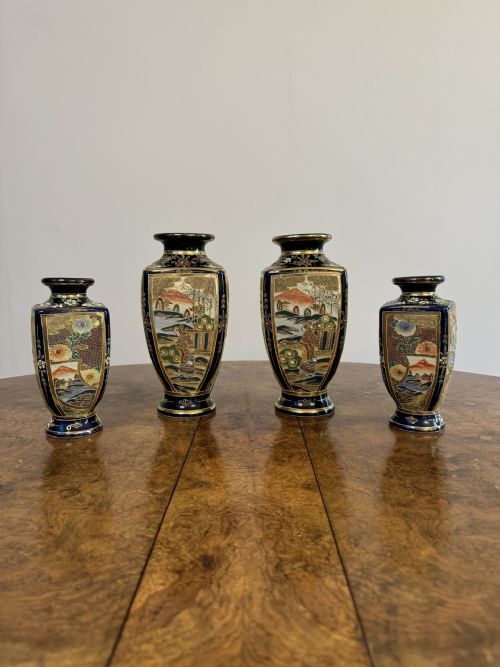
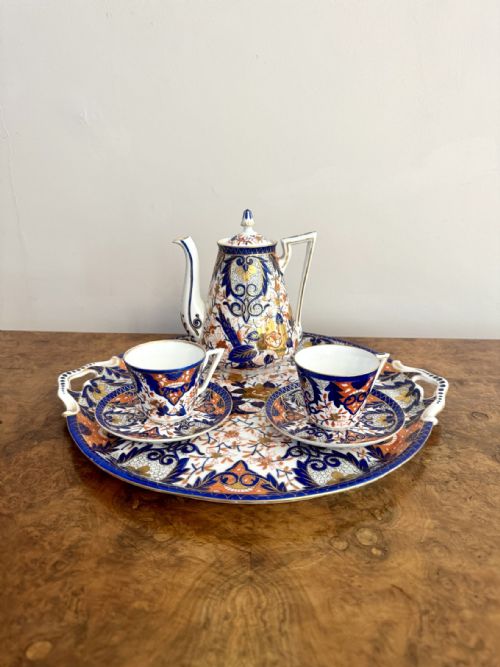
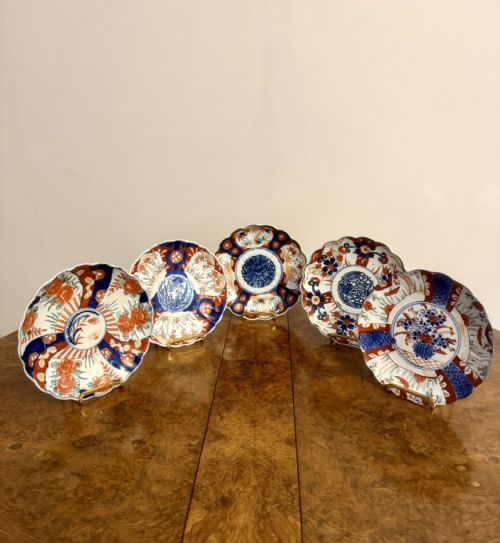
A japanese porcelain set encompasses diverse groupings such as plates, vases, tea services, coffee sets and garnitures spanning periods from the eighteenth century through to the 1930s. The most frequent finds on this page are decorative plates, shaped dishes and vases decorated in the Imari palette or created in Satsuma and Kutani styles.
Buyers encounter matching service collections complete with storage boxes, figures such as Hirado puppies, and multi-piece garnitures designed for display. These objects reflect both traditional Japanese craftsmanship and nineteenth-century European interpretations, including pieces produced by English factories using distinct Imari and Kakiemon motifs.
Materials and construction
Porcelain and earthenware form the physical foundation of these pieces, shaped into plates, bowls, saucers, services and vases. Makers applied complex finishes utilising enamel, glaze, gold leaf and gilt detailing.
Decoration relied on skilled hand-painting, visible in the intricate multi-coloured Imari palettes, Satsuma Thousand Flowers designs and Kutani figural work. Some items incorporate additional mounts of wood or ormolu.
A delightful set of three Hirado puppies waits patiently among the plates and vases.
Defining quality in these groupings
The standard of a japanese porcelain set rests on the precision of its enamel work, the richness of its gilding and the uniformity within matching groupings of plates or vases. Superior examples display crisp detail in multi-piece garnitures and tea services.
Completeness alters the character of a collection, particularly where original storage boxes or full matching counts remain intact. The clarity of the glaze and the complexity of palette execution distinguish finer output from standard production.
Taniguchi·Minton
The Japanese Porcelain Set Glossary
- Imari palette
- A traditional decorative style utilising underglaze blue, iron red and gold on porcelain. This aesthetic appears frequently on plates, bowls and vases dating from the Edo period onwards.
- Satsuma ware
- An earthenware pottery type featuring a crackled ivory glaze decorated with elaborate enamels and gilt. It often depicts figures, florals or scenes such as the Thousand Flowers pattern.
- Garniture
- A matched set of three, four or five vases or jars designed to be displayed together on a mantelpiece or sideboard. They vary in shape and height while sharing a unified decorative scheme.
- Kutani
- A style of Japanese porcelain known for bold colours and pictorial designs. Pieces often feature figures, such as Buddhist triads, rendered in detailed enamels.
- Hirado
- A type of fine Japanese porcelain historically produced for the ruling lords. It is celebrated for delicate moulding and animal figures like puppies.
Japanese Porcelain Set: Frequently Asked Questions
What is an Imari palette?
An Imari palette refers to the distinctive combination of underglaze blue, iron red and gold used to decorate porcelain.
This colouring originated in Japan and heavily influenced both domestic wares and European imitations over several centuries.
How were garnitures displayed?
Garnitures of three or more vases were traditionally arranged together on mantelpieces or architectural ledges.
They provided balanced symmetry and decorative impact for formal rooms during the eighteenth and nineteenth centuries.
What is Satsuma ware?
Satsuma ware is a distinct style of Japanese earthenware featuring a pale, crackled ivory glaze.
It serves as a base for dense, colourful enamel painting and extensive gilding depicting floral and figural subjects.
How do I care for antique porcelain?
Antique porcelain and enamel services require gentle handling and washing by hand in lukewarm water without harsh detergents.
Avoid displaying gilt and enamel pieces in direct sunlight to protect the fragile surface decoration over time.