









Japanese Imari Display Dishes
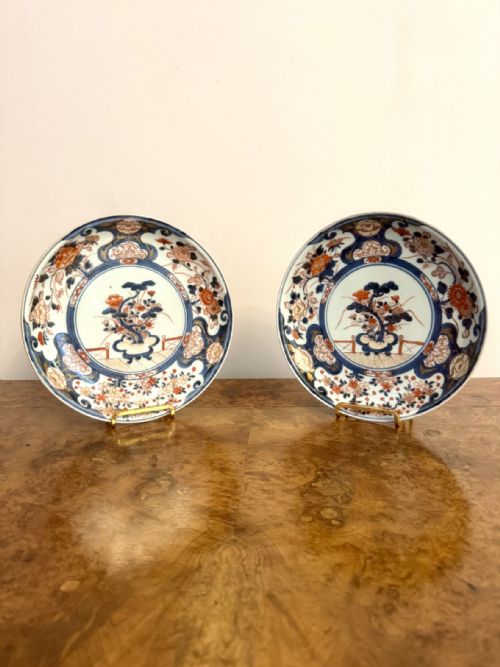
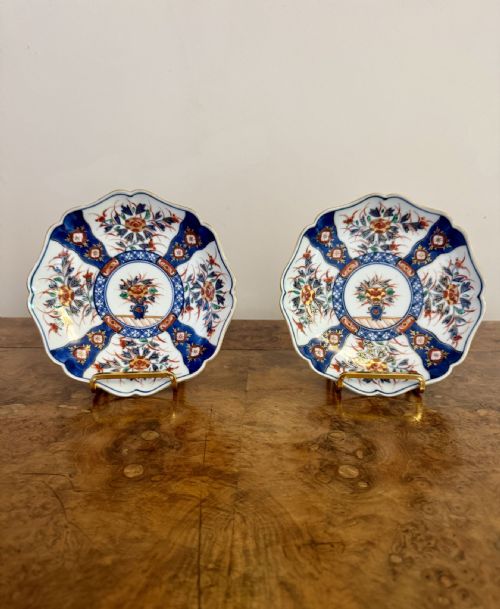
These japanese imari display dishes are hand-painted porcelain chargers and plates created for visual impact, combining rich iron-red and cobalt-blue pigments.
Japanese Imari Display Dishes
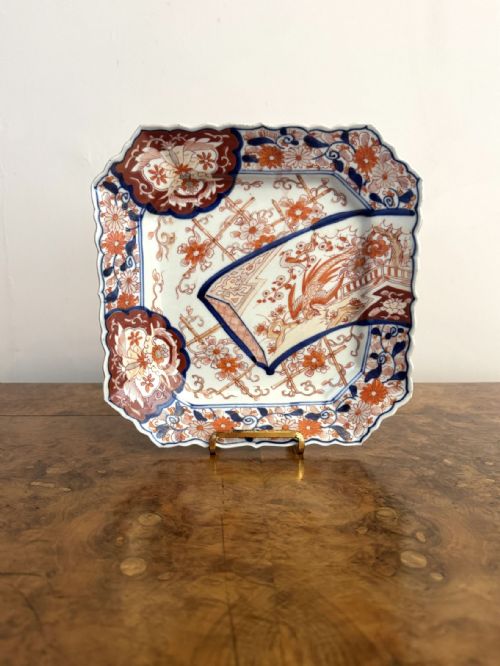
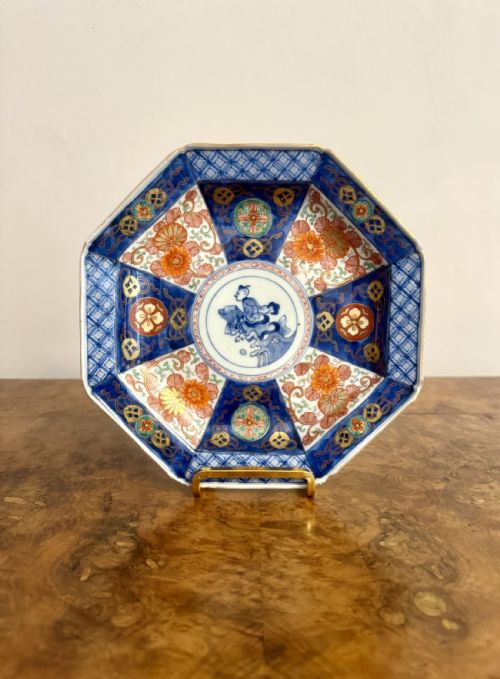
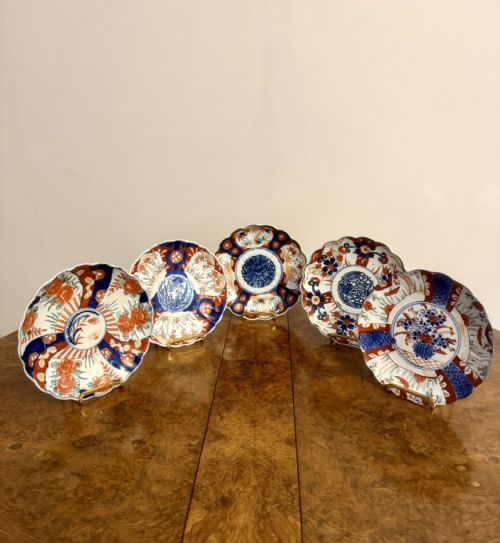
Japanese imari display dishes encompass decorative plates, chargers, and bowls shaped with round, scalloped, square, or hexagonal edges. These ceramics are designed primarily for display rather than daily dining use.
The pieces appearing on this page belong predominantly to the late nineteenth century and the Meiji period, alongside examples originating from the Edo period and the early twentieth century. Common decorative subjects include floral motifs, exotic birds, and figures such as the Seven Lucky Gods.
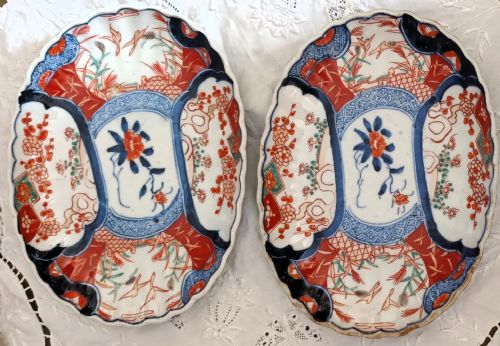
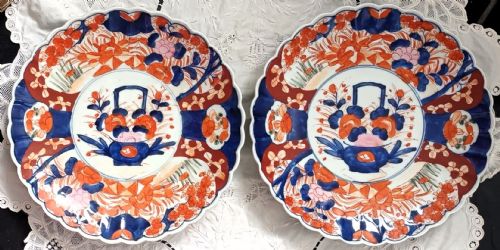
Buyers encounter both individual plates and matched pairs or larger sets. Large chargers dominate the visual scale, while smaller plates and bowls offer alternative geometric forms.
How They Were Made
The foundation of these objects is hard-paste porcelain, shaped by hand or moulded into plates, chargers, and bowls before firing. Artisans then applied underglaze cobalt blue and overglaze iron-red enamel directly onto the ceramic body.
Many examples incorporate supplementary details in gold leaf, gilt, or gilding to accent the painted floral and figural designs. A clear glaze covers the body, sealing the pigments during the kiln firing process.
Object types include square plates, hexagonal bowls, and large decorative chargers adorned with floral and bird motifs.
What Varies in Quality
Quality rests upon the precision and complexity of the hand painting across the porcelain surface. Finer examples display crisp botanical and figural details with balanced colour distribution.
The application of gold leaf and enamel embellishments separates standard production from superior pieces. Additionally, unusual geometric forms such as square and hexagonal profiles demand greater skill in shaping than standard circular plates.
The Japanese Imari Display Dishes Glossary
- Imari
- A style of Japanese export porcelain originating from the port of Arita, traditionally characterised by a palette of cobalt blue, iron-red, and gold. The style developed during the Edo period and continued into the Meiji era.
- Charger
- A large decorative plate or dish intended for display on a wall or sideboard rather than for serving food. These pieces measure significantly larger than standard dining plates.
- Meiji Period
- The era in Japanese history spanning from 1868 to 1912, associated with increased export of decorative arts to Western markets. Pieces from this time often exhibit intricate hand-painted enamel and gilt work.
- Enamel
- A glass-like substance applied over the fired glaze to add secondary colours such as iron-red and green. It sits slightly raised on the surface of the porcelain.
- Gilt
- A thin layer of gold applied to surface details to catch the light and accentuate specific motifs. On these dishes, gilding highlights floral elements and garments.
Japanese Imari Display Dishes: Frequently Asked Questions
How do I display a large charger safely?
Large chargers require sturdy wall hangers specifically designed for heavy porcelain, or secure plate stands with a wide base.
Placement should avoid direct sunlight and areas subject to vibration from foot traffic.
Can I use these dishes for serving food?
These pieces are intended as decorative display items rather than functional tableware. Overglaze enamels and gold leaf can wear down with frequent washing and utensil contact.
Gentle dusting with a dry cloth is sufficient for maintenance.
What does a scalloped edge indicate?
A scalloped edge involves shaping the rim of the plate or bowl into rhythmic, wavy curves rather than a simple circle. This technique requires skilled moulding before the ceramic is fired.
Scalloping adds a decorative, organic silhouette frequently found on bowls and plates from the late nineteenth century.