


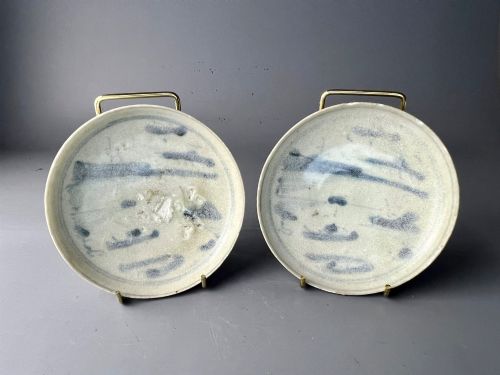
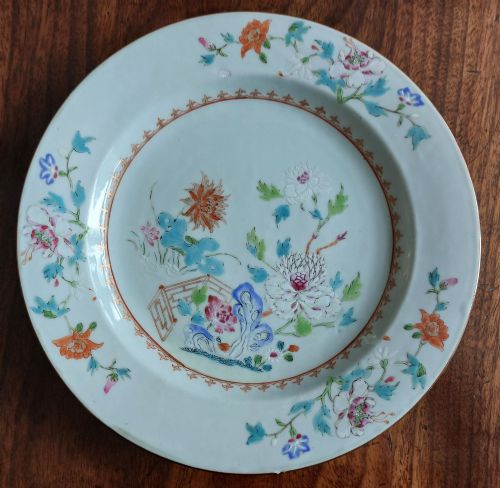
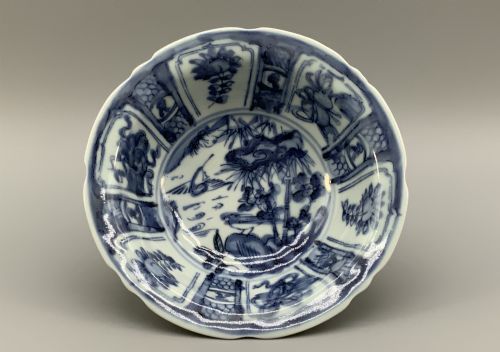
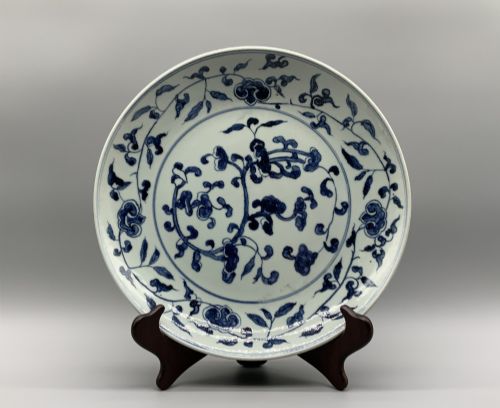
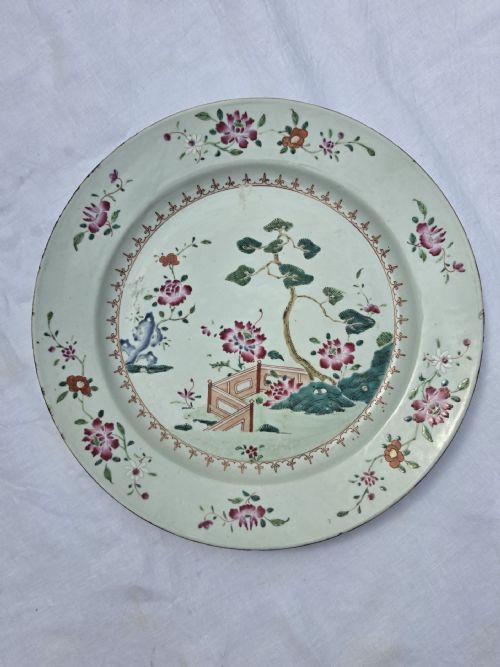


Qing Dynasty Export Plates
Qing dynasty export plates bring overseas trade history into domestic interiors through hand-painted porcelain made specifically for Western markets.
Qing Dynasty Export Plates
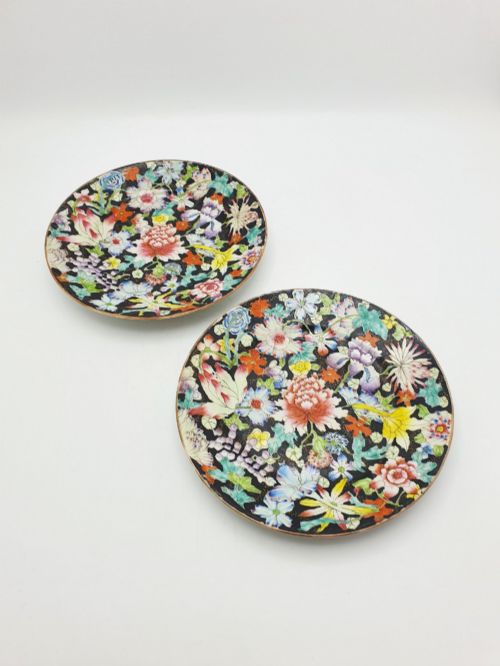
These items represent ceramics manufactured in China during the Qing period for shipping abroad to European and global buyers. Most pieces met on this page date from the eighteenth century, spanning reigns such as Kangxi and Qianlong, alongside nineteenth-century Canton productions.
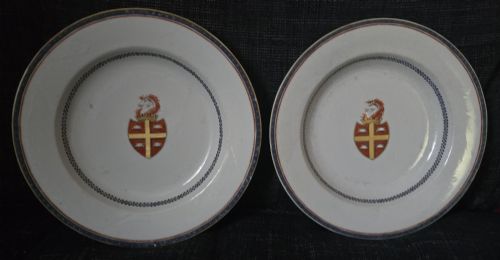
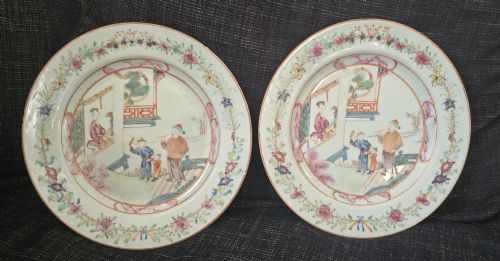
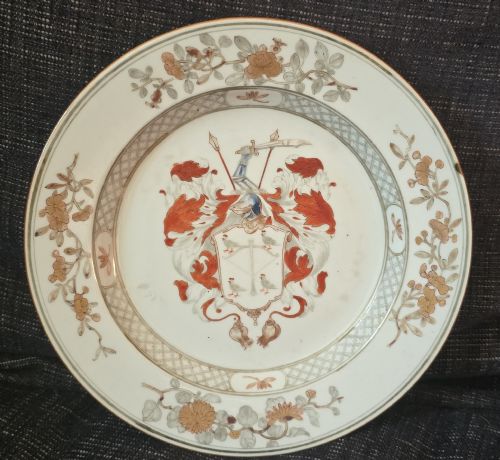
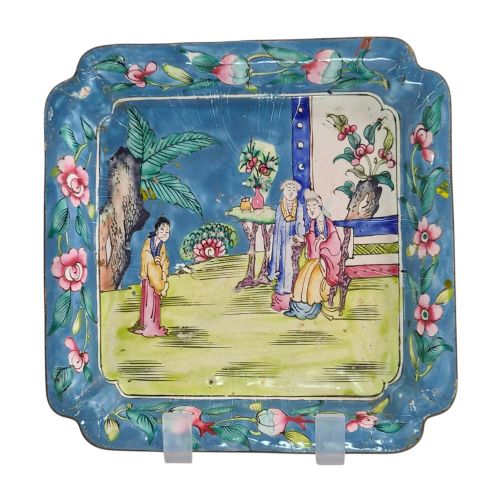
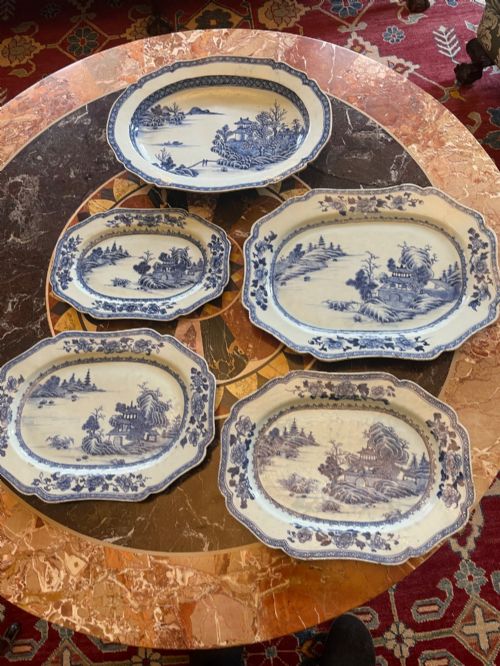
Forms range from standard dinner plates and soup plates to large chargers, platters, square dessert plates, and lobed dishes. They often display armorial bearings, garden interiors, or maritime trade subjects rather than domestic Chinese motifs.
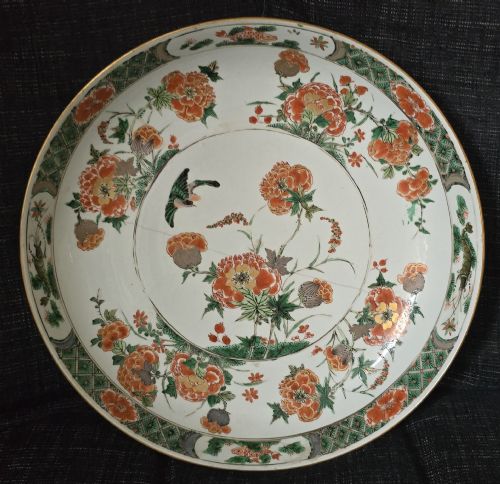
Makers produced them in hard-paste porcelain and enamel, catering to foreign tastes while employing traditional domestic potting techniques. The selection encompasses blue and white wares, famille rose, famille verte, and Chinese Imari palettes.
Materials and production methods
Potters shaped hard-paste porcelain using fine china clay before applying cobalt underglaze for blue and white designs. Artisans then fired the pieces at high temperatures to vitrify the body and seal the pigment beneath a glossy glaze.
Overglaze enamel pigments, including rose, green, and iron red, were added in subsequent lower-temperature firings for polychrome wares. Gilding and gold leaf often provided final decorative highlights to rims and focal points.
Specialised workshops in Canton and Jingdezhen executed the painting by hand, dividing labour amongst master artists who specialised in figures, borders, or heraldic coats of arms.
Qing Dynasty Export Plates Retail Price Guide 2026
Typical asking prices for qing dynasty export plates among the pieces listed under this phrase on Sellingantiques today, from the lower quarter to the upper quarter. They describe what is for sale here now, not the wider market.
The selection includes blue and white porcelain, famille rose, Chinese Imari, and Canton enamel pieces across various dish and charger formats.
Judging the range of quality
The precision and detail of the hand-painted brushwork dictate artistic merit, separating rapidly executed trade pieces from master-painted armorial or narrative commissions. Faces, drapery, and heraldic accuracy reveal the skill level of the decorator.
The clarity of the porcelain body and the stability of the glaze influence visual appeal, with superior items displaying smooth surfaces free from heavy firing distortion or excessive kiln grit. Enamel adhesion and the vibrancy of overglaze colours also separate standard wares from finer examples.
The Qing Dynasty Export Plates Glossary
- Armorial
- Ceramic decoration featuring a specific European family's coat of arms. These were custom ordered by wealthy patrons through trading companies.
- Famille rose
- A palette dominated by opaque pink enamel introduced during the Qing dynasty. It allowed artists to achieve subtle shading and varied colour tones.
- Famille verte
- A green-dominated enamel palette popular during the Kangxi period. It relies on transparent green alongside iron red, yellow, and blue.
- Hard-paste porcelain
- A dense, vitreous ceramic fired at high temperatures using kaolin and petuntse. It rings when struck and does not absorb water.
- Underglaze blue
- Cobalt oxide pigment applied directly to the unglazed clay body. A clear glaze covers the pigment before the single high-temperature firing.
Qing Dynasty Export Plates: Frequently Asked Questions
How were qing dynasty export plates used?
Western households displayed these ceramics on dining tables for formal meals or mounted them on walls as decorative art. Wealthy merchants and aristocracy used armorial services to signal social status and global connections during dinner parties.
Over time, many services transitioned from functional dining ware to cabinet display pieces. Their robust hard-paste bodies allowed everyday use before collectors moved them into protected environments.
What is the difference between kangxi and qianlong plates?
Kangxi period plates, dating from the late seventeenth and early eighteenth centuries, frequently feature vibrant cobalt blue underglaze landscapes and famille verte enamels. The potting is robust, and designs often draw on traditional Chinese literary themes.
Qianlong period plates, produced later in the eighteenth century, are heavily associated with famille rose palettes and intricate armorial commissions. The brushwork during this later era reflects increasing adaptation to Western decorative preferences.
How should I care for antique export plates?
Wash these porcelain items gently by hand using warm water and mild soap when cleaning is necessary. Avoid dishwashers, harsh scrubbers, and soaking, as aggressive cleaning can damage delicate overglaze enamels and historic gilding.
Display or store the plates in stable environments away from direct sunlight and sudden temperature changes. Use padded plate hangers or custom stands to distribute weight evenly if mounting them on walls or placing them on shelves.
What does canton export mean?
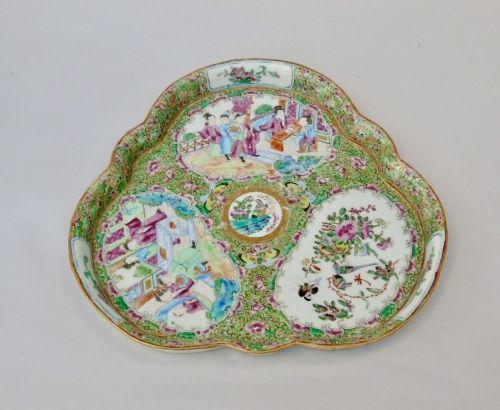
Canton export refers to porcelain decorated and shipped through the southern Chinese port of Guangzhou during the nineteenth century. These wares often feature distinct rose medallion patterns crowded with birds, butterflies, and figural panels.
Unlike earlier custom armorial orders from interior kilns, Canton pieces were frequently produced in large quantities for the nineteenth-century export market. They display bright, dense polychrome enamels applied over thick porcelain bodies.