

Polychrome Ceramic Dishes
Polychrome ceramic dishes bring vibrant colour and hand-painted artistry to a room, offering centuries of diverse kiln traditions from Europe and Asia.
Polychrome Ceramic Dishes
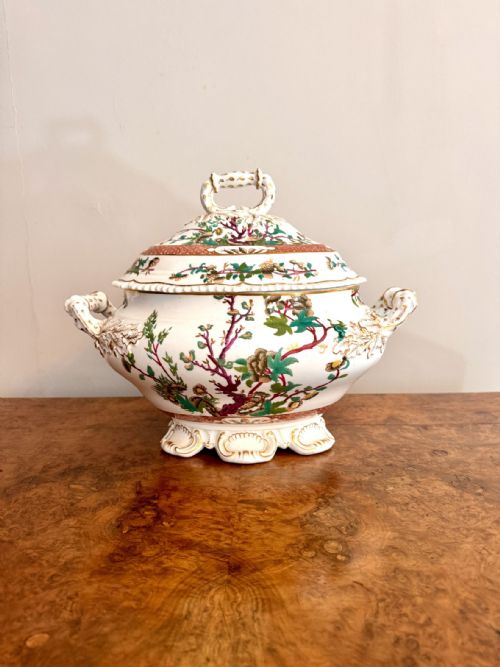
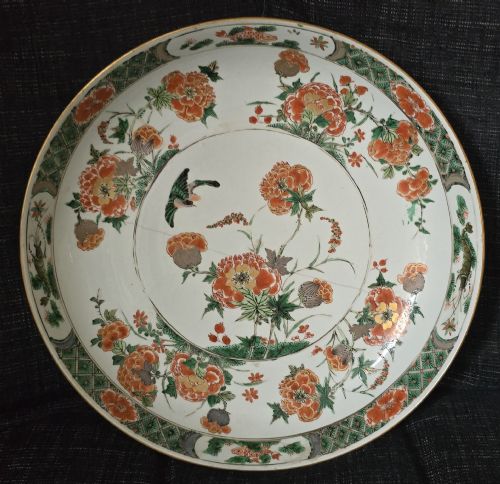
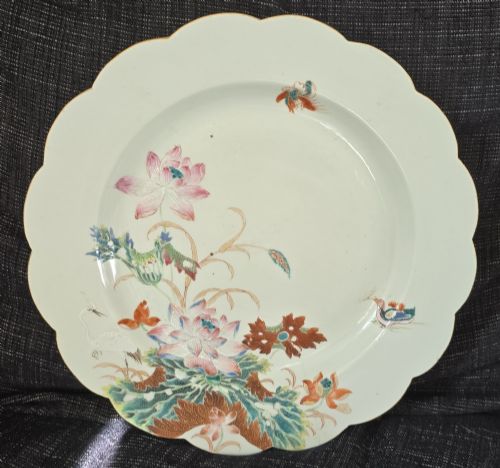
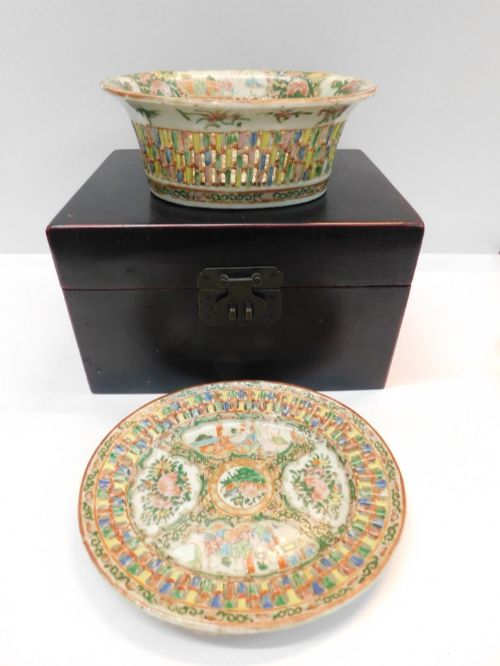
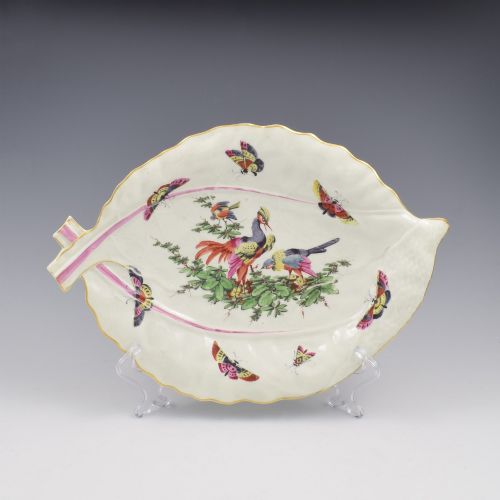
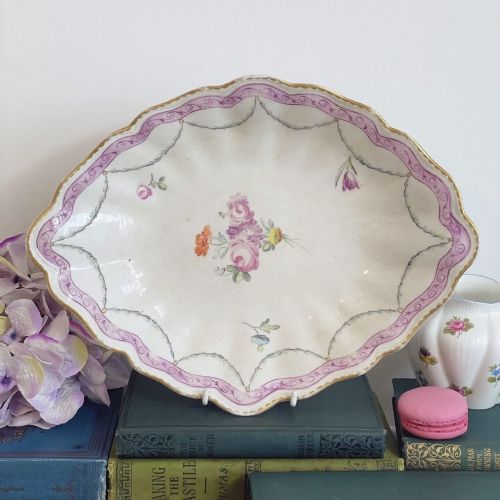
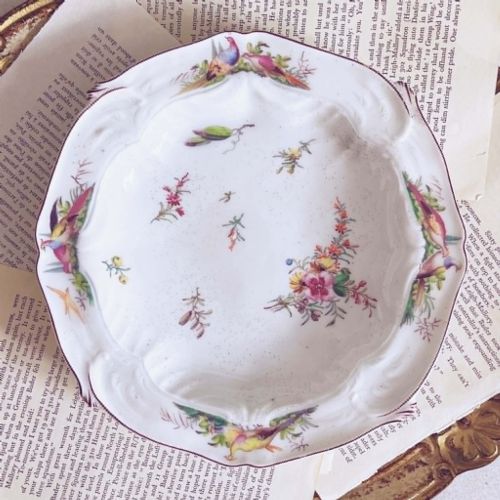
When you search for polychrome ceramic dishes, you encounter a broad spectrum of decorated vessels spanning the seventeenth century through to the early twentieth century. The selection ranges from English delftware chargers and eighteenth-century porcelain dessert plates to expansive Japanese Imari and Satsuma bowls.
European factories such as Worcester, Chelsea, Meissen and Minton sit alongside Chinese export porcelains and Japanese Meiji period wares. Most examples on this page take the form of chargers, dessert plates, serving dishes and decorative bowls intended for display or formal dining.
Materials and production techniques
Makers utilised various ceramic bodies including porcelain, earthenware, tin-glazed earthenware and felspar porcelain, shaped by hand or moulded before firing. Artisans applied pigments directly onto the raw glaze or over the fired surface, often incorporating enamel, gold leaf and gilt highlights to enrich the design.
Kiln techniques varied by region, from the high-fired translucency of European and Chinese porcelain to the absorbent earthenware bodies of English delftware and French faience. Painters executed floral, ornithological and figural motifs by hand, sealing the colours with subsequent low-temperature firings where required.
Listings feature wares from the seventeenth to the twentieth century, combining European earthenware and Asian porcelain forms.
Distinctions in quality
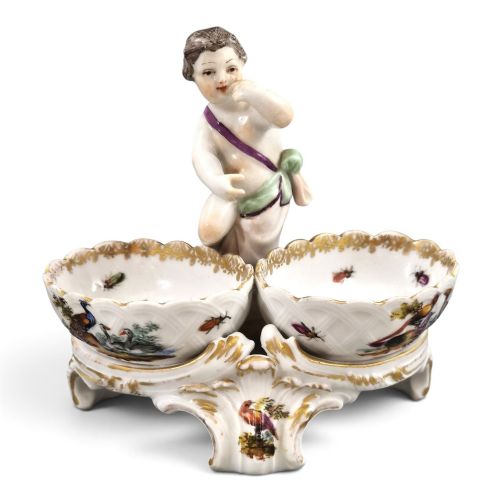
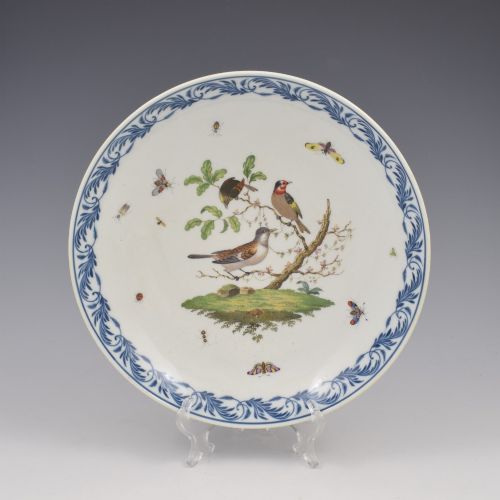
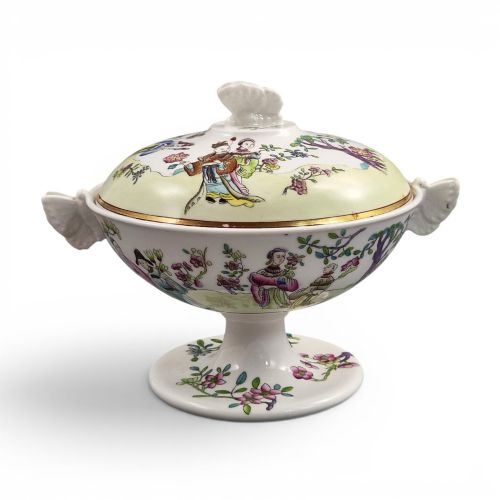
Quality rests upon the precision of the hand-painting, the crispness of the moulded form and the complexity of the palette. Superior pieces display confident, detailed brushwork in the rendering of birds, flowers or figures, while lesser examples rely on simpler, repetitive stencil applications.
The sophistication of the glaze and the purity of the ceramic body further separate standard production from exceptional pieces. Works bearing factory marks from renowned kilns or signed by specific makers command greater appreciation for their technical execution.
Chelsea·Meissen·Spode·Hicks and Meigh·Minton·Mann and Co
The Polychrome Ceramic Dishes Glossary
- Polychrome
- Decoration employing multiple colours on a single ceramic piece. This multi-coloured approach distinguishes these wares from monochrome or blue-and-white ceramics.
- Charger
- A large decorative plate or dish, typically exceeding thirty centimetres in diameter. These pieces were often displayed on walls or sideboards rather than used for dining.
- Imari
- Japanese porcelain decorated in underglaze blue, iron red and gilt, originating from the Hizen province. The style gained immense popularity across European export markets.
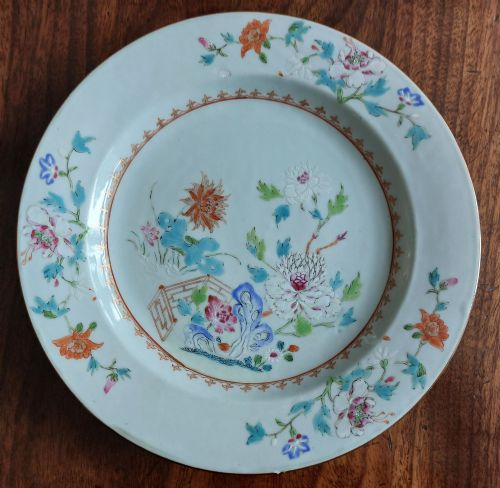
- Famille Rose
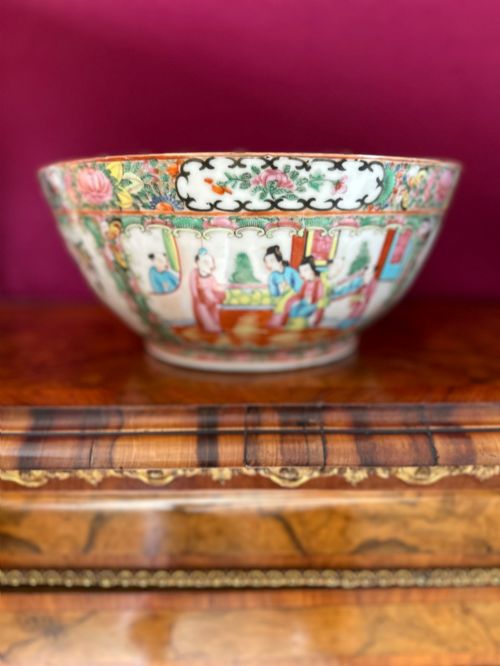
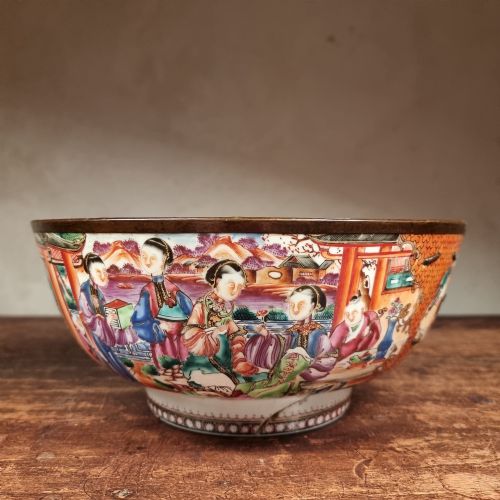
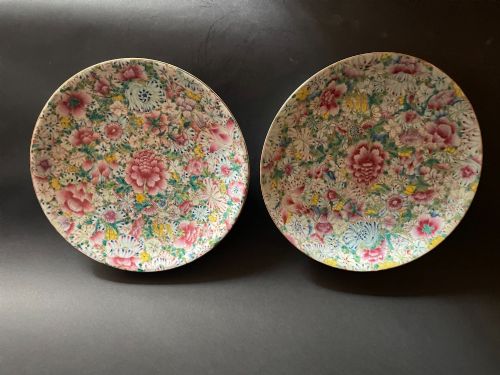
- A Chinese porcelain palette dominated by opaque pink enamel, introduced during the Qing dynasty. The style encompasses soft floral and figural compositions.
Polychrome Ceramic Dishes: Frequently Asked Questions
How were polychrome ceramic dishes used historically?
Many large chargers and platters served as ceremonial display pieces on dining room sideboards or hung on walls to demonstrate household wealth. Smaller dessert dishes and bowls formed part of formal tablescapes for serving fruit, sweets and confections.
Over time, owners transitioned these items from utilitarian dining functions to purely decorative interior objects, preserving their hand-painted surfaces from daily wear.
How do I care for antique ceramic dishes?
Protect delicate enamels and gilt highlights by washing pieces by hand in lukewarm water using mild soap, avoiding abrasive sponges or modern dishwashers. Sudden temperature changes can stress aged ceramic bodies, so keep them away from direct heat sources.
Display dishes securely using padded plate hangers or stable stands to prevent accidental slips. Handle them only by the rim and base to protect fragile handles or raised borders.
What distinguishes Delftware from porcelain?
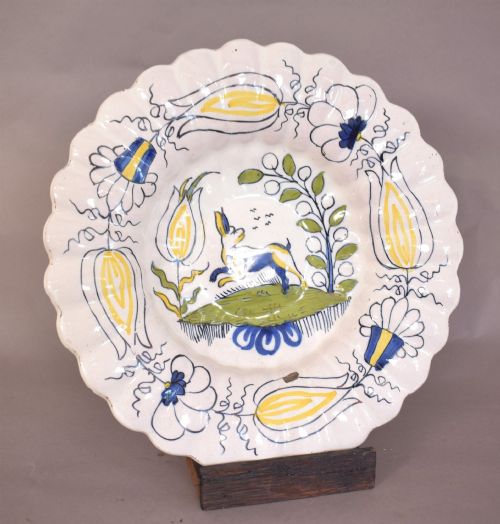
Delftware employs an earthenware body covered in an opaque tin glaze that provides a white canvas for painted motifs. It is heavier, more porous and fired at lower temperatures than porcelain.
Porcelain utilises hard-paste or soft-paste ceramic materials that vitrify during high-temperature firing, resulting in a dense, resonant and often translucent body.
How can I tell Japanese Imari from Chinese export porcelain?
Japanese Imari typically displays a dense combination of underglaze blue, vibrant iron red and heavy gilt over a slightly greyish or textured porcelain body. The motifs often feature intricate brocade patterns, flowers and panels.
Chinese export porcelain generally presents a whiter, finer paste with enamel palettes such as Famille Rose, focusing on delicate floral sprays or figural scenes rather than dense geometric brocades.