
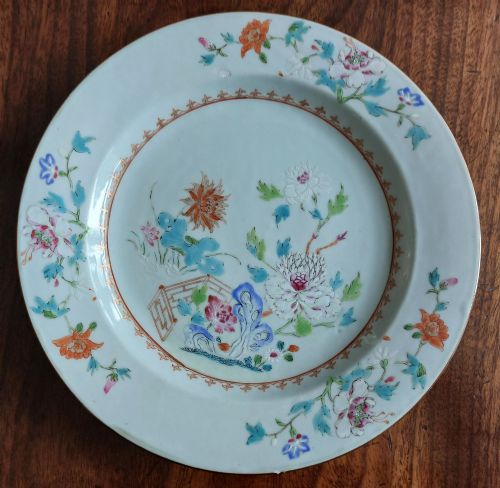
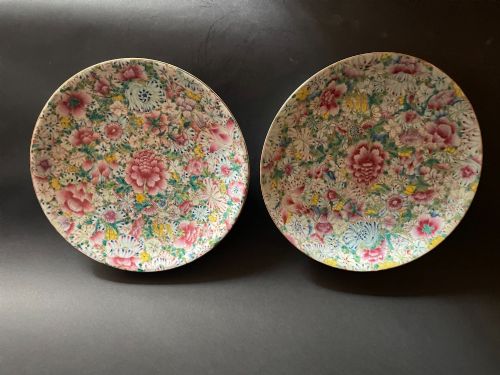
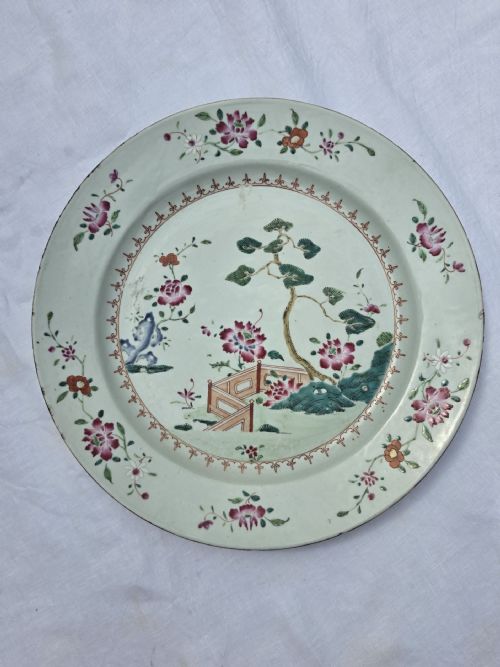


Famille Rose Dishes
Famille rose dishes bring vibrant pink enamel palettes and intricate hand-painted detail to any collection, spanning eighteenth-century export wares to nineteenth-century Canton pieces.
Famille Rose Dishes
Famille rose dishes encompass decorative plates, chargers, bowls, and trays defined by their opaque rose-pink enamel colouring. The phrase leads you directly to porcelain tablewares made in China, primarily for export during the Qing dynasty and the eighteenth and nineteenth centuries.
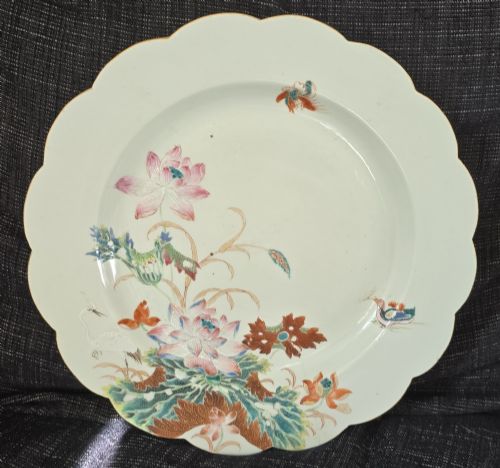
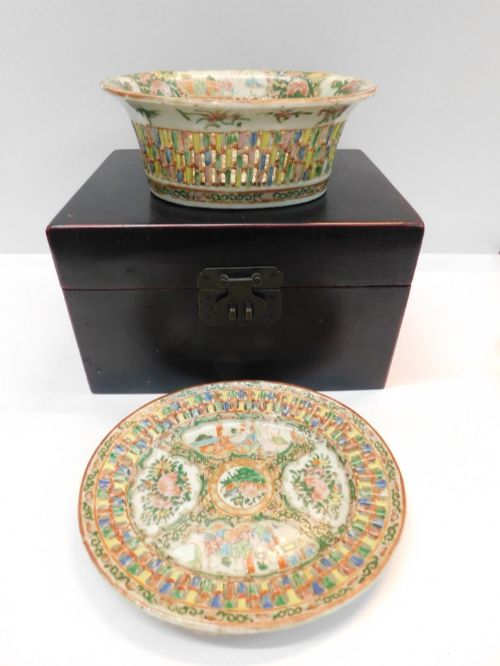
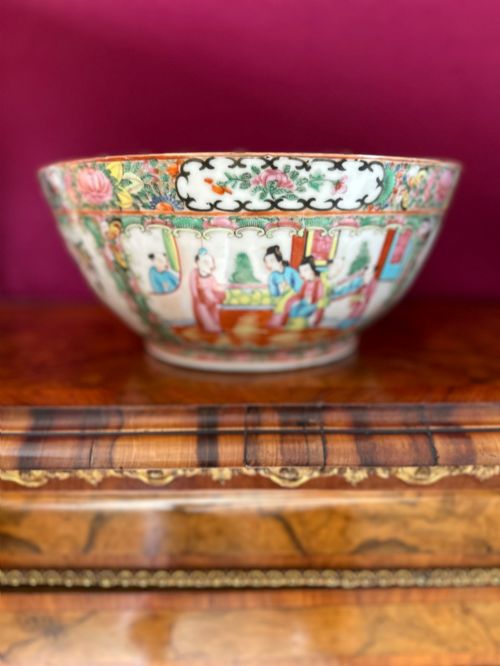
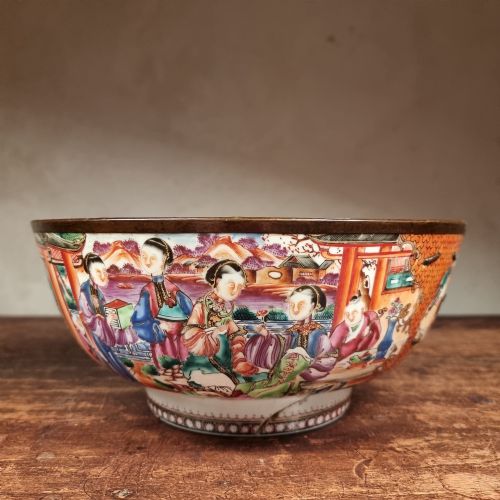
You are most likely to meet nineteenth-century Canton pieces and eighteenth-century Qianlong examples on this page. These items range from simple saucer dishes to reticulated chestnut baskets and armorial platters decorated with floral, bird, and figural scenes.
How they were made
Potters shaped hard-paste porcelain before applying underglaze elements and intricate overglaze enamels. The distinctive pink colour, derived from colloidal gold, sits alongside greens, yellows, and coral-orange pigments painted entirely by hand.
Gilt, gold leaf, and gilding frequently highlight the rims and borders of these plates and bowls. Certain pieces incorporate brass mounts or feature pierced, reticulated structures such as chestnut baskets and trefoil trays.
What varies in quality
The precision and brushwork of the hand-painted enamel decoration dictate the tier of the piece. Crisp lines and detailed figural or botanical scenes distinguish superior dishes from simpler, repetitive factory work.
The sophistication of the form also shapes the standard, moving from standard circular plates to lobbed rectangular bowls, shamrock shapes, and intricate reticulated baskets with matching stands.
The Famille Rose Dishes Glossary
- Famille Rose
- A palette of ceramic enamels introduced in China during the Qing dynasty, characterised by an opaque pink colour. It allowed painters to achieve tonal gradations through shading.
- Canton
- A major Chinese port and production centre for porcelain decorated with colourful enamel patterns often featuring figures, birds, and flowers. Canton pieces are frequently associated with nineteenth-century output.
- Qianlong
- The sixth emperor of the Qing dynasty, whose long reign from 1736 to 1795 marked a peak in Chinese porcelain production and export quality. Pieces from this period are highly sought after by collectors.
- Export
- Porcelain manufactured in China specifically for overseas markets in Europe and the West, often incorporating armorial bearings or shapes tailored to foreign tastes.
- Reticulated
- A decorative openwork pattern formed by piercing the porcelain body before firing, seen on specialised serving pieces like chestnut baskets.
Famille Rose Dishes: Frequently Asked Questions
How do I date famille rose dishes?
Dating relies on stylistic clues, reign marks, and the character of the porcelain body and enamel colours. Eighteenth-century Qianlong pieces often display finer, more controlled painting compared to later nineteenth-century Canton production.
Changes in palette and subject matter also help narrow the decade. Examining the foot rim and the wear on the overglaze enamels provides further context for age.
Were these dishes used for dining?
Many eighteenth-century armorial and service pieces were commissioned for actual dining and display at European tables. Over time, their delicate nature and decorative value meant they transitioned into cabinet pieces.
Saucers, tea bowls, and larger platters served practical functions in tea and dining services before becoming decorative items for collectors.
What is the difference between Canton and Qianlong wares?
Qianlong wares date from the eighteenth century and typically feature refined, balanced compositions with detailed floral or narrative scenes. Canton wares are largely nineteenth-century and often showcase denser, more vibrant rose medallion patterns with birds and figures.
The potting and the specific tone of the pink enamel also shift between these two distinct eras of Chinese export porcelain.
How should I display antique porcelain dishes?
Display these plates and bowls on stable plate stands within cabinets or on shelves away from direct sunlight. Ensuring they are secure prevents accidental tipping, as many chargers and platters have curved bases.
Avoid hanging them with destructive wire hangers that bite into the rim. Modern display ledges offer a safer alternative for wall mounting.