


Chinese Famille Rose Plate
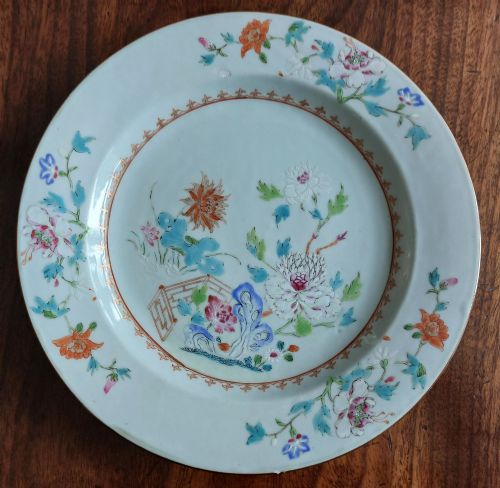
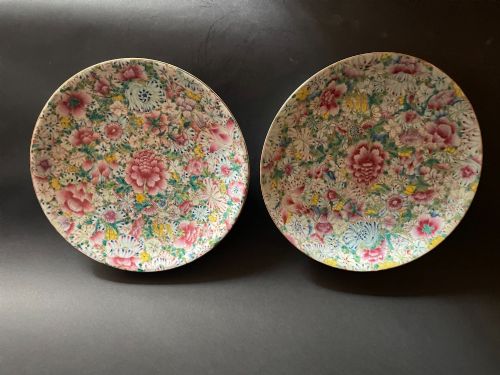
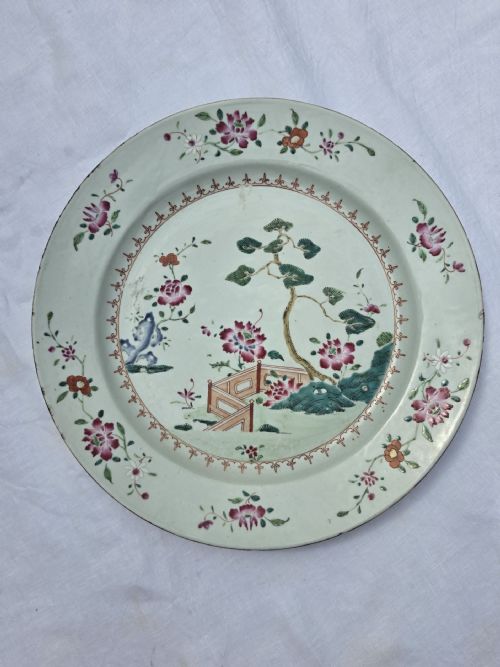
A chinese famille rose plate brings brilliant polychrome enamel painting on hard-paste porcelain into domestic display.
Chinese Famille Rose Plate
A chinese famille rose plate is a ceramic piece decorated with opaque overglaze enamels dominated by pink or rose colours, originating predominantly from the Qing dynasty and the eighteenth century. These ceramics appear in circular plates, chargers, octagonal soup plates, and platters, often created for export markets.
The objects span periods from the eighteenth century through the nineteenth century, including specific dates such as seventeen fifty, seventeen seventy-five, and eighteen eighty. Buyers encounter both round forms and specialised shapes like shamrock or trefoil trays.
Makers and decorators utilised themes ranging from floral motifs and birds to armorial crests with coats of arms and narrative scenes. The visual vocabulary includes specific palettes like the mandarin palette alongside export styles.
How they were made
Hard-paste porcelain forms the structural body of these pieces, providing a durable and dense white ceramic base. Artisans applied enamel glaze and overglaze enamels by hand, painting intricate details directly onto the fired surface.
Gold leaf and gilding frequently accent the rim and motifs, requiring an additional low-temperature firing to bond the precious metal to the porcelain. This combination of enamel and gold creates the characteristic layered texture found on the plates.
Listings feature hard-paste porcelain decorated with overglaze enamel, gold leaf, and enamel glaze across the eighteenth and nineteenth centuries.
What varies in quality
The precision and detail of the hand-painted brushwork separate standard production from superior examples. Finely executed pieces display crisp outlines in floral, bird, or human figures without blurring in the enamel.
The Chinese Famille Rose Plate Glossary
- Famille Rose
- A group of Chinese ceramic glazes characterised by opaque pink or rose overglaze enamels introduced during the Qing dynasty. This palette allowed painters to achieve tonal gradations previously unavailable in Chinese porcelain decoration.
- Qianlong
- The imperial reign spanning seventeen thirty-six to seventeen ninety-five associated with technical excellence in porcelain production. Pieces from this period frequently display sophisticated enamel work and balanced compositions.
- Chinese Export
- Ceramics manufactured in China specifically for western markets and trade. These objects often combined traditional Chinese techniques with European shapes and heraldic designs.
- Armorial
- A style of decoration incorporating a specific family coat of arms or crest commissioned by foreign buyers. These plates represent documented historical commissions for European and British households.
- Hard-paste porcelain
- A true porcelain composed of petuntse and kaolin fired at very high temperatures. This material yields a vitrified body that resists scratching and supports delicate overglaze enamels.
Chinese Famille Rose Plate: Frequently Asked Questions
How old is my chinese famille rose plate?
Dating relies on stylistic evidence, reign marks, and the characteristics of the paste and enamel colours. Eighteenth-century pieces often exhibit thinner porcelain bodies and refined Qianlong period painting.
Nineteenth-century examples frequently display denser Canton styles with crowded floral medallions and heavier gilding. Examining the foot ring and base glaze provides further clues to the manufacturing era.
Were these plates used for dining?
Many export pieces served as functional tableware for wealthy households, particularly armorial services used during formal dinners. Soup plates and platters fulfilled specific roles in historical dining arrangements.
Over time, fragile enamel and gold leaf led owners to transition these objects to decorative display on walls or in cabinets.
What is the mandarin palette?
The mandarin palette refers to a specific style of enamel decoration featuring elaborate figural scenes within garden or architectural settings. These motifs often depict domestic or courtly activities of figures in traditional attire.
Painters used vibrant pinks, greens, and yellows to render the garments and surrounding foliage with high detail.
How do I care for antique porcelain?
Display these ceramics away from direct sunlight to prevent fading of the delicate overglaze enamels and gold leaf. Hand washing in lukewarm water with mild soap is necessary if cleaning is required, avoiding abrasive materials.
Wall mounting requires secure hardware designed specifically to support the weight of porcelain plates without placing stress on the rim.