
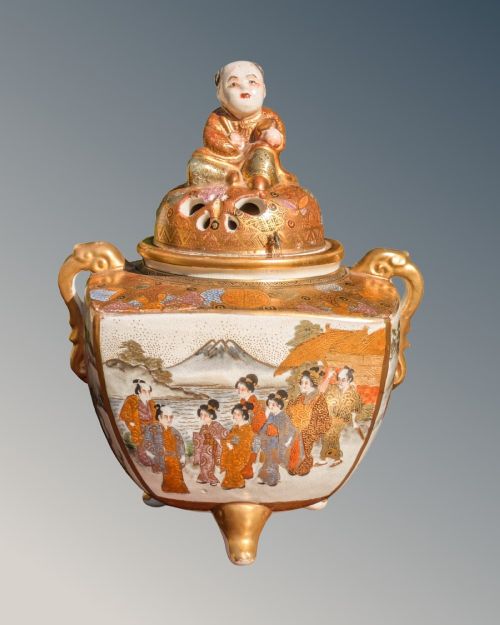


Porcelain Incense Burner
These porcelain incense burner examples bring together centuries of kiln craftsmanship across Chinese, Japanese, and English traditions.
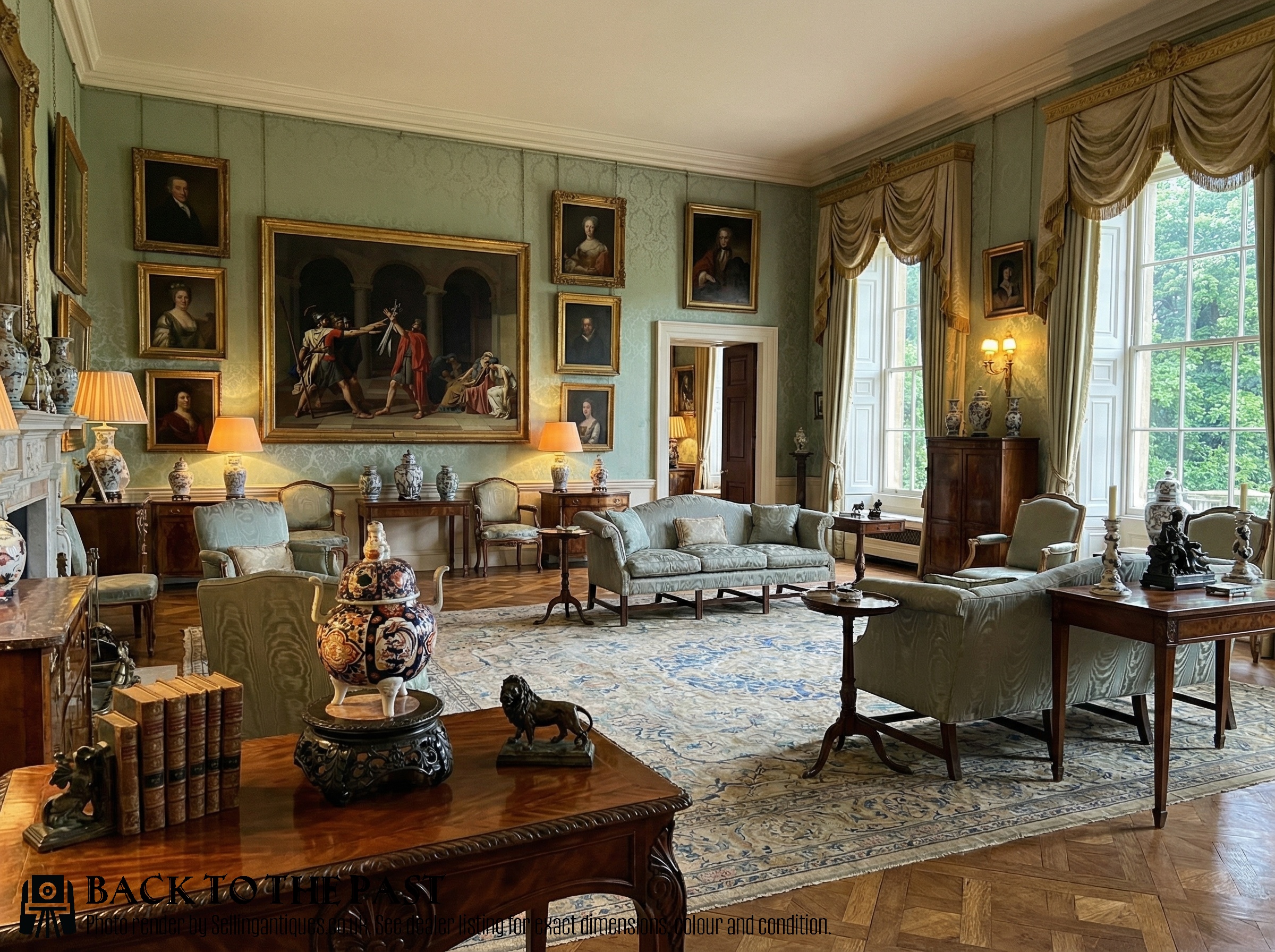
Porcelain Incense Burner
A porcelain incense burner serves to hold and diffuse aromatic materials, taking forms such as tripods, koro vessels, and lidded jars. When you search for this phrase, you encounter objects spanning from the Ming and Qing dynasties to the Meiji period and Regency eras.
The pieces on this page appear most frequently as Japanese Meiji period koro vessels and Chinese dynastic tripods, alongside English pastille burners. They range from small tabletop objects to monumental ritual vessels.
Makers shaped these items for domestic interiors, temples, and formal display, utilising distinct regional aesthetics from Kutani, Satsuma, Dehua, and Worcester.
How they were made
Potters shaped porcelain, earthenware, and celadon glazed stoneware bodies by hand or on the wheel, often incorporating moulded elements like elephant head feet and sculpted dragons. Firing took place in high-heat kilns to achieve durable ceramic structures.
Artisans applied glazes, enamel, gold leaf, and gilding to the surfaces, sometimes creating reticulated patterns or detailed blue and white designs. Covers and finials such as the Karashishi lion completed the vessels.
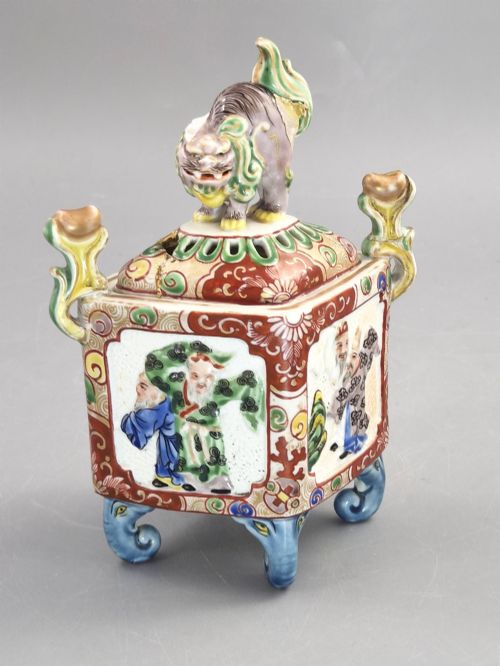
Several examples feature fierce lion dogs perched atop the lids, guarding the fragrant smoke within.
What varies in quality
The refinement of the potting and the precision of the sculptural details dictate the standard of the vessel. Finely potted bodies with crisp bamboo ribs or intricate openwork lattice show superior handling of the clay.
The application of enamels, gilding, and underglaze painting creates distinction between standard wares and exceptional examples. Signed pieces and those retaining specific dynastic marks or crests carry greater artistic weight.
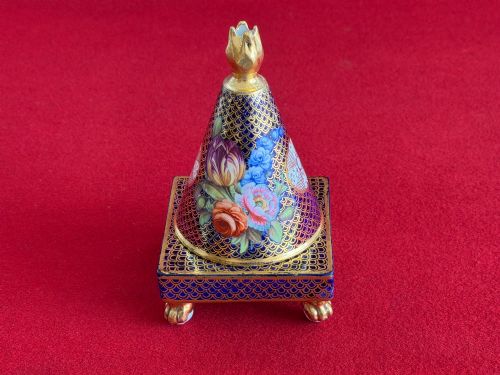
Chamberlain Worcester·Kizan
The Porcelain Incense Burner Glossary
- Koro
- A Japanese incense burner, typically featuring a body, handles, and a pierced cover. These vessels often rest on tripod feet and take forms ranging from spherical bowls to treasure ships.
- Blanc de Chine
- A white porcelain produced at Dehua in China, known for its milky glaze and smooth finish. This ceramic body often displays moulded details such as bamboo sections.
- Celadon
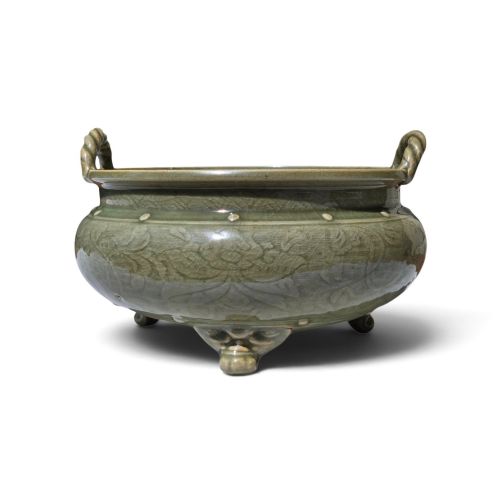
- A pale green or grey-green glaze applied to stoneware and porcelain. The finish mimics the appearance of jade and originates from long kiln traditions.
- Pastille burner
- An English ceramic vessel designed to diffuse scented paste pastilles rather than burning loose incense. These often took the architectural shape of small cottages.
- Reticulated
- Describes ceramic work featuring an openwork, interlaced lattice design cut into the body before firing. This technique demonstrates high technical skill in handling fragile clay.
Porcelain Incense Burner: Frequently Asked Questions
How do pastille burners work?
Pastille burners are small ceramic vessels designed to hold scented paste blocks that smolder and release fragrance when heated. English factories like Chamberlain Worcester produced cottage-shaped versions for domestic use.
The base holds the pastille while the chimney or roof vents the scented smoke safely into the room.
What is celadon glaze?
Celadon glaze is a translucent green or grey-green coating applied to stoneware and porcelain bodies. It develops its characteristic colour through iron oxide reacting in the kiln atmosphere.
This finish appears on early Chinese tripod censers, creating a smooth surface that mimics jade.
How do I date an incense burner?
Dating relies on examining the ceramic body, glaze characteristics, reign marks, and stylistic indicators such as Meiji period motifs or Regency period forms. Material details like crackle glazes or underglaze blue painting help place the object in its historical era.
Comparative study of known workshop signatures and kiln styles further narrows the period of origin.