

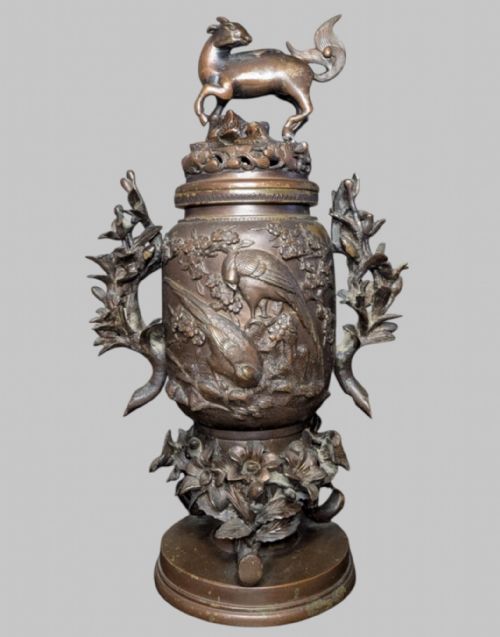


Meiji Period Koro
These meiji period koro are traditional Japanese incense burners crafted to burn aromatic woods, bringing refined sculptural detail to a room.
Meiji Period Koro
A meiji period koro functions as a lidded incense burner or decorative censer originating from late nineteenth and early twentieth century Japan. Buyers searching this phrase look for vessels designed with pierced covers to release fragrance, often accompanied by matching lids and sturdy footed bases.
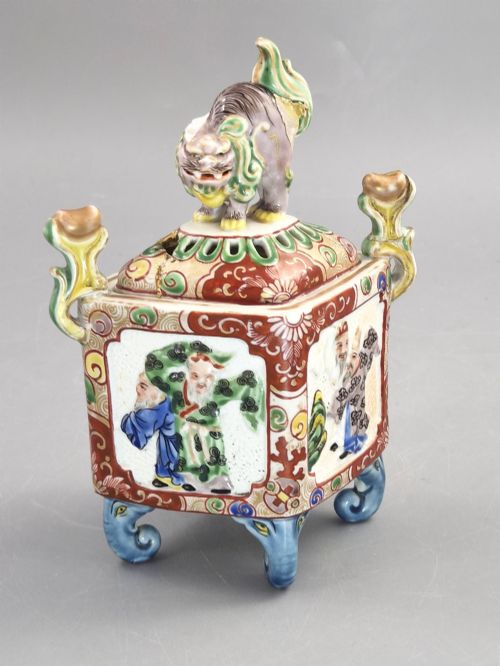
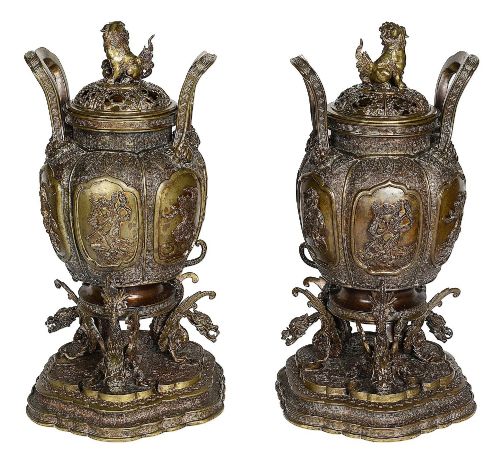
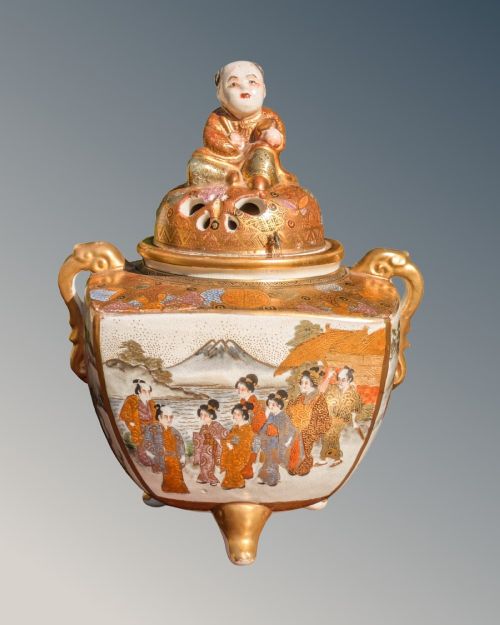
The pieces appearing here span specific regional aesthetics, notably Satsuma earthenware, Kutani porcelain, and heavy bronze or cloisonne enamel. Forms range from miniature vessels to large temple-scale urns, sometimes configured as hanging boat containers or animal motifs.
Makers fashioned these lidded vessels to serve both ritual and decorative functions within domestic interiors and export markets. Surviving examples demonstrate the stylistic shifts of the era, moving from traditional imperial motifs toward elaborate mixed metal and sculpted ceramic designs.
Materials and construction methods
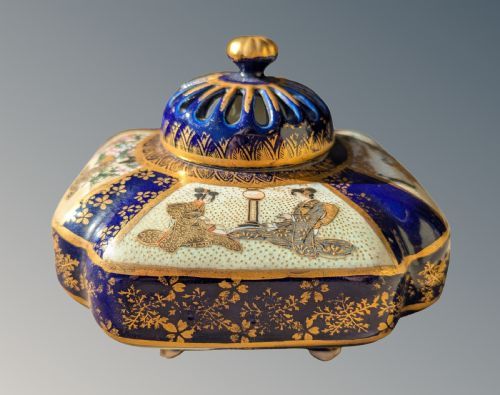
Ceramic koro utilise earthenware bodies finished with Satsuma crackle glaze and hand-painted polychrome enamel, or hard-paste Kutani and Hirado porcelain decorated with cobalt and gold leaf. Potters shaped these bodies alongside sculpted figures such as dragons, lions, and elephant head supports.
Metal versions rely on cast bronze, iron, and mixed metal alloys enriched with silver highlights and gilt detailing. Cloisonne examples incorporate thin wire partitions fused to a metal base and filled with vibrantly coloured enamel paste before firing.
Meiji Period Koro Retail Price Guide 2026
Typical asking prices for meiji period koro among the pieces listed under this phrase on Sellingantiques today, from the lower quarter to the upper quarter. They describe what is for sale here now, not the wider market.
Listings feature items from the nineteenth century through the Edwardian period, executed in materials including bronze, earthenware, porcelain, and cloisonne enamel.
Distinctions in execution and finish
Quality rests in the crispness of the modelled elements, such as the detailed rendering of guardian lion finials, sculpted dragons, and intricate reticulated covers. Superior ceramic pieces display precise hand-painted brushwork alongside refined gilding and clear enamel separation.
In metalwork, the distinction lies in the complexity of mixed metal inlay, the security of the applied elements, and the depth of the casting. Pieces bearing distinct signatures from recognised workshops or imperial crests demonstrate higher artistic ambition than standard export items.
Kinkozan·Kizan·Kotobuki do·Shizan
The Meiji Period Koro Glossary
- Koro
- A Japanese incense burner typically consisting of a body, a pierced lid for releasing smoke, and supporting feet. These vessels served both practical and decorative purposes in traditional interiors.
- Satsuma
- A type of Japanese earthenware featuring an ivory-coloured, crackled glaze painted with polychrome enamels and gilding. Pieces often depict figurative scenes and floral motifs.
- Cloisonne
- A metalwork technique where fine wire is soldered to a base to form compartments, which are then filled with enamel paste and fired. This method creates intricate patterns across the surface of the vessel.
- Kutani
- A style of Japanese porcelain known for bold pictorial designs and rich colour palettes, frequently incorporating extensive gold leaf decoration. Kutani kilns produced both utilitarian wares and ornamental display pieces.
- Shi-Shi
- A mythical guardian lion or dog frequently depicted as a sculptural finial perched upon the lid of an incense burner. These figures symbolise protection and authority.
Meiji Period Koro: Frequently Asked Questions
What is a meiji period koro used for?
These vessels functioned primarily as burners for aromatic incense during traditional ceremonies or quiet reflection. Their pierced lids allowed scented smoke to drift evenly into living spaces.
Over time, many of these lidded pieces transitioned into purely decorative art objects displayed on cabinets and mantelpieces. Their sculptural presence made them centrepieces in both Japanese interiors and European collections.
How do I distinguish Satsuma from Kutani?
Satsuma pieces feature a distinctive earthenware body covered in a fine, crackled cream-coloured glaze that acts as a canvas for detailed enamel paintings. They often showcase ornate figures and heavy gold highlights.
Kutani vessels are constructed from resonant porcelain rather than earthenware. They typically display vibrant cobalt blue underglazes and bold red or gold overglaze patterns without the characteristic crackle glaze.
Are these bronze burners solid metal?
Many bronze examples are cast as substantial single pieces or assembled from multiple cast components such as handles, feet, and decorative finials. Mixed metal versions incorporate contrasting elements like silver, iron, and gold to highlight specific motifs.
Some larger items combine bronze casting with cloisonne enamel panels fitted into the body. The interior surfaces frequently show the natural texture and oxidation expected from traditional foundry work.
How should I clean my antique koro?
Dust ceramic and bronze surfaces gently with a soft, dry brush to prevent particulate buildup within recessed carved areas or reticulated lid patterns. Avoid liquid cleaners and chemical polishes that can damage delicate enamel or historical patina.
If the interior retains old incense residue, leave it undisturbed as it forms part of the piece's history. Handle lidded examples with care by supporting both the body and the lid simultaneously.