




Japanese Incense Burner
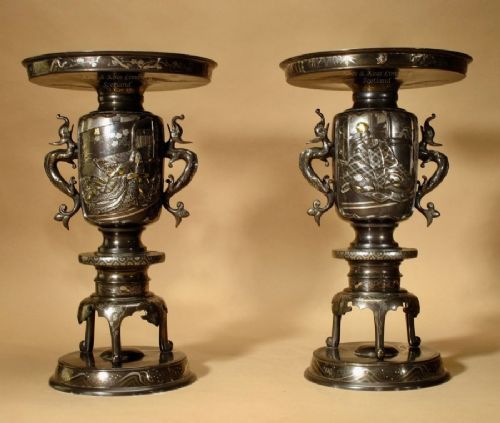
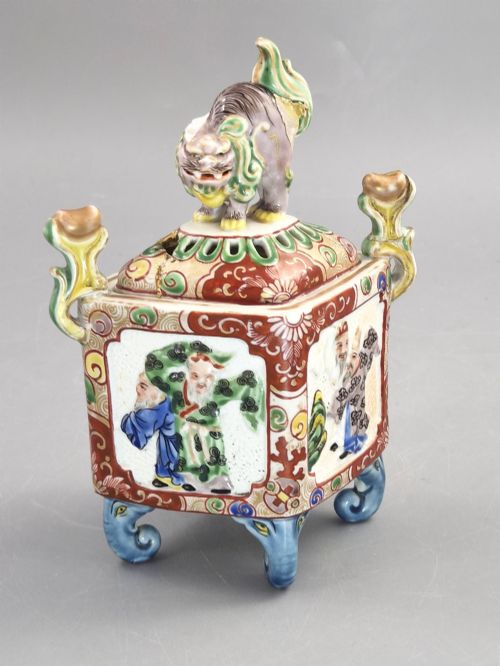
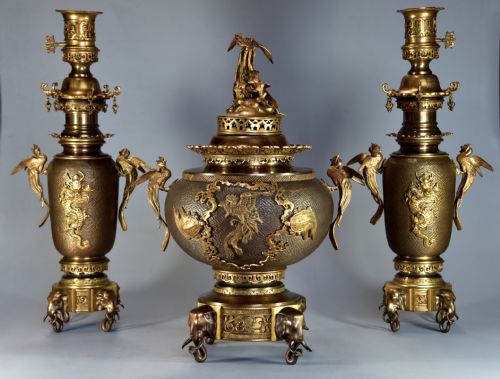
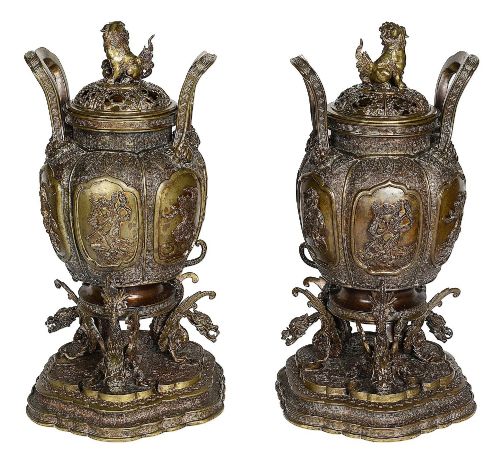
These Japanese incense burner pieces bring bronze, Satsuma, and cloisonne craft into the room with traditional forms.

Japanese Incense Burner
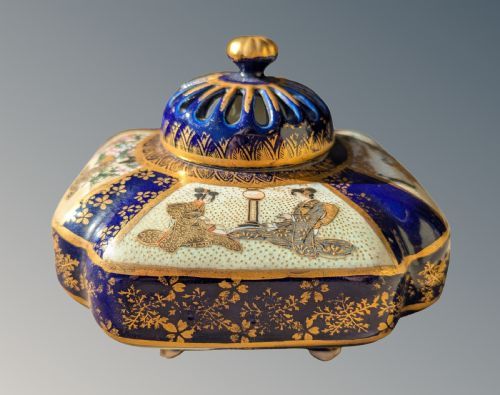
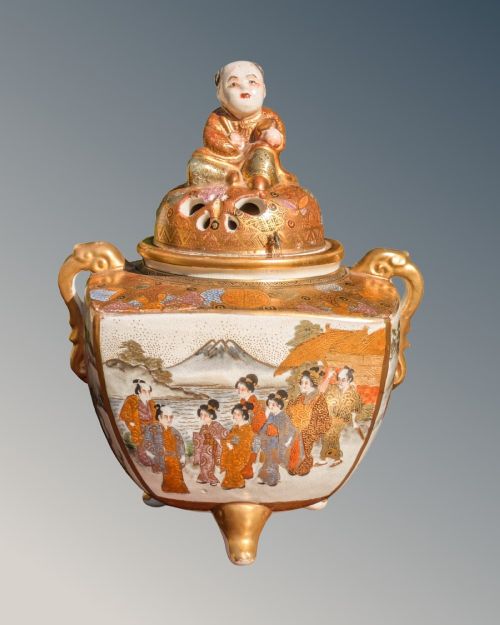
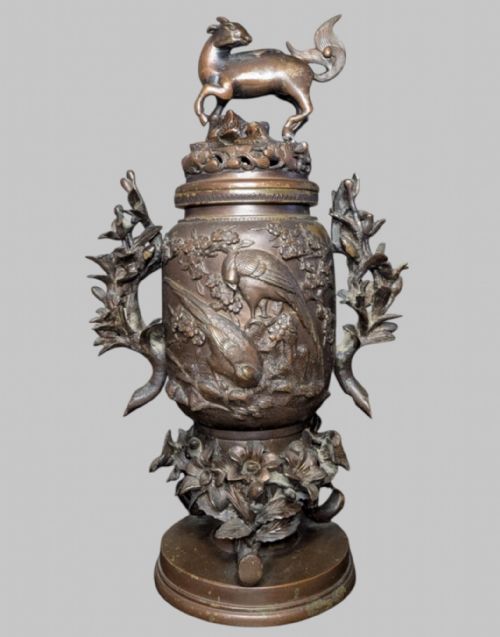
A japanese incense burner typically takes the traditional form of a lidded koro vessel, often supported on small feet or shaped like animals such as quails, elephants, and temple lions. These examples emerge primarily from the Meiji and Edo periods, alongside later Taisho and Edwardian interpretations.
Ceramic variations include Satsuma and Kutani earthenware alongside delicate porcelain, while metalwork versions utilise bronze, silver, and patinated alloys with intricate relief or inlay.
Buyers will encounter diverse formats ranging from miniature cabinet pieces to large lidded temple urns and hanging boat containers.
Materials and construction methods
Bronze and silver pieces rely on lost-wax casting and hand-chasing, often enriched with parcel-gilt details, gold inlay, or mixed metal shibuichi work.
Ceramic pieces combine hand-painted enamel decoration, crackle glazes, and applied gold leaf, finished with pierced lids designed to release fragrant smoke.
Japanese Incense Burner Retail Price Guide 2026
Typical asking prices for japanese incense burner among the pieces listed under this phrase on Sellingantiques today, from the lower quarter to the upper quarter. They describe what is for sale here now, not the wider market.
Several bronze incense burners take the delightful form of plump eggplants, crouching quails, or hawks.
Markers of distinction
Quality rests in the crispness of the casting on metalwork, where finely chased feathers, fur, and geometric borders show the hand of a skilled workshop rather than standard production.
On ceramics, the precision of the enamel painting, the delicacy of the pierced reticulated lids, and the clarity of artist signatures or kiln crests separate standard wares from masterworks.
Kinkozan·Kizan·Masahiko Katori·Kazumi·Koshida
The Japanese Incense Burner Glossary
- Koro
- A traditional Japanese incense burner, usually fitted with a removable pierced cover. These vessels appear in both ceramic and metal forms.
- Meiji
- The period of Japanese history spanning from 1868 to 1912, known for intense artistic output directed at Western export markets. Much of the surviving decorative metalwork and Satsuma pottery dates from these decades.
- Satsuma
- A style of earthenware pottery characterised by a fine crackle-glaze and elaborate polychrome and gilt enamel decoration. These wares frequently depict figures, flowers, and traditional landscapes.
- Cloisonne
- An enamelling technique where flat wire is soldered to a metal base to create compartments, which are then filled with coloured paste and fired. The resulting surface is polished smooth.
- Shi-shi
- A mythical guardian lion or temple dog frequently modelled as a finial or support on incense burners. These figures are typically depicted with curly mannes and playful expressions.
Japanese Incense Burner: Frequently Asked Questions
What is a koro?
A koro is the traditional Japanese term for a vessel specifically designed for burning incense. These containers feature lidded tops pierced with decorative apertures to allow scented smoke to escape.
They appear in varied materials including bronze, silver, porcelain, and Satsuma earthenware.
How do I date a Japanese bronze burner?
Dating relies on stylistic markers, casting techniques, and surface patination. Meiji period pieces often display complex relief work and signature panels, whereas Edo period examples lean towards heavier, archaic bronze casting.
Makers' marks and signatures stamped or engraved on the base also help establish the chronological period.
Where should I display an incense burner?
These decorative objects work well placed on mantelpieces, sideboards, or within cabinet displays where their detailed casting and enamel work can be seen up close. Because many retain delicate pierced lids, stable surfaces away from heavy traffic are best.
Larger floor or table urns function effectively as standalone sculptural focal points.
Are these burners still used for incense?
While historic pieces were made for traditional incense ceremonies using aromatic woods or resins, today they are collected primarily as decorative works of art. Owners occasionally burn modern incense cones inside them, though care must be taken to protect antique surfaces from residue.
Many collectors simply display them with their covers in place to appreciate the sculptural form.