


Asian Ceramic Censer
An asian ceramic censer brings centuries of ritual history to a room, offering quiet form and tactile glaze.
Asian Ceramic Censer
When you search for an asian ceramic censer, you encounter vessels designed for burning incense across several Asian traditions, spanning centuries of craftsmanship.
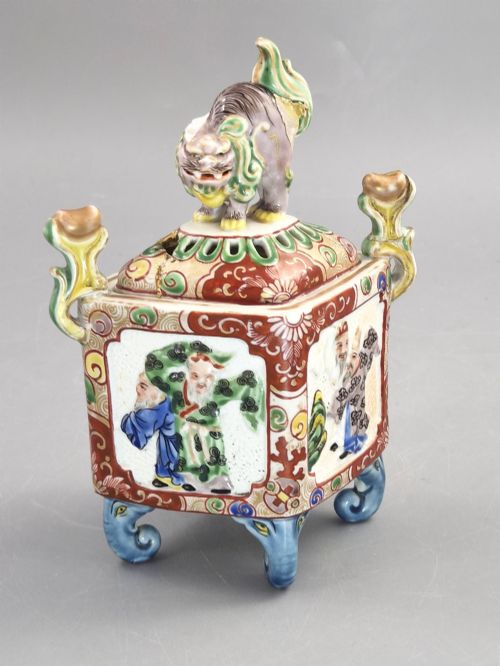
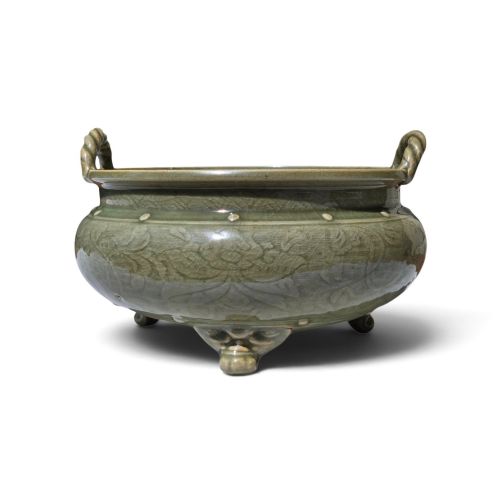
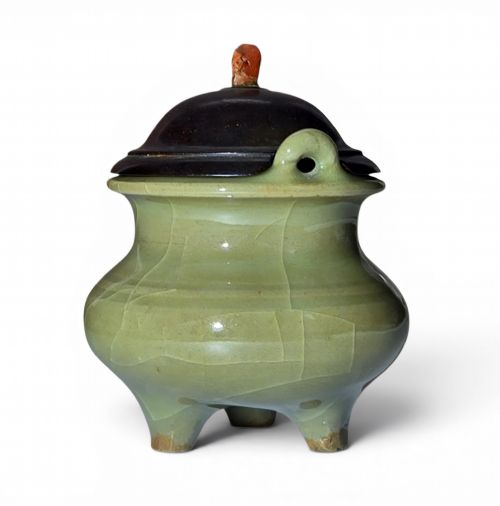
The pieces on this page range from early Chinese Ming Dynasty celadon and Qing Dynasty blanc de chine to Japanese Meiji period Satsuma, Kutani, and Hirado porcelain.
Tripod vessels and lidded koro forms predominate, shaped as round bowls on feet, animal forms, or sculptural figures created for domestic shrines and scholar desks.
How they were made
Potters shaped these censers in porcelain, earthenware, stoneware, and celadon glazed stoneware, often employing tripod feet or elaborate sculptural elements.
One listed censer takes the delightful shape of a treasure ship, ready to sail fragrance across your desk.
What varies in quality
Quality rests in the precision of the potting, the depth and nuance of the glaze, and the clarity of sculptural modelling on handles, feet, and covers.
Pinnacle examples display meticulous hand-painting in enamel or gold leaf, balanced proportions in tripod forms, and bespoke wooden or coral covers that complement the ceramic body.
Kotobuki do·Kizan·Shizan
The Asian Ceramic Censer Glossary
- Koro
- A traditional Japanese incense burner, often fitted with a pierced lid for releasing fragrance. These vessels appear frequently in porcelain and earthenware.
- Celadon
- A pale green jade-like glaze originating in China and prized for its subtle tone and crackle patterns. It is found on durable stoneware bodies.
- Blanc de Chine
- A white porcelain produced in Dehua, China, known for its milky glaze and smooth tactile finish. It translates directly to white of China.
- Reticulated
- Describes ceramic work featuring an openwork pattern carved or pierced through the clay before firing. This technique allows smoke to filter through decorative designs.
- Tripod
- A vessel supported by three feet, a configuration common in ancient bronze vessels replicated in later ceramic censers.
Asian Ceramic Censer: Frequently Asked Questions
How were asian ceramic censers used?
These vessels held burning incense sticks or cones during meditation, scholarly pursuits, and spiritual rituals in homes and temples.
The scented smoke drifted upward through the pierced lids or open tops, purifying the surrounding air and space.
Where should I display my censer?
Place your censer on a stable surface where its form and glaze can be appreciated close up, such as a low table or desk.
Keep it away from high traffic areas to protect delicate elements like tripod feet, applied dragons, and removable lids.
How do I date an antique censer?
Dating relies on stylistic markers, clay composition, glaze characteristics, and reign marks or signatures stamped on the base.
Comparing the potting style to known periods like the Ming Dynasty or Meiji period clarifies the likely era of manufacture.
Can I still burn incense inside them?
While historic censers were built for burning incense, many collectors prefer to display them without use to preserve fragile glazes and interior surfaces.
If you choose to burn incense, use appropriate ash beds and clean the interior gently afterward to prevent residue buildup.