

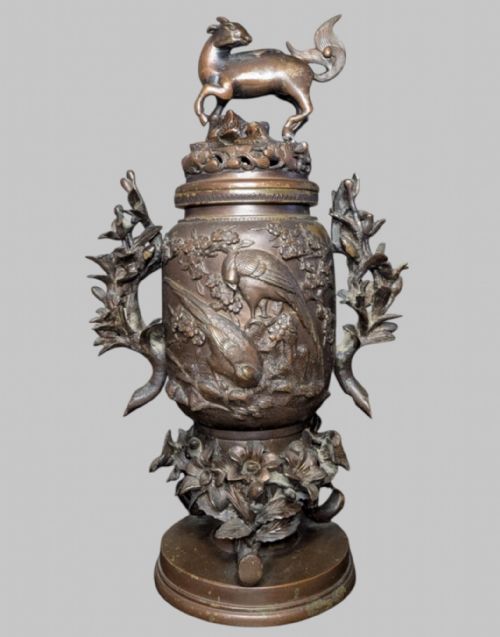


Meiji Period Censer
These meiji period censer examples are striking vessels for burning incense, crafted with the intricate detail characteristic of Japanese metalwork and ceramics.
Meiji Period Censer
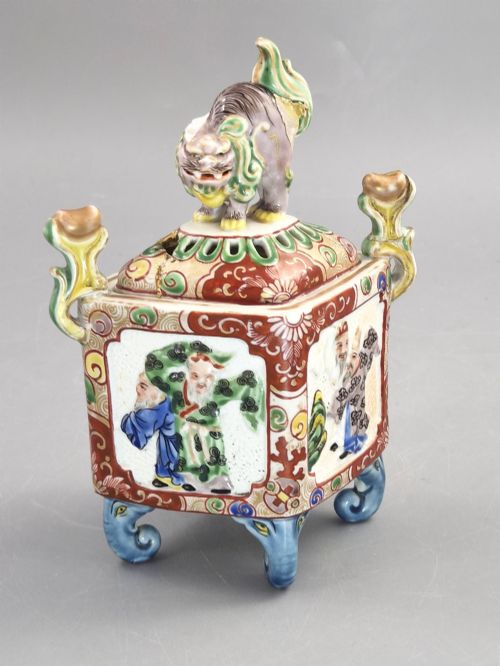
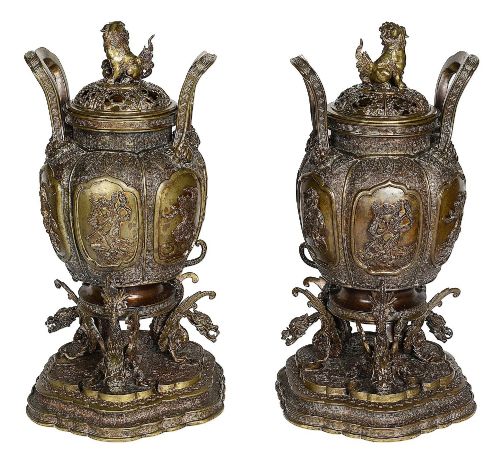
A meiji period censer typically takes the form of a lidded koro, designed for burning aromatic incense during the late nineteenth and early twentieth centuries. These vessels appear in various configurations, including tripod bowls, hanging boat shapes, and elaborate animal forms.
The material composition spans traditional Japanese ceramics and heavy metalwork. Porcelain and earthenware examples from kilns such as Satsuma and Kutani sit alongside cast bronze pieces.
Makers utilised distinct regional styles, producing everything from miniature decorative burners to large lidded urns with sculpted finials representing lions, dragons, and elephants.
Materials and Technique
Bronze components are frequently cast and finished with applied details in silver, gold leaf, or gilt. Cloisonné and champlevé enamel techniques add vibrant surface decoration to both metal bodies and specific vessel sections.
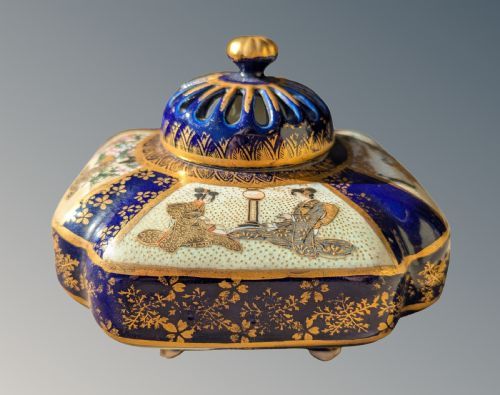
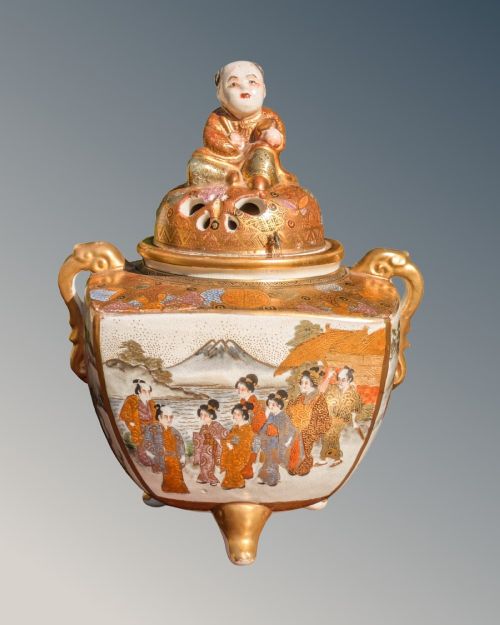
Ceramic koro combine moulded or thrown earthenware and porcelain bases with hand-painted polychrome glazes and intricate gilding. Reticulated panels and sculpted figural elements demonstrate advanced ceramic manipulation during the Meiji era.
Listings feature items dated from the nineteenth century through the Edwardian era, incorporating both bronze and Satsuma earthenware.
Judging the Standard
Quality rests upon the precision of the casting or the finesse of the ceramic body and glaze application. Finer metal censers exhibit sharp, deeply chased details and secure attachments, while superior ceramics show controlled brushwork and even firing.
The presence of known workshop signatures, crests, and complex figural finials elevates a piece beyond standard decorative production. Proportion, balance, and the crispness of reticulated or enamelled patterns distinguish workshop standards.
Kinkozan·Kizan·Kotobuki do·Shizan
The Meiji Period Censer Glossary
- Koro
- A traditional Japanese incense burner, usually fitted with a pierced cover to allow smoke to escape. These lidded vessels form the majority of surviving examples from the Meiji period.
- Satsuma
- A type of Japanese earthenware featuring a crackle-glaze ivory body decorated with polychrome enamels and gilding. Originating in Satsuma Province, production later expanded to Kyoto and other urban centres.
- Cloisonne
- A metalwork technique where thin wire partitions are soldered to a bronze or copper base to create cells, which are then filled with enamel paste and fired. The resulting surface is ground smooth and polished.
- Kutani
- Japanese porcelain or pottery characterised by strong polychrome overglaze designs, often incorporating rich iron red and gold pigments. These wares frequently depict figurative scenes or auspicious motifs.
- Reticulated
- Openwork decoration formed by cutting or piercing patterns through the ceramic wall before firing. This technique creates intricate screens that allow light and incense smoke to filter through the body.
Meiji Period Censer: Frequently Asked Questions
What is a meiji period censer used for?
These vessels were created to burn aromatic incense in domestic interiors, temples, and formal reception rooms.
The pierced lids allowed fragrant smoke to permeate the space while containing the embers safely within the ceramic or metal body.
How do I identify a Meiji period piece?
Meiji period items date from the reign of the Meiji Emperor, spanning the late nineteenth and early twentieth centuries.
Look for distinctive manufacturing traits such as Satsuma crackle glazes, rich bronze patination, and traditional Japanese motifs like dragons and lions.
Are these censers made of bronze or ceramic?
Surviving examples appear in both metal and ceramic mediums, reflecting the diverse output of Japanese workshops at the time.
Bronze versions often feature cloisonné enamel or silver highlights, while ceramic versions utilise porcelain and earthenware from kilns like Kutani and Satsuma.
What does Koro mean in these listings?
Koro is the Japanese term for an incense burner, typically consisting of a bowl, a fitted base or feet, and a pierced lid.
These vessels vary from small desk accessories to large decorative garniture pieces.