


Japanese Satsuma Koro
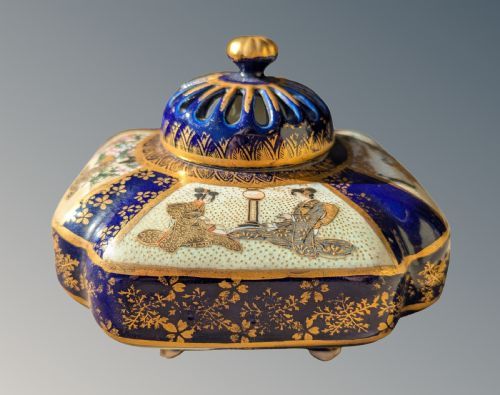
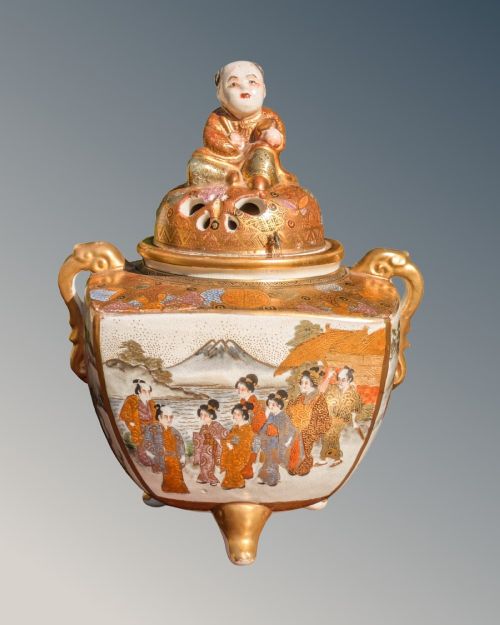
These Japanese satsuma koro are intricate ceramic incense burners from the nineteenth century, prized for their elaborate polychrome enamel and gilt decoration.
Identifying Japanese satsuma koro
A Japanese satsuma koro is an incense burner typically fashioned from earthenware with a matching lid, often incorporating tripod feet or support structures. These vessels emerge predominantly from the nineteenth century and the Meiji period, reflecting the traditional craftsmanship of that era.
Collectors encounter various scales, ranging from miniature lidded vessels to large decorative pieces, sometimes accompanied by pierced silver covers. The overarching style links these incense burners to Kyoto and other prominent ceramic centres of Meiji Japan.
Materials and construction
Potters shaped these Japanese satsuma koro from earthenware, applying detailed enamel paint and gold leaf or gilding to the surface. Selected examples integrate bronze elements or feature reticulated silver lids alongside the ceramic body.
The decorative schemes rely on meticulous hand-painting, frequently utilising rich gilt accents to highlight figures, floral motifs and heraldic devices such as the Shimazu crest.
Retail Price Guide 2026
Typical UK retail prices for japanese satsuma koro, calculated from the Sellingantiques database of over a million retail prices indexed since 2003. This retail price guide relies exclusively on Sellingantiques data; no external sources or auction records are used, so the figures do not describe the wider market.
Standards of craftsmanship
Quality rests in the precision of the enamel work and the finesse of the gilding applied across the earthenware body. Pieces bearing identifiable artist signatures or specific workshop attributions demonstrate a higher grade of artistic execution.
The integration of ancillary materials, such as finely reticulated silver lids or cast bronze components, distinguishes more ambitious examples from standard production.
Kinkozan·Kizan·Kotobuki-do·Ippo·Ryozan Okamoto·Yabu Meizan·Koshida
The Japanese Satsuma Koro Glossary
- Koro
- An incense burner, traditionally featuring a body and a fitted cover designed to allow scented smoke to escape. These vessels form the core of this collecting category.
- Meiji Period
- The historical era spanning from 1868 to 1912, during which Japanese decorative arts experienced significant international exposure. Most available pieces date from this timeframe.
- Earthenware
- Porous pottery fired at lower temperatures, serving as the foundational ceramic base for satsuma wares. This material absorbs the characteristic fine-craquelure glaze.
- Gilding
- The application of gold leaf or gold paint to highlight specific decorative elements on the ceramic surface. This technique provides the characteristic metallic brilliance seen on these pieces.
- Shishi
- A mythical lion-dog creature frequently sculpted in ceramic or metal to serve as the finial atop a koro lid. These guardian figures add sculptural presence to the vessel.
Frequently Asked Questions
How are these incense burners used?
A Japanese satsuma koro holds aromatic incense within its ceramic body, allowing scented smoke to filter upward through the pierced lid during quiet domestic rituals.
Today, collectors typically display these lidded vessels as decorative works of art rather than utilising them for burning incense.
How do I date a Meiji piece?
Dating relies on stylistic markers, signature analysis, and historical records from the nineteenth century, particularly the Meiji period spanning 1868 to 1912.
Specific artist signatures and workshop names often narrow down the production period to particular decades within the late nineteenth century.
What is the Shimazu crest?
The Shimazu crest is a traditional heraldic symbol associated with the powerful Satsuma domain, frequently appearing on high-status ceramic pieces.
Its presence links the vessel directly to the ruling clan that patronised the kilns producing these distinctive earthenware items.
Why do some have silver covers?
Some pieces feature custom-made silver lids, sometimes reticulated, added either during production or later to enhance the utility and aesthetic appeal of the koro.
These metal additions reflect the cross-cultural exchange between traditional Japanese ceramics and Western decorative preferences during the late nineteenth century.