




Antique Japanese Censer
An antique japanese censer brings centuries of ritual craft into a room, offering bronze vessels and porcelain vessels made to burn incense.
Antique Japanese Censer
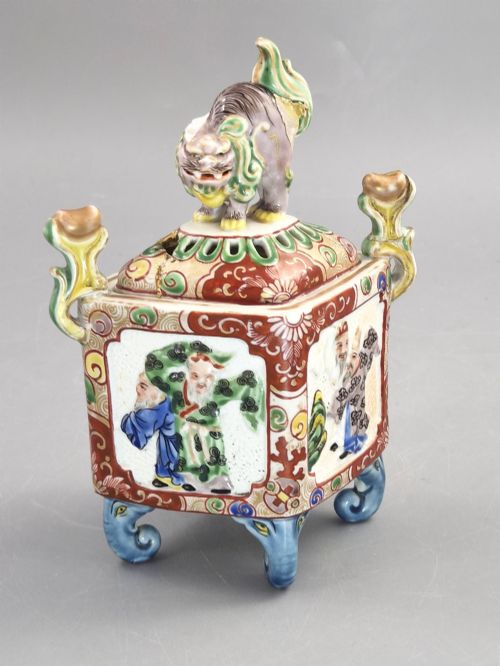
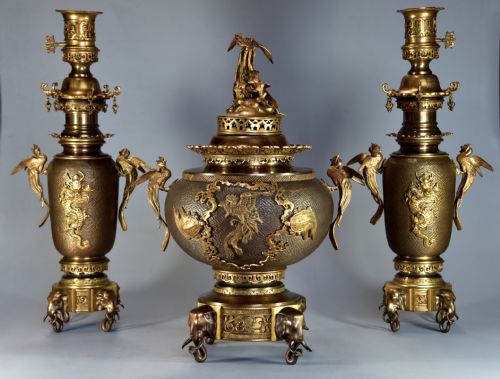
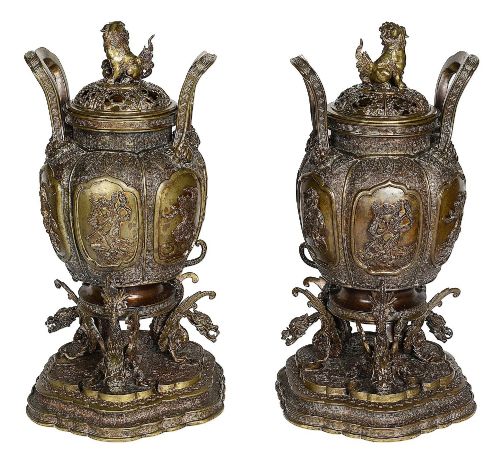
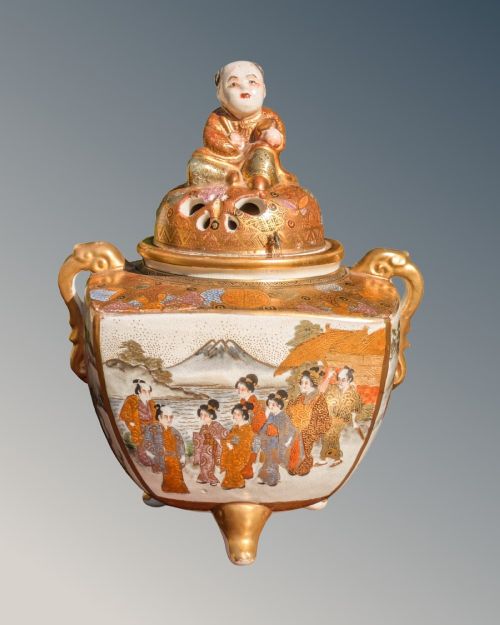
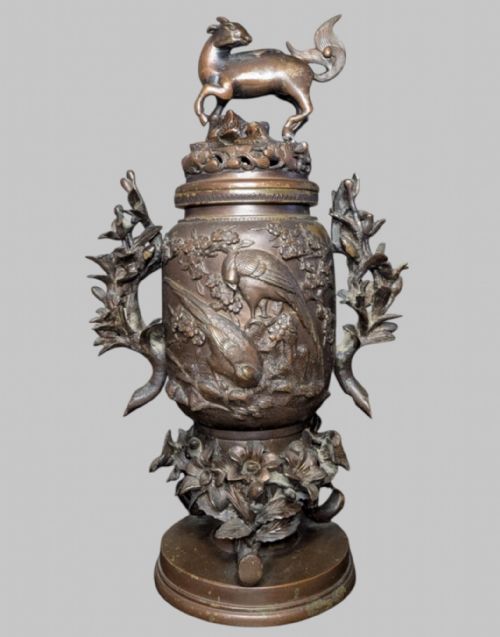
When you search for an antique japanese censer, you encounter lidded vessels designed for burning aromatic materials, commonly termed koro. These pieces emerge predominantly from the Meiji period and the Edo period, spanning bronze, porcelain, and earthenware forms.
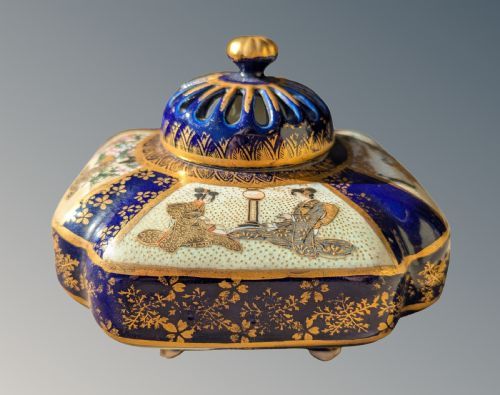
The selection on this page centres heavily on Meiji period bronze and Satsuma earthenware examples. You also meet Kutani porcelain and Imari porcelain variants, alongside hanging boat shapes and crescent moon shapes.
Beyond standard tabletop burners, the forms extend to tripod bowls, miniature incense burners with lids, and larger lidded urns. These objects served both domestic display and traditional ritual functions in Japanese interiors.
How They Were Made
Metal vessels rely on bronze casting, often incorporating patinated bronze, gilt bronze, and silver details. Artisans frequently integrated cloisonné enamel and champlevé enamel directly into the metal body.
Ceramic pieces utilise earthenware and porcelain bases, decorated with hand-painted enamel and gold leaf. Sculpted animal elements, such as elephant head feet and shi-shi lion finials, are modelled separately before assembly.
Antique Japanese Censer Retail Price Guide 2026
Typical asking prices for japanese censer among the pieces listed under this phrase on Sellingantiques today, from the lower quarter to the upper quarter. They describe what is for sale here now, not the wider market.
One bronze censer takes the unusual shape of a crescent moon, proving that nineteenth-century metalworkers enjoyed bending celestial geometry.
What Varies in Quality
Quality rests upon the crispness of the bronze casting and the precision of the enamel work. Finer examples display intricate reticulated patterns and securely fitted lids that align completely with the rim.
In ceramic bodies, the refinement of the crackle glaze and the delicacy of the gold leaf application distinguish superior Satsuma and Kutani work. Maker signatures and imperial crests further indicate production by notable workshops.
Kinkozan·Kizan·Kotobuki do·Shizan·Ippo
The Antique Japanese Censer Glossary
- Koro
- A traditional Japanese incense burner, typically fitted with a lid and resting on three or more feet. These vessels form the majority of the incense containers in this collection.
- Satsuma
- A type of earthenware originating from Satsuma Province, characterised by an ivory-coloured, crackled glaze painted with polychrome enamels and gilding. Many nineteenth-century examples display rich figural scenes.
- Cloisonné
- A metalwork technique where thin wire partitions create compartments on a bronze surface, which are then filled with enamel paste and fired. This method produces intricate geometric and pictorial designs.
- Kutani
- A style of Japanese porcelain known for bold colour palettes, particularly iron red and green, depicting natural subjects and figures. These wares date largely from the Meiji period.
Antique Japanese Censer: Frequently Asked Questions
What is a koro?
A koro is a Japanese incense burner designed with a body, a lid for releasing smoke, and feet to elevate the vessel off a surface.
These pieces were used in domestic rooms and temples to burn aromatic woods and resins.
How do I identify a Satsuma censer?
Satsuma censers are made from earthenware rather than porcelain, featuring a distinct ivory-coloured crackle glaze beneath painted enamel decoration.
They frequently incorporate raised gold leaf highlights and are often stamped or signed by the maker on the base.
Were these incense burners made for export?
Many nineteenth-century bronze and ceramic censers were produced specifically for Western export markets during the height of European interest in Japanese art.
These objects combined traditional forms with decorative finishes that appealed to Victorian collectors.
What materials were used for Japanese censers?
Makers utilised bronze, patinated bronze, and gilt bronze alongside porcelain and earthenware.
Enamelwork, gold leaf, and silver were frequently added to embellish the metal and ceramic surfaces.