




Cast Bronze Censer
These cast bronze censer vessels bring ritual weight and scholarly form to a room, forged in bronze, brass, and copper alloy across centuries.
Cast Bronze Censer
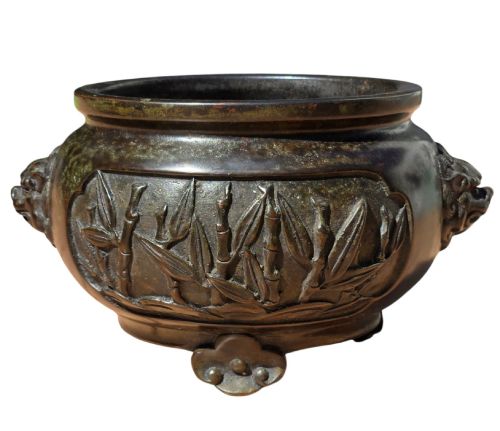
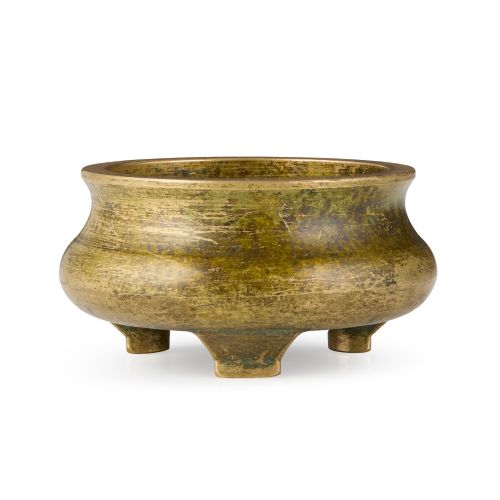
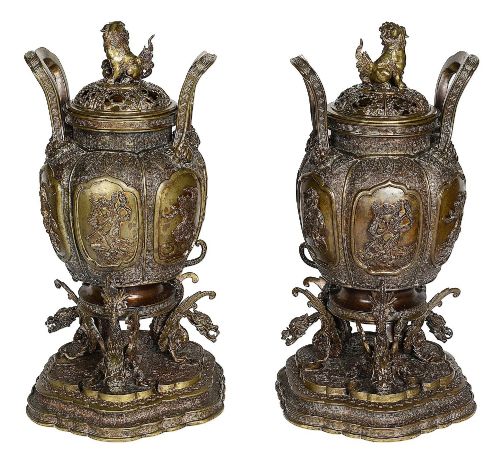
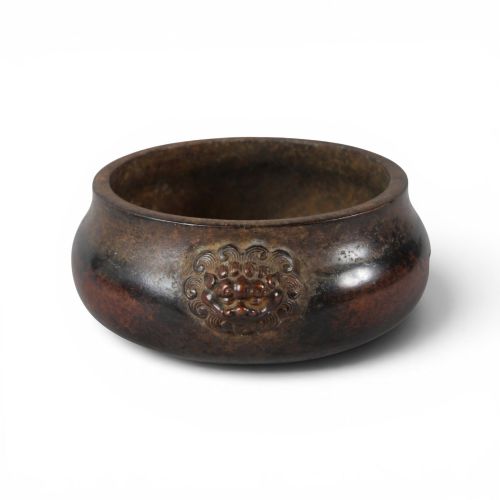
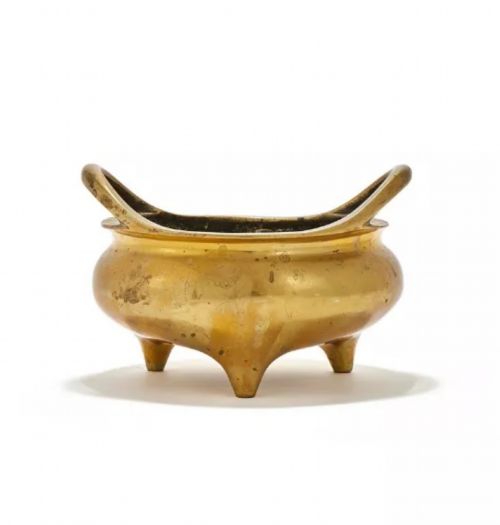
A cast bronze censer stands as a vessel for burning aromatic resins and woods, appearing here in forms from tripod bowls and lidded urns to ritual vessels and hanging burners. The pieces on this page draw principally from Chinese dynasties and Japanese periods alongside English Regency and Victorian interpretations.
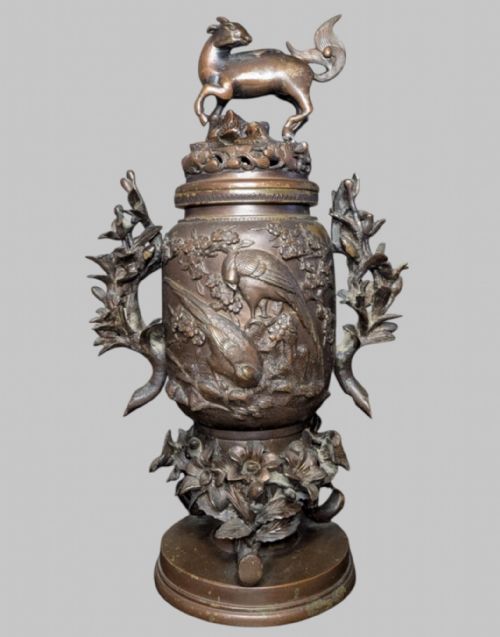
Scholar's pieces dominate the selections, often bearing relief panels, mask handles, or animal finials such as fu lions and goats. Buyers encounter heavier tripod formats and boat-shaped censers that originate from centuries of metalworking traditions.
The objects serve as focal points for interiors, uniting utilitarian incense burning with sculptural presence. Their diverse origins span the Ming, Qing, Meiji, and Edo eras, as well as Anglo-Indian and domestic nineteenth-century workshops.
Method and metal
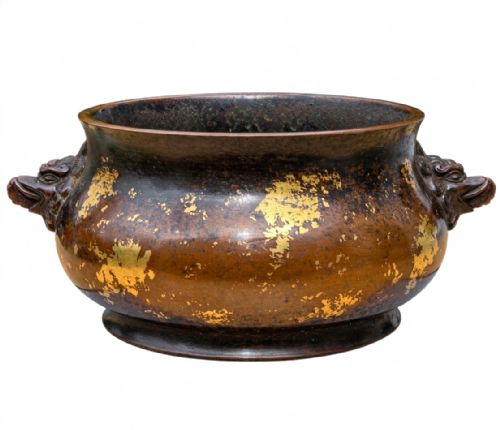
Makers utilised bronze, brass, and copper alloy, often enhancing surfaces with gold leaf or gilt splashes to create varied tonal depth. The casting process produced substantial weights, ranging from miniature scholar's objects to heavy ritual pieces exceeding three kilograms.
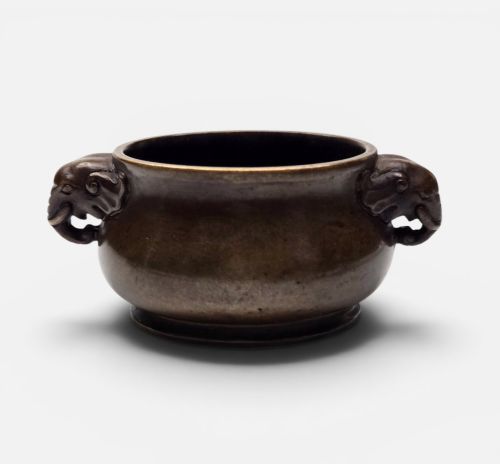
Craftsmen applied surface details through relief panels, incised marks, and applied elements like taotie masks and elephant head handles. Finishing techniques involved polishing and patination, ensuring the metal retained resonant qualities and deep colour over time.
Cast Bronze Censer Retail Price Guide 2026
Typical asking prices for cast bronze censer among the pieces listed under this phrase on Sellingantiques today, from the lower quarter to the upper quarter. They describe what is for sale here now, not the wider market.
One exceptional scholar's censer arrives equipped with a goat finial, watching over the smoke with quiet determination.
Distinctions of execution
Weight and wall thickness separate substantial master-cast vessels from lighter decorative items, with heavier examples providing a solid physical presence and bell-ring resonance. The crispness of the casting defines the tier of the piece, particularly in complex details like lion masks and archaic motifs.
The integrity of the surface patination and the precision of studio or maker marks indicate the care taken during production. Pieces featuring integrated handles, well-defined finials, and original covers demonstrate higher levels of workshop proficiency.
Wu Bangzuo
The Cast Bronze Censer Glossary
- Censer
- A vessel designed for burning incense. These items range from open bowls to lidded urns.
- Tripod
- A vessel supported by three feet. This formation appears frequently in early scholar's pieces.
- Taotie
- A mythological mask motif found on ancient Chinese ritual vessels. It often appears on the sides of heavier censers.
- Finial
- An ornamental crowning detail attached to the lid of a censer. Common examples include sculpted lions and goats.
- Jardiniere
- A decorative ceramic or metal bowl used for holding plants. Some large bronze bowls serve this dual function.
Cast Bronze Censer: Frequently Asked Questions
What is a cast bronze censer used for?
These vessels were created to burn incense resins, woods, and powders during ritual ceremonies or within the private studies of scholars. They diffused fragrance while serving as contemplative objects on desks and altars.
In modern interiors, collectors place them as sculptural accents, utilising their weight and historical patination to anchor a room's decorative scheme.
How do I identify a Ming dynasty piece?
Ming pieces often display characteristic scholarly forms, such as tripod bodies with relief panels depicting themes like the three friends of winter. They frequently feature deep, stable casting and subtle patination developed over centuries.
Consulting the recorded reign marks and comparing the heft and surface wear against known examples helps confirm the period of manufacture.
Are these censers suitable for burning incense today?
Many of these metal vessels remain robust enough to hold charcoal and incense resins directly within their bowls. Their solid bronze or copper alloy construction withstands heat without structural compromise.
Collectors often place a layer of ash inside the base to protect the historic metal surface from direct thermal shock.
What distinguishes Japanese bronze censers from Chinese ones?
Japanese examples from the Meiji and Edo periods frequently incorporate specific wildlife motifs, such as dragons, goats, or distinctive floral finials on koro burners. Their surface detailing often reflects the precise metalwork styles characteristic of Japanese artisanal traditions.
Chinese pieces lean more toward archaic ritual forms, gui shapes, and studio marks associated with scholarly dynasties.