


Japanese Porcelain Burner
These Japanese porcelain burners are intricate vessels designed for burning incense, bringing traditional artistry and form into a contemporary interior.
Japanese Porcelain Burner
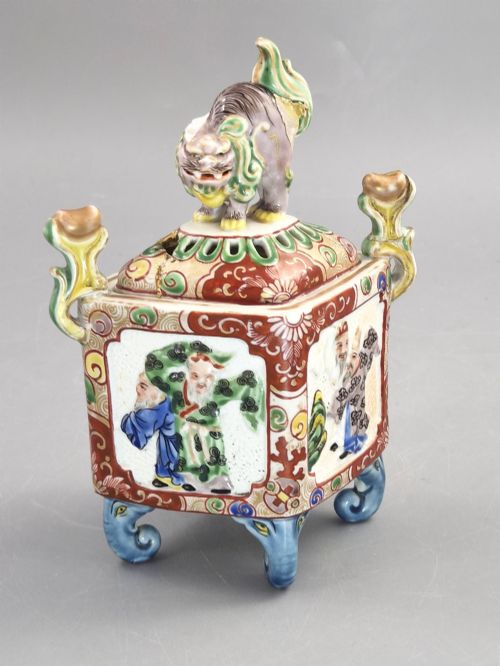
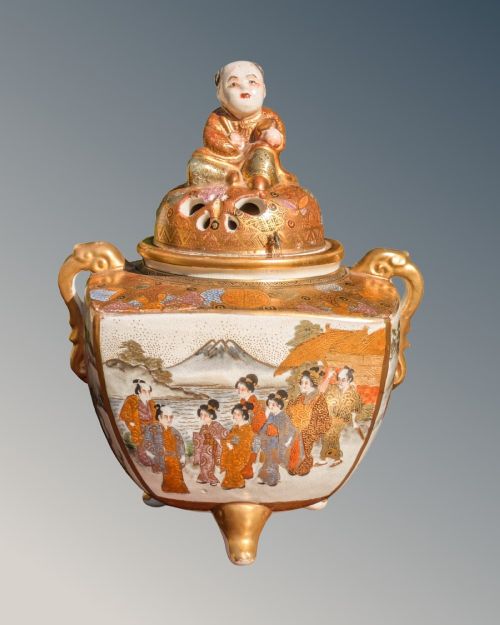
A Japanese porcelain burner is typically encountered as a lidded koro or censer originating from the nineteenth century, spanning periods such as Meiji, Edo, and Edwardian eras. These pieces take various sculptural forms, including traditional tripod vessels, treasure ships, and animal shapes featuring elephant head feet or mythical beasts like the karashishi finial.
Collectors searching for a Japanese porcelain burner will find examples decorated in distinct traditional aesthetics such as Kutani, Satsuma, and Imari styles. The inventory demonstrates a strong representation of Meiji period craftsmanship, often incorporating detailed reticulated work and sculpted dragons.
The utility of these objects historically involved diffusing fragrant resins and woods within domestic or temple spaces, though today they function primarily as decorative focal points. The selection ranges from robust earthenware bodies to refined porcelain structures complete with matching covers.
How they were made
Makers utilised high-fired porcelain and earthenware bodies as the foundational structure for each vessel, often shaping them by hand or mould before applying intricate details. Cobalt underglaze was frequently employed to establish deep blue foundational patterns beneath subsequent layers of decoration.
Enamel colours and surface gilding, including gold leaf and gold gilt, were meticulously applied over the glaze to build up complex pictorial scenes and geometric motifs. Bronze elements sometimes supplemented the ceramic body, particularly for mounts or structural feet.
Several burners transform entirely into mythical beasts and ships, proving that nineteenth-century artisans took their incense security very seriously indeed.
What varies in quality
The distinction between standard production and superior craftsmanship rests in the precision of the hand-painting and the complexity of the sculptural elements. Finely modelled details, such as reticulated carving and expressive mythical finials, elevate the artistic merit of a piece.
Preservation of the delicate surface decoration, particularly the integrity of the enamel and gold leaf applications, marks the difference in condition. Pieces bearing clear signatures from recognised makers and crests demonstrate superior provenance and higher artistic ambition.
Kizan
The Japanese Porcelain Burner Glossary
- Satsuma
- A type of Japanese earthenware featuring a pale, ivory-coloured crackle glaze, typically decorated with elaborate polychrome enamels and gilding. Pieces from this tradition often depict figurative or floral scenes.
- Kutani
- A style of Japanese porcelain and pottery known for vibrant coloured enamels, particularly greens, blues, yellows, and purples, often framed with bold black lines. This aesthetic originated in Ishikawa Prefecture.
- Imari
- A traditional style of Japanese export porcelain characterised by a palette of cobalt blue, iron red, and gold over a white ground. These wares were widely produced for both domestic and international markets.
- Reticulated
- Openwork decoration created by cutting or piercing patterns through the ceramic wall before firing. This technique demonstrates high technical skill in handling clay without structural collapse.
- Karashishi
- A mythical lion-dog creature frequently used as a decorative finial or sculptural motif on vessel covers. These guardian figures symbolise protection and strength.
Japanese Porcelain Burner: Frequently Asked Questions
What is a koro?
A koro is a traditional Japanese incense burner designed with a body, a pierced lid for smoke release, and small feet. They were primarily used to burn aromatic woods and resins in interior spaces.
Over time, these vessels transitioned from utilitarian ritual objects into highly decorative art pieces collected for their intricate painting and sculptural form.
How do I identify Meiji period pieces?
Meiji period burners, produced between eighteen sixty-eight and nineteen twelve, typically exhibit high technical proficiency with dense enamel work, gilding, and sculptural additions like dragons or lions. Many examples from this era reflect the opening of Japan to Western trade and the distinct rise of export wares.
Examining the underside for artist signatures, studio marks, or family crests like the Shimazu crest can further clarify the date and origin of the piece.
Where were Satsuma burners made?
Satsuma ware originated in Satsuma Province on the southern island of Kyushu, though production later expanded to major urban centres such as Kyoto and Tokyo to meet foreign demand. These pieces are distinguished by their fine earthenware body and characteristic network of fine crackles in the glaze.
Painters decorated these surfaces with elaborate scenes, often heightened with extensive gold leaf and raised enamel details.
Can I still burn incense in them?
While these antique burners retain their original hollow construction, many collectors choose not to burn incense in them to preserve fragile interior surfaces and historical gilding. Smoke residue can accumulate over time and discolour porous earthenware or delicate enamelwork.
If utilised, they require careful handling and appropriate non-combustible liners to protect the historic ceramic material from direct heat and ash staining.