



Oriental Porcelain Burner
An oriental porcelain burner brings ancient scent and ritual into a room, fashioned in traditions from the Meiji period back to the Ming dynasty.
Oriental Porcelain Burner
When you search for an oriental porcelain burner, you encounter vessels designed to hold aromatic incense, ranging from lidded koro to open censers and incense holders. These pieces arrive from Japanese and Chinese traditions, spanning the seventeenth century through the Edwardian era.
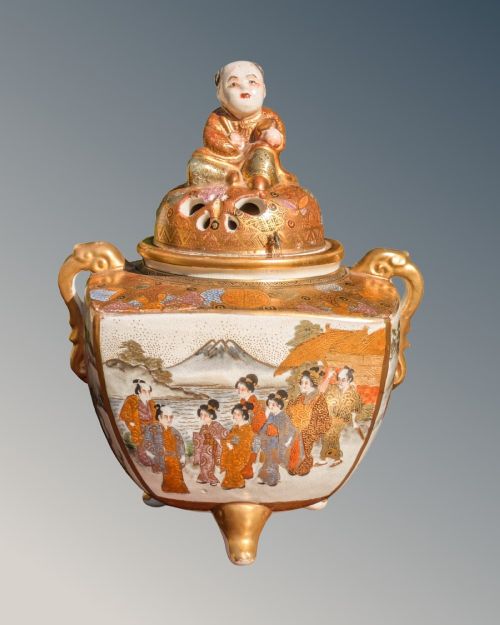
The versions you are most likely to meet on this page belong to the nineteenth century, particularly the Meiji period and the Qing dynasty. Japanese examples often showcase Kutani and Satsuma wares, while Chinese pieces include Imari, Famille Rose, and Blanc de Chine.
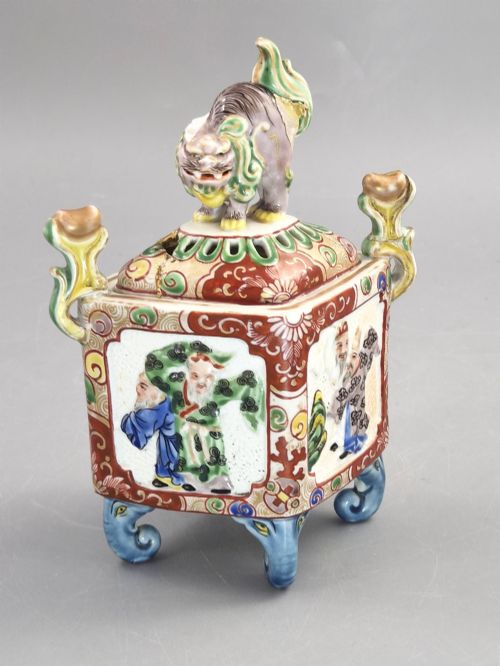
Forms vary from traditional tripod vessels supported by elephant head feet to figural shapes such as treasure ships and laughing boys. Many retain their original covers, frequently finished with sculpted finials including karashishi lions and dragons.
Materials and construction methods
Potters shaped these burners from porcelain, earthenware, and ceramic bodies, utilising cobalt underglaze to establish deep blue decoration beneath clear glazes. Skilled hands added enamel colours and detailed gilding, sometimes incorporating gold leaf or gold gilt to highlight specific motifs.
Techniques range from fine reticulation, seen in pierced porcelain panels, to sculptural modelling that produced distinct dragon forms and animal feet. Firing methods and glaze applications varied between Chinese kilns and Japanese workshops, resulting in distinctive surface textures and weights.
Several Meiji burners stand upon miniature elephant head feet, bravely supporting entire incense vessels without a single murmur.
Distinctions in quality
The standard of a burner depends upon the crispness of its modelling and the control of its glaze, whether in the precision of cobalt underglaze work or the richness of applied enamel and gilding. Finer pieces demonstrate superior command of the kiln, avoiding distortion in complex forms such as reticulated walls or figural finials.
Artistic execution sets individual works apart, particularly in hand-painted details where brushwork on Kutani or Satsuma surfaces displays notable depth and character. The preservation of original covers and delicate elements like elephant head feet or sculpted dragons further defines the standing of each vessel.
The Oriental Porcelain Burner Glossary
- Imari
- A style of Japanese export porcelain decorated in underglaze blue, iron red, and gold. It gained immense popularity in Europe during the export periods.
- Kutani
- Japanese coloured porcelain known for its vibrant palette and intricate detailing. Pieces from this tradition often incorporate rich reds, greens, and extensive gilding.
- Blanc de Chine
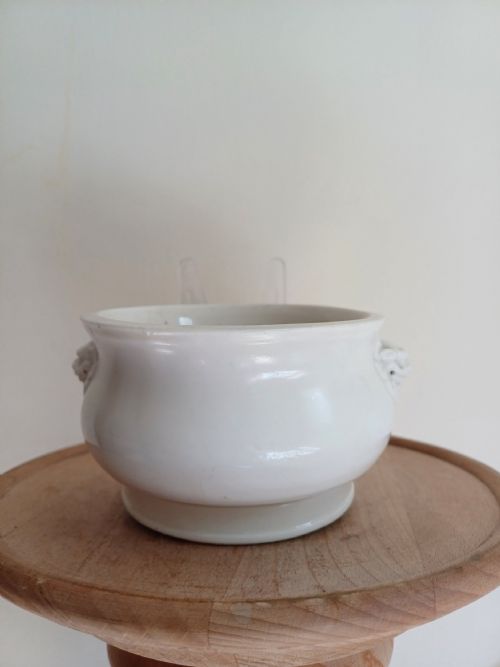
- A type of white porcelain made in Dehua, China, featuring a smooth, ivory-coloured glaze. This material is particularly associated with early censers and figures.
- Famille Rose
- A palette of opaque enamel colours introduced in China during the Qing dynasty. The style is characterised by its soft pink and pastel tones.
Oriental Porcelain Burner: Frequently Asked Questions
What is an oriental porcelain burner used for?
These vessels were primarily designed for burning solid or powdered incense during traditional ceremonies, meditation, or quiet reflection. The pierced covers allowed fragrant smoke to disperse evenly throughout a room while containing the embers safely inside.
Today, they serve mainly as decorative objects and focal points in interiors. Collectors appreciate them for their sculptural forms and the intricate hand-painted artistry preserved on their ceramic surfaces.
How do I distinguish between Chinese and Japanese pieces?
Chinese pieces often reflect dynastic styles, such as the monochrome elegance of Blanc de Chine or the delicate enamel work of the Qing dynasty. Their forms tend to follow classic ritual shapes rooted in earlier ceramic traditions.
Japanese examples frequently originate from the Meiji period, displaying distinct regional styles like Kutani, Satsuma, or Imari. They often incorporate sculptural elements such as karashishi lions, elephant head feet, or figural themes like treasure ships.
How do I date a Meiji period burner?
The Meiji period spans from 1868 to 1912, aligning with the reign of the Japanese emperor of that name. Pieces from this era often reflect the opening of Japan to Western trade, which influenced export wares.
Look for stylistic markers typical of late nineteenth-century workshops, alongside the specific characteristics of Kutani or Satsuma production. Markings on the base, where present, can also offer clues to the workshop or maker.