
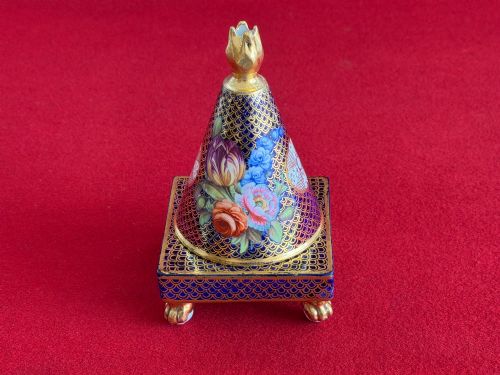
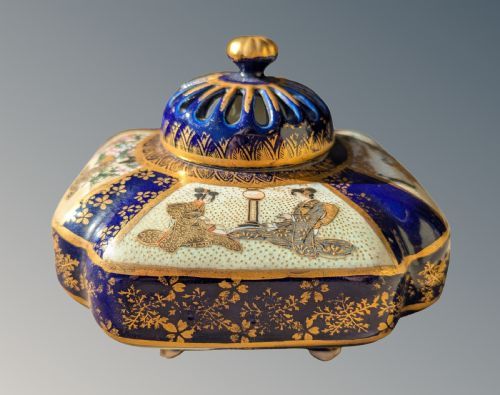


Gilded Ceramic Burner
These gilded ceramic burners unite porcelain and earthenware forms across Georgian and Meiji periods to scent interiors.
Gilded Ceramic Burner
A gilded ceramic burner serves as a vessel for incense, pastilles or potpourri, taking shapes from cottage forms to traditional Japanese koro. When searching for a gilded ceramic burner, a buyer encounters pieces originating from Georgian, Regency and Meiji periods.
The selection here includes Japanese koro, chamberlain Worcester pommanders, pastille burners and potpourri vases in porcelain and earthenware. These items function both as decorative vessels and as functional scent burners for the home.
How they were made
Potters shaped these bodies from porcelain, earthenware and ironstone before applying enamels and gold leaf or gilt. Japanese makers utilised Satsuma, Kutani and Imari techniques, while English manufactories employed porcelain and ironstone.
Makers integrated bronze mounts and covers onto ceramic vessels, combining metalwork with painted ceramic bodies. Gold gilt and enamel decoration were applied across the surfaces to highlight specific design motifs.
One ceramic censer takes the precise shape of a Japanese treasure ship, ready to sail across your mantelpiece.
What varies in quality
Quality depends upon the precision of the hand-painted enamels and the application of gold leaf or gilt across the ceramic body. Pieces bearing identifiable signatures or crests demonstrate higher levels of workshop execution.
The complexity of the form, such as treasure ships or cottage pastille burners, separates standard production from finer examples. Preservation of the original gilding and enamelling determines the standing of each piece.
Kinkozan·Kizan·Shizan·Chamberlain Worcester·Mason's Ironstone
The Gilded Ceramic Burner Glossary
- Koro
- A Japanese incense burner, often lidded and supported on feet. These ceramic vessels frequently feature Satsuma or Imari decoration.
- Pastille burner
- A small ceramic vessel designed to diffuse fragrant pastilles. English examples often take miniature cottage forms.
- Pomander
- A spherical or container vessel used for holding aromatic substances. Eighteenth-century examples include Chamberlain Worcester porcelain.
- Satsuma
- A type of Japanese earthenware featuring a crackle glaze and elaborate enamel and gold decoration. These wares date largely to the Meiji period.
- Ironstone
- A type of heavy, durable earthenware developed in the nineteenth century. Makers such as Mason utilised this ceramic body for decorative vases.
Gilded Ceramic Burner: Frequently Asked Questions
How do I use a ceramic burner?
These vessels were originally designed to hold burning incense, pastilles or aromatic potpourri within their lidded bodies. The pierced covers allowed scent to disperse into the room.
Modern owners generally display them as decorative objects rather than burning materials inside them, preserving the delicate gilt and enamel surfaces.
How do I date an English pastille burner?
English pastille burners from the Georgian and Regency periods often take architectural forms, such as miniature cottages. Examining the paste, enamel palette and potting style helps determine the era.
Manufactories like Chamberlain Worcester produced these earthenware and porcelain pieces during the early nineteenth century.
What is Satsuma ware?
Satsuma ware is a distinct type of Japanese earthenware characterised by an ivory-coloured body with a fine crackle glaze. Artisans decorated these surfaces heavily with enamel and gold gilt.
Signed pieces from the Meiji period frequently feature specific family crests, such as the Shimazu crest.
Are all these burners gilded?
The listings feature ceramic bodies enhanced with gold leaf, gilt or enamel highlights across various styles and periods. This metallic detailing catches the light on both English porcelain and Japanese koro.
The extent of the gilding varies by piece and maker, influencing the overall visual impact of the vessel.