



Chamberlain Worcester Porcelain
Chamberlain Worcester porcelain pieces are fine English wares from the Georgian and Regency periods, prized for hand-painted views, armorial crests, and intricate gilding.
Chamberlain Worcester porcelain forms and periods
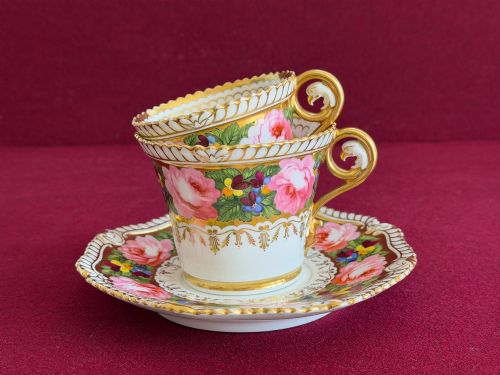
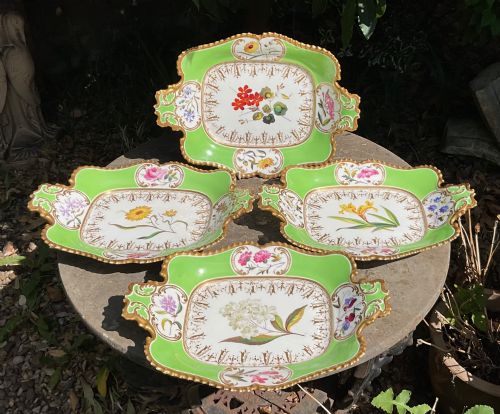
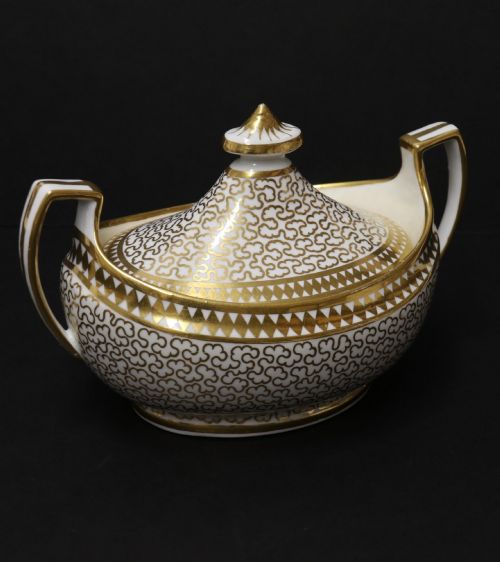
Chamberlain Worcester porcelain encompasses a wide variety of tableware and decorative objects spanning the late eighteenth century through the nineteenth century, including Georgian and Regency eras. Buyers encounter teacups and saucers, decorative dessert and botanical plates, jugs, coffee cans, pastille burners, vases, and larger items like punch bowls and sauce tureens.
The assortment on offer ranges from armorial services made for specific patrons, such as the Nawab of the Carnatic, to domestic tea wares painted with British birds, fancy birds, floral displays, and Chinese-inspired Chinoiserie patterns. Pieces often reflect contemporary tastes, moving from eighteenth-century motifs into grand Regency and Victorian forms including double-walled cups, card trays, and topographical views of Malvern, Worcester, and Buckingham Palace.
Materials and construction
The manufactory utilised hard-wearing porcelain bodies decorated with polychrome enamel painting, hand-applied gold leaf, and rich gilding. Many items, such as pastille burners, vases, and boxes, relied on delicate moulding techniques, while specialist forms like twin-handled cups featured pierced double walls.
Decoration often involved meticulous hand painting of botanical studies, landscapes, topographical scenes, and heraldic armorial crests. Potters also produced patterned wares using spiral fluting, Tournay shapes, and New Gadroon edges, alongside specialised items incorporating orange grounds or Imari palettes.
Retail Price Guide 2026
Typical UK retail prices for chamberlain worcester porcelain, calculated from the Sellingantiques database of over a million retail prices indexed since 2003. This retail price guide relies exclusively on Sellingantiques data; no external sources or auction records are used, so the figures do not describe the wider market.
Among the topographical plates and stately armorial services, a porcelain pug dog from the Regency era stands ready to guard the tea table.
Judging quality and execution
Quality in Chamberlain Worcester porcelain rests on the ambition and precision of the hand-painted decoration, ranging from simple floral sprays to detailed topographical views of Malvern or custom armorial services. The application of gold leaf and the crispness of moulded details like gadrooning or pierced double walls further separate standard production items from elite commissions.
Provenance and specific patterns elevate certain pieces, with documented services for historical figures or named landscape views representing the peak of the factory's output. The complexity of forms, such as specialised scent bottles, pug dog figures, or large punch bowls, demonstrates the technical mastery of the makers.
Chamberlain and Co·Chamberlains of Worcester·Chamberlain Worcester
The Chamberlain Worcester Porcelain Glossary
- Armorial
- Bearing a heraldic crest or coat of arms commissioned by a specific family or patron. These bespoke items sit at the upper tier of factory production.
- Imari
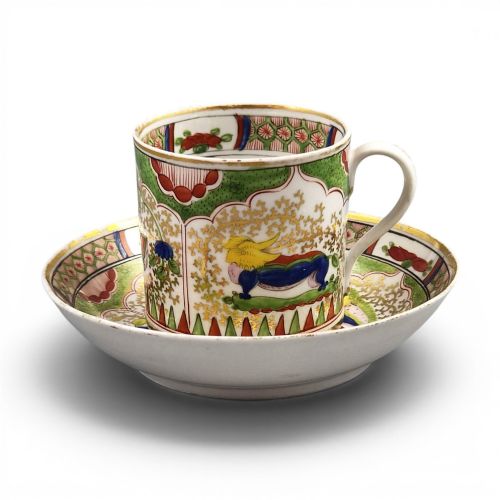
- A decorative style inspired by Japanese export wares, typically featuring a palette of iron red, cobalt blue, and gold leaf. This aesthetic appears frequently on plates, jugs, and tea wares.
- Pastille burner
- A small ceramic vessel designed to hold and diffuse scented pastilles through pierced lids or chimneys. Regency examples often take elaborate miniature architectural forms.
- Coffee can
- A straight-sided cylindrical ceramic cup used for drinking coffee in the Georgian and Regency periods, frequently matched with a saucer.
- Gadroon
- A decorative moulded ornamental band of radiating curved ridges or flutes, often edging the rims of plates and cups during the Regency era.
Frequently Asked Questions
What periods do these pieces date from?
The inventory spans the Georgian and Regency eras, stretching from the late eighteenth century through the nineteenth century.
Most items date between the peak of production around 1800 and the mid-nineteenth century, capturing shifts in design from neoclassical styles to Victorian tastes.
How were pastille burners used?
Pastille burners functioned as domestic room deodorisers and scent diffusers in Georgian and Regency drawing rooms.
Users placed aromatic paste pastilles inside the small ceramic vessels, allowing fragrant smoke to escape through specially pierced lids or chimneys.
How do I identify armorial porcelain?
Armorial pieces feature hand-painted coats of arms, crests, or heraldic shields belonging to specific historical families or patrons.
These bespoke table services and single plates were ordered directly from the factory to display elite status and family lineage.