


Georgian Ceramic Pitcher
These robust vessels offer a tangible link to Georgian domestic life through transfer-printed earthenware and painted porcelain.
Georgian Ceramic Pitcher
A georgian ceramic pitcher encompasses a variety of utilitarian and decorative pouring vessels produced during the Georgian period and the broader Regency era. Buyers seeking these items will encounter milk jugs, creamers, and larger commemorative or Masonic pitchers used in households and taverns.
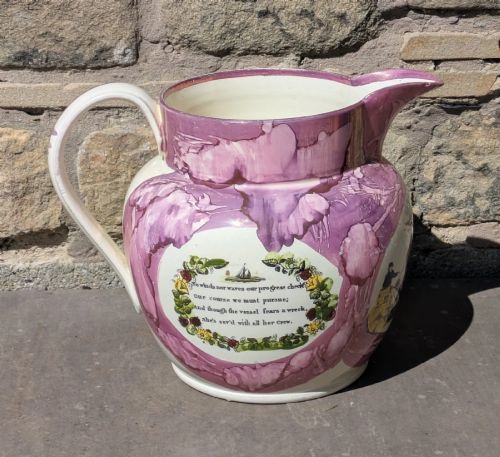
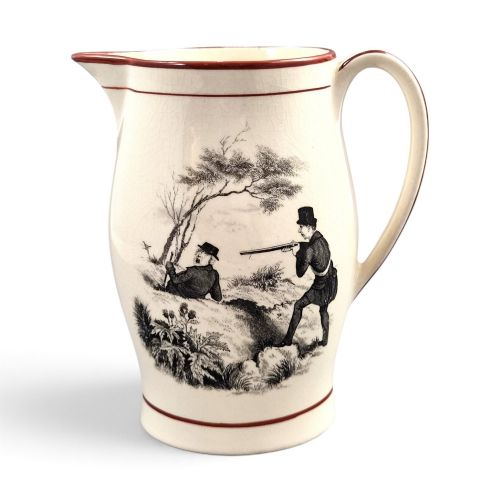
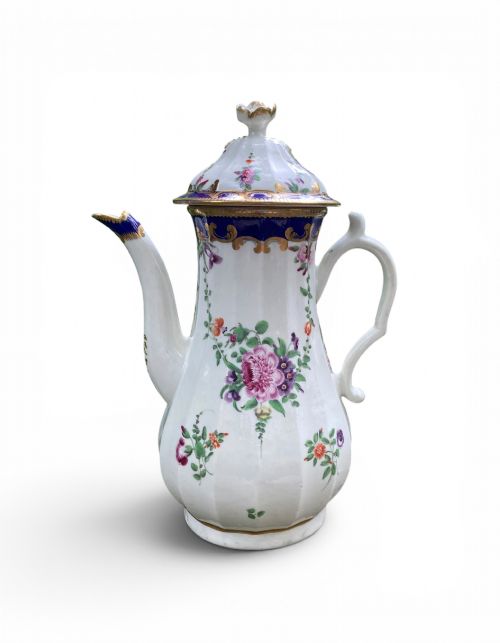
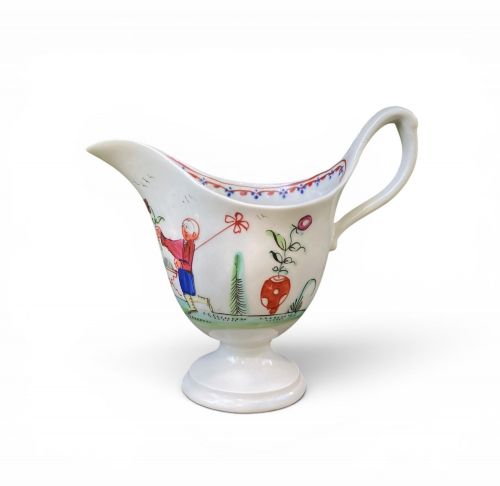
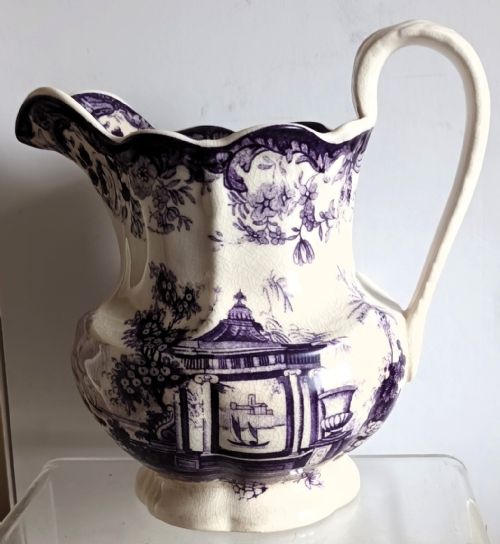
The pieces on this page span several decades, featuring earthenware bodies like creamware and pearlware alongside fine porcelain from factories such as Worcester and New Hall. Staffordshire potteries dominate the earthenware offerings, often decorated with transfer printing depicting maritime themes or patriotic scenes.
Materials and production techniques
Potters shaped these vessels using earthenware, pearlware, and creamware bodies, frequently applying tin or salt glazes to seal the porous clay. Porcelain pieces involved refined paste fired at higher temperatures to achieve a translucent white finish.
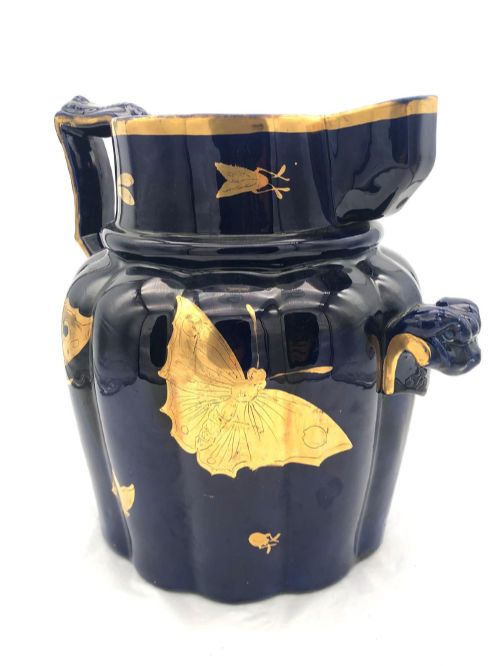
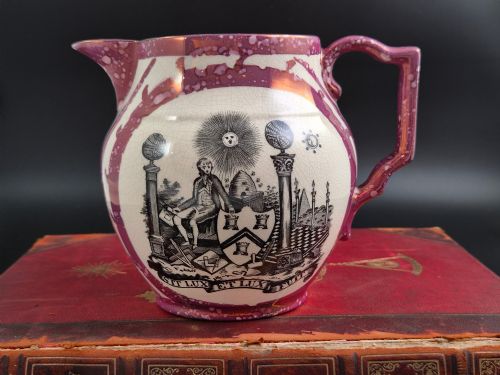
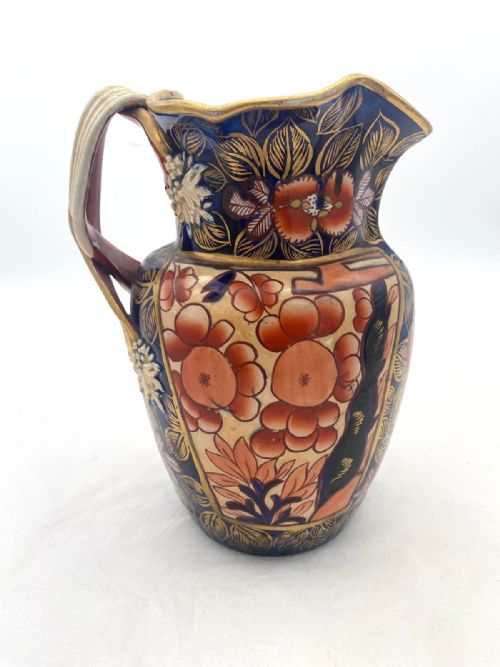
Decoration relied heavily on underglaze and overglaze techniques, including black and magenta transfer printing, pink splash lustre, and hand-painted enamel scenes. Moulded details such as cabbage leaf patterns or mask heads added texture to the bodies.
Georgian Ceramic Pitcher Retail Price Guide 2026
Typical asking prices for georgian ceramic pitcher among the pieces listed under this phrase on Sellingantiques today, from the lower quarter to the upper quarter. They describe what is for sale here now, not the wider market.
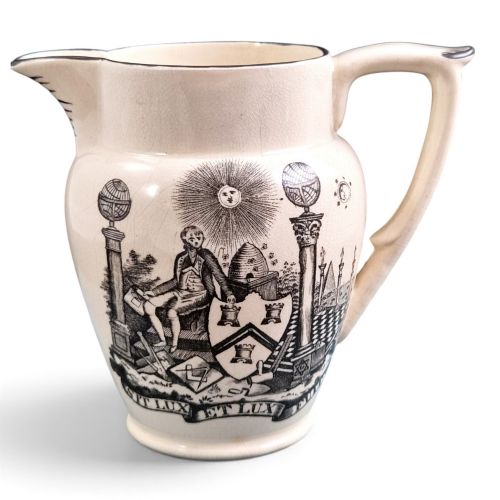
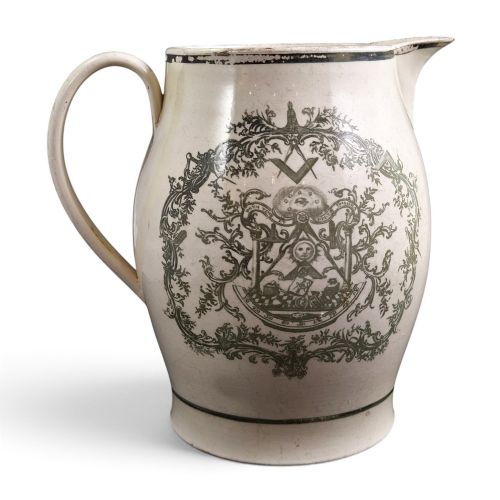
Several jugs display Masonic symbols and oddfellows emblems, ensuring secret society toasts lasted well into the evening.
Distinctions in quality and execution
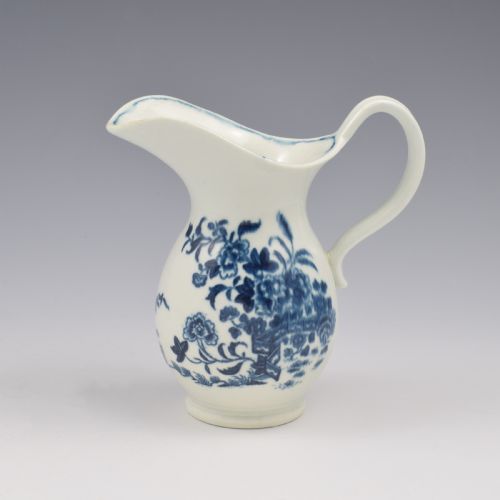
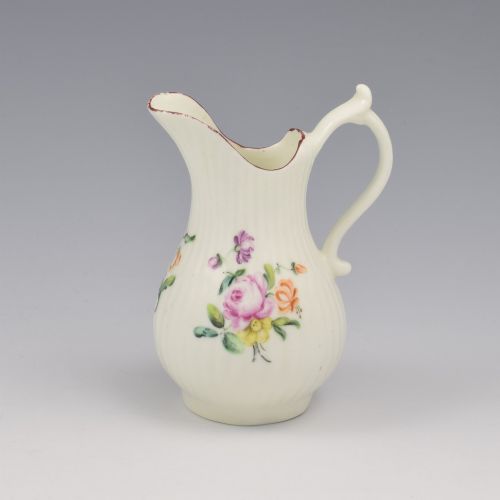
The refinement of the ceramic body and the clarity of the transfer printing or hand-painted enamel work separate standard utilitarian vessels from superior examples. Early porcelain pieces display finer potting, crisper moulding, and more controlled application of gold leaf or polychrome enamels.
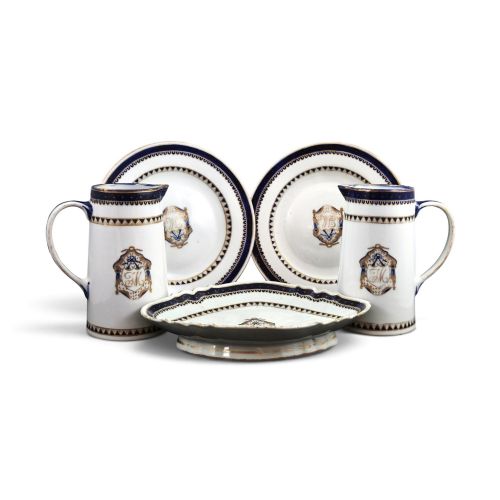
Artistic execution in the hand-painted motifs or transfer details dictates the desirability of a piece. Well-defined mask heads, intricate armorial crests, and complex topographical or Masonic iconography indicate a higher tier of production.
Dr Wall Worcester·Mason's Ironstone·New Hall·Leeds Pottery·Chamberlain Worcester
The Georgian Ceramic Pitcher Glossary
- Creamware
- A fine earthenware developed in Yorkshire and Staffordshire, characterised by a pale yellowish-cream glaze.
- Pearlware
- An refined earthenware introduced by Josiah Wedgwood featuring a bluish glaze that pooled in recesses to mimic Chinese porcelain.
- Transfer printing
- A method of applying intricate designs to ceramic surfaces by pressing paper engraved with copperplate ink onto the biscuit or glazed body.
- Lustreware
- Earthenware or porcelain decorated with a metallic film that produced an iridescent sheen, often seen in pink or copper tones on nineteenth-century jugs.
- Basalt
- A dense, fine-grained black stoneware developed by Josiah Wedgwood that required no glaze to achieve its smooth finish.
Georgian Ceramic Pitcher: Frequently Asked Questions
How do I date a ceramic pitcher?
Dating relies on identifying the ceramic body, such as creamware or pearlware, alongside stylistic markers like Neoclassical shapes or transfer-printed themes. Factory marks and pattern numbers also provide precise chronological reference points.
Changes in glaze formulation and handle design help narrow the window of manufacture across the eighteenth and nineteenth centuries.
Were these pitchers used daily?
Many earthenware and stoneware vessels served practical roles in kitchens and dining rooms for pouring milk, water, or ale. Larger examples often saw use in communal gatherings, inns, or fraternal lodges.
Finer porcelain cream jugs were reserved for the tea table among wealthier households, reflecting polite social rituals of the period.
How do I display a ceramic jug safely?
Displaying these pieces requires stable shelving away from direct sunlight and high traffic areas to prevent accidental knocks. Earthenware and porcelain benefit from stable indoor humidity and minimal handling.
Using padded display stands supports the weight of heavier ironstone or stoneware pitchers without stressing the base or handle.
What is lustre decoration?
Lustre decoration involves applying a metallic solution containing gold, copper, or silver to the glazed ceramic before a low-temperature firing. This technique creates a reflective, iridescent finish popular on nineteenth-century jugs.
Pink splash lustre was frequently achieved by flicking acid onto the metallic surface before firing to create a mottled effect.