


Pink Lustre Pitcher
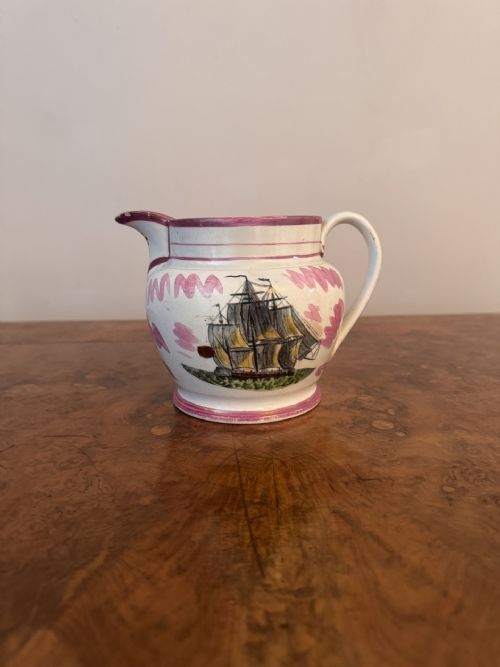
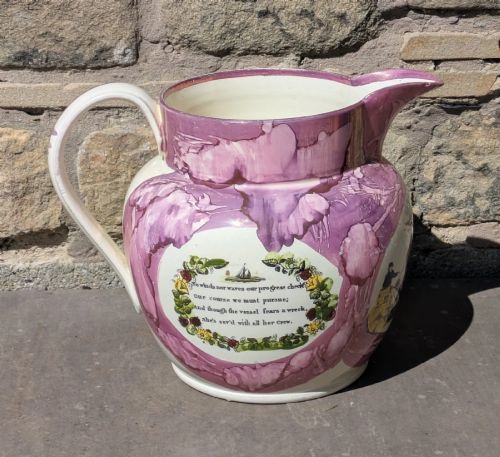
A pink lustre pitcher brings rich metallic sheen and transfer-printed maritime or masonic scenes right to the table.
Pink Lustre Pitcher
A pink lustre pitcher is a ceramic vessel decorated with a metallic glaze that fires to a distinctive pink or purple tone. These pieces span Georgian and Victorian periods, with many originating from Sunderland potteries.
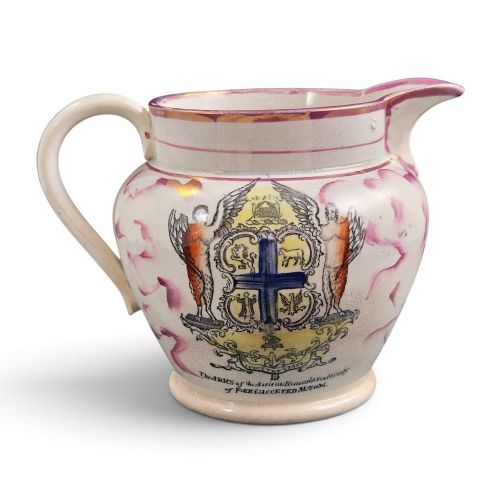
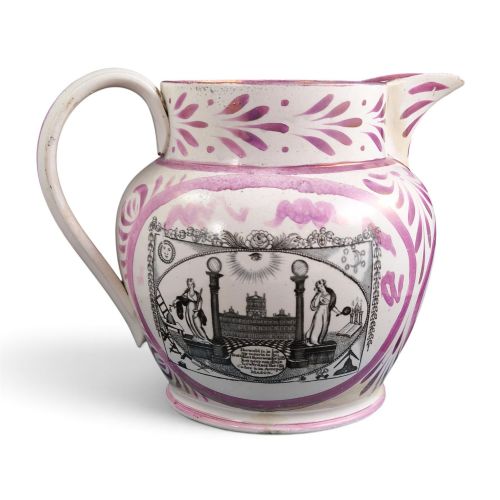
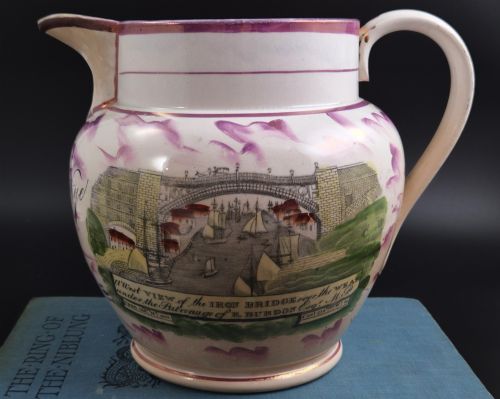
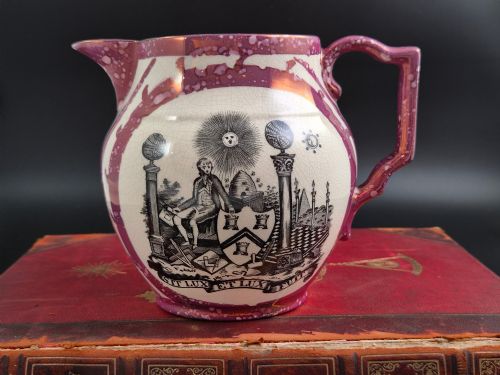
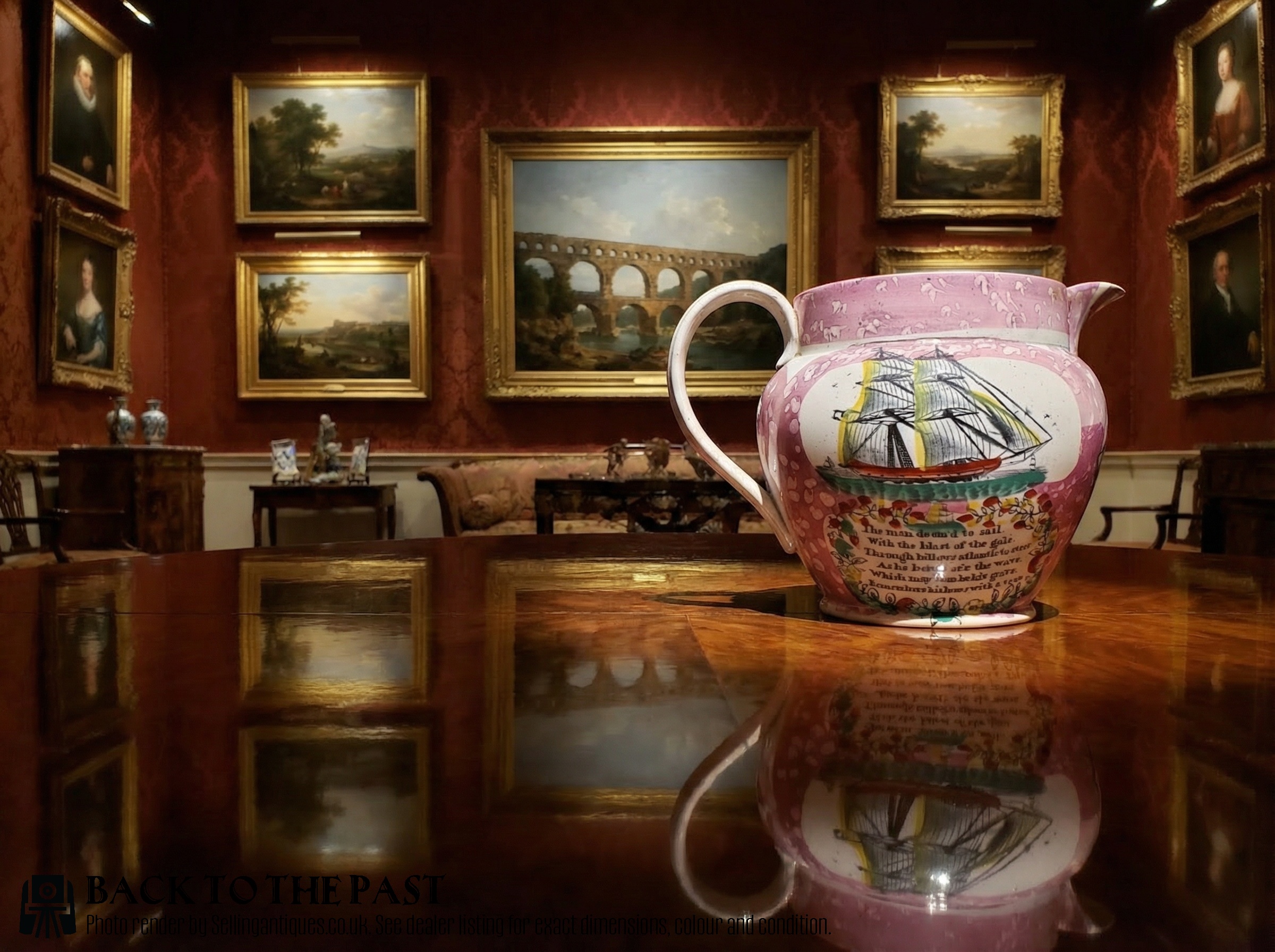
The most common examples on this page feature robust earthenware bodies adorned with transfer-printed shipping scenes, verses, or masonic symbols. Collectors frequently encounter large forms showcasing a distinctive pink splash effect.
Makers often combined purple transfer decoration with hand-painted polychrome highlights to enhance the visual appeal of these jugs. Most surviving examples belong to the nineteenth century, reflecting the peak era of British lustreware production.
Materials and production methods
Potters shaped these vessels using earthenware or pearlware bodies before applying decorative glazes. Metallic oxide mixtures were applied to the surface to create the characteristic lustre effect during firing.
Makers utilised transfer printing techniques to transfer detailed images, such as tall ships and poetic panels, directly onto the ceramic body. Enamel colours were often added by hand over the print to provide extra brightness before the final kiln firing.
Pink Lustre Pitcher Retail Price Guide 2026
Typical asking prices for pink lustre pitcher among the pieces listed under this phrase on Sellingantiques today, from the lower quarter to the upper quarter. They describe what is for sale here now, not the wider market.
Listings feature earthenware and pearlware bodies decorated with metallic lustre glazes, enamel colours, and purple transfer prints.
Evaluating quality in lustreware
Quality rests on the crispness of the transfer print and the depth of the metallic glaze. Superior examples display a brilliant pink splash with well-defined details on the maritime or masonic subjects.
The weight and balance of the earthenware body also indicate the skill of the maker. Finer vessels maintain clean potting lines and evenly distributed enamel colours across the entire surface.
The Pink Lustre Pitcher Glossary
- Pearlware
- A refined earthenware body developed in the eighteenth century featuring a subtle bluish glaze that pools in crevices. It provides a smoother canvas for transfer-printed decoration than standard creamware.
- Lustre glaze
- A metallic film applied to ceramics to produce an iridescent surface resembling precious metal. Gold and platinum oxides create the pink and purple tones seen on these jugs.
- Splash lustre
- A decorative technique where droplets of metallic solution are flicked onto the glazed surface before firing. This creates a mottled or marbled pattern unique to each vessel.
- Transfer printing
- A method of applying engraved designs to ceramics using paper or tissue pulled from a copper plate. It allowed potteries to produce detailed pictorial scenes consistently.
- Earthenware
- A porous pottery body fired at lower temperatures than stoneware or porcelain. It serves as the primary substrate for nineteenth-century lustre jugs.
Pink Lustre Pitcher: Frequently Asked Questions
What are pink lustre pitchers made of?
These pitchers consist of a ceramic earthenware or pearlware body covered in tin or lead glazes. Metallic oxides are applied over the surface to create the signature pink sheen during a secondary firing.
Pottries shaped these vessels on a wheel or in moulds before adding handles and spouts. The resulting body provides a sturdy base for detailed transfer-printed imagery.
How do you date a pink lustre jug?
Dating relies on stylistic clues, ceramic bodies, and specific themes recorded in the transfer prints. Pearlware bodies and certain poetic verses point toward the earlier Georgian decades.
Later Victorian examples often feature bolder splash effects and heavier earthenware forms. Dated inscriptions on pieces provide direct evidence for specific years of manufacture.
Where were these pitchers manufactured?
Production centred primarily around the pottery works in Sunderland and Staffordshire during the nineteenth century. The Wear river region became particularly renowned for large maritime jugs.
Local factories supplied these vessels to sailors, tradesmen, and local communities. Many pieces commemorate specific ships, bridges, or fraternal orders.
How should I clean a antique lustre jug?
Cleaning requires gentle washing with warm water and mild soap using a soft cloth. Harsh abrasives or chemical detergents must be avoided to protect the delicate metallic glaze.
Submerging antique ceramics for extended periods can damage old bodies through crazing lines. Careful hand drying preserves the enamel highlights and the lustre finish.