

Georgian Ceramic Jug
A georgian ceramic jug brings tactile warmth to a room, offering functional pottery shaped by eighteenth and nineteenth-century hands.
Georgian Ceramic Jug
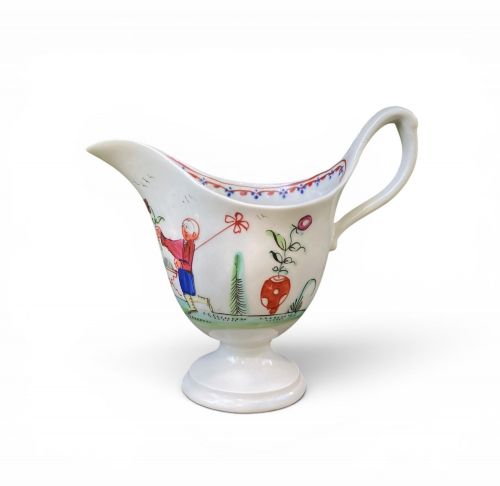
A georgian ceramic jug encompasses earthenware, porcelain, and stoneware forms produced across the eighteenth and nineteenth centuries. Buyers encounter creamware, pearlware, and ironstone pieces designed for milk, cream, water, or ale.
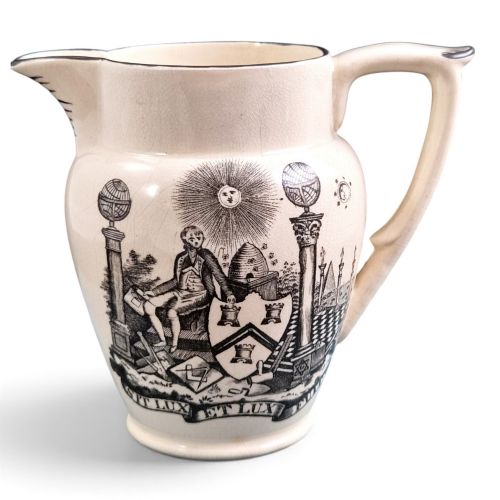
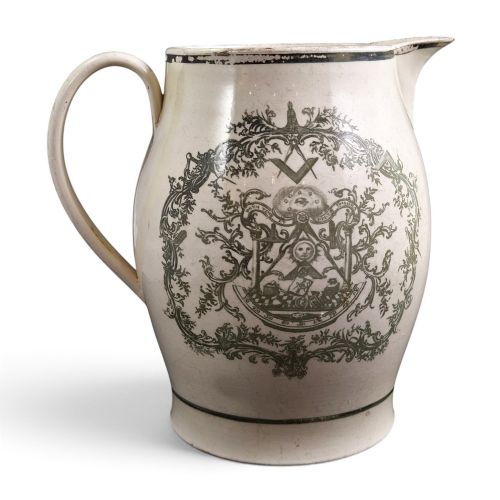
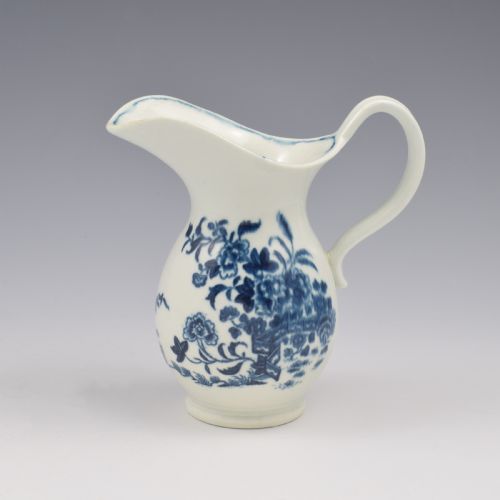
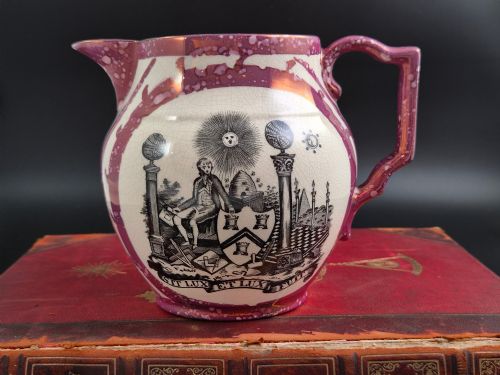
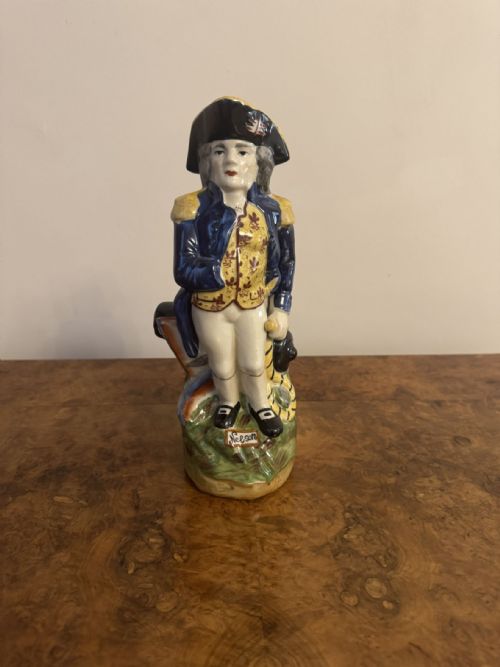
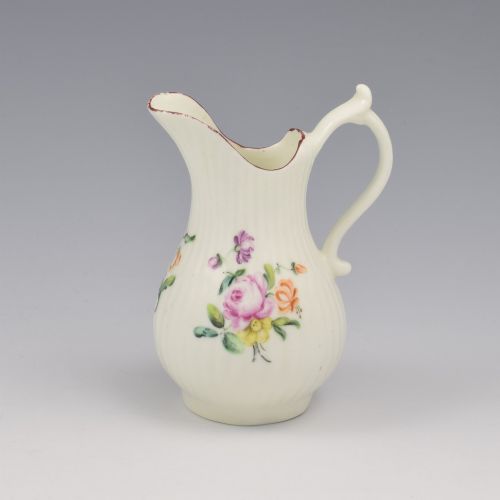
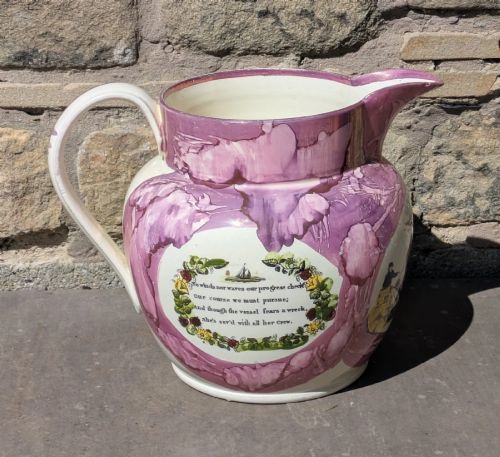
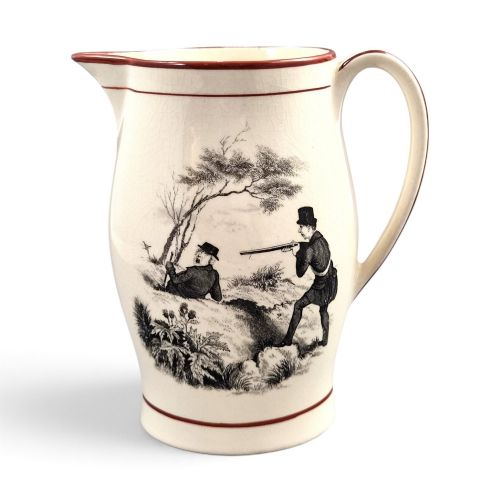
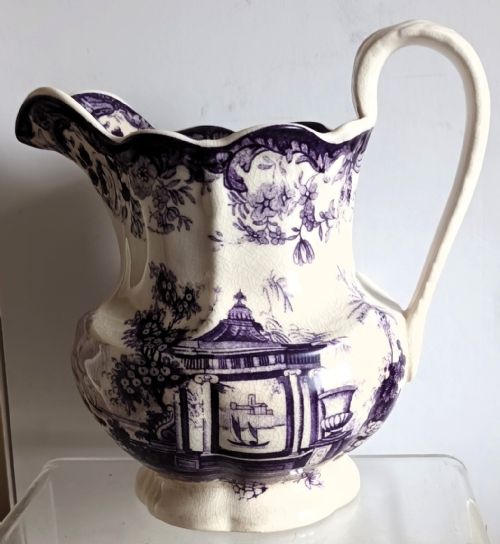
The selection ranges from Staffordshire transfer-printed pitchers to delicate porcelain ewers from factories such as Worcester and Derby. Forms include utilitarian cream jugs alongside commemorative pieces decorated with maritime themes, masonic symbols, or poetic panels.
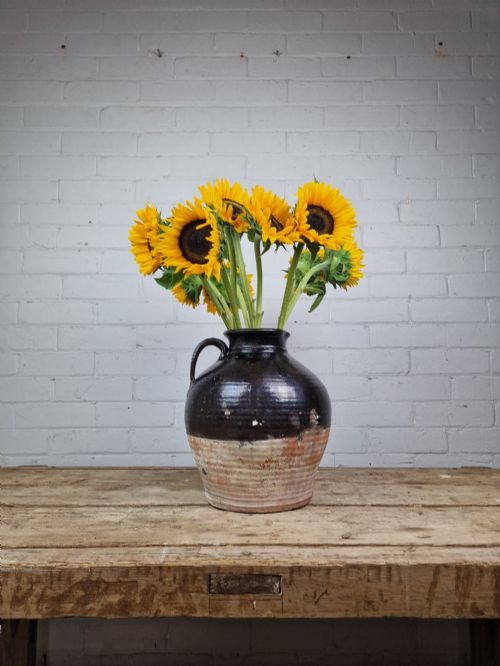
Rustic slipware vessels sit alongside refined porcelain service items, showing the full social spectrum of domestic pottery. Most examples date from the late eighteenth century through the regency period into the early victorian era.
Materials and methods
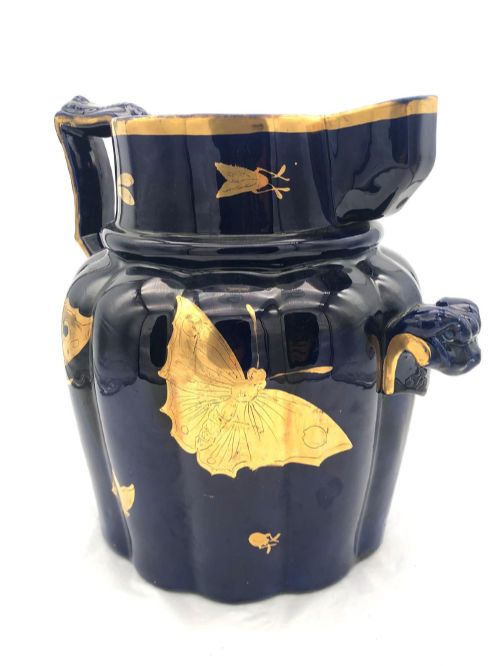
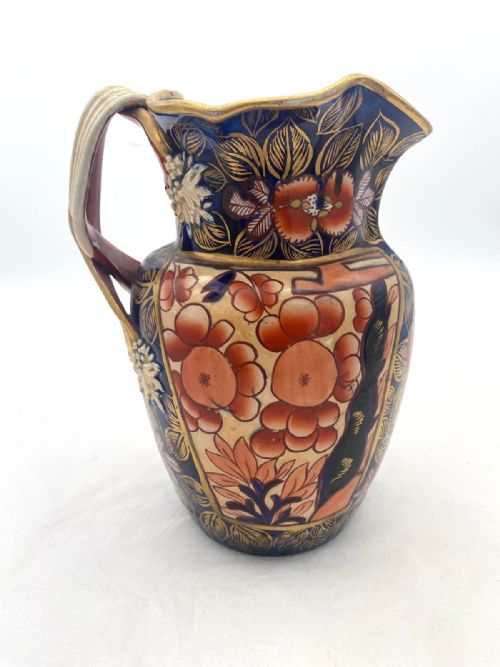
Potters shaped these vessels using earthenware, creamware, pearlware, and porcelain bodies, often utilising moulds for cabbage leaf or mask head designs. Ironstone provided a heavier, durable alternative for larger jugs and washbasin pieces.
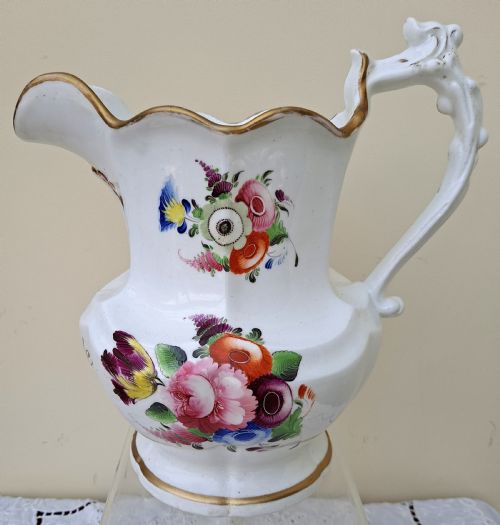
Decoration relied on hand-painting, transfer printing in black, magenta, or blue, and lustre finishes such as Sunderland pink. Glazes ranged from simple salt glaze on stoneware to rich enamel colours and gold leaf highlights.
Common decorative motifs include masonic emblems, maritime themes, armorial crests, and transfer-printed landscapes.
What determines quality
Quality rests on the crispness of the moulding and the precision of the transfer print or hand-painted enamel. Early porcelain bodies show superior translucency, while refined creamware exhibits an even, warm tone without heavy pooling in the glaze.
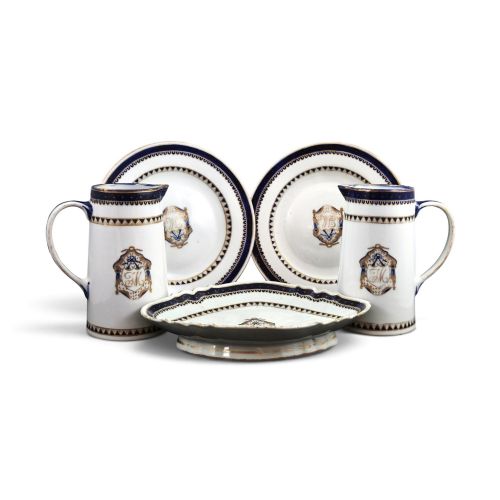
Artistic ambition separates standard domestic items from exhibition pieces, seen in modelled mask spouts, intricate armorial crests, or detailed topographical views. The integration of handle and spout shapes reveals the modeller's skill.
Dr Wall Worcester·New Hall·Mason's·Leeds Pottery·John Rose Coalport·Chamberlain Worcester
The Georgian Ceramic Jug Glossary
- Creamware
- A fine earthenware with a pale yellowish-white glaze, developed in Yorkshire and Staffordshire during the eighteenth century.
- Pearlware
- An improved earthenware body containing a small amount of cobalt in the glaze to create a bluish-white surface that resembled Chinese porcelain.
- Transfer printing
- A decoration technique where an engraved metal plate transfers a design onto paper, which is then stamped onto the ceramic body before firing.
- Lustreware
- Pottery finished with a metallic glaze that produces an iridescent sheen, often associated with pink or copper effects from the early nineteenth century.
- Slipware
- Earthenware decorated with liquid clay applied to the body before firing, creating simple linear or marbled patterns.
Georgian Ceramic Jug: Frequently Asked Questions
How do I date a ceramic jug?
Dating relies on body composition, glaze characteristics, and decorative styles typical of specific manufacturing periods. Creamware and pearlware bodies combined with transfer-printing techniques usually point towards the late eighteenth or early nineteenth century.
Shape and handle design offer further clues, as neoclassical forms and mask spouts followed distinct stylistic shifts across the georgian era.
Were these jugs used daily?
Many examples served practical household functions, holding milk, cream, water, or ale at the table. Sturdier ironstone and earthenware versions handled robust everyday tasks in domestic kitchens.
More delicate porcelain jugs and armorial pieces likely remained on display or appeared only for formal dining and tea service.
How should I display my jug?
Displaying pottery on open shelving or within glass cabinets highlights the variety of glazes and handle profiles. Placing pieces where natural light catches lustre finishes or painted porcelain brings out their surface detail.
Ensure shelves are stable and deep enough to support heavy stoneware or ironstone safely.
What is lustre decoration?
Lustre decoration involves applying a thin metallic film over the glazed ceramic surface and firing it at a low temperature to create a reflective, metallic shine. Pink or purple splash effects were particularly popular on early nineteenth-century earthenware.
Potters often combined this technique with transfer-printed mottos or maritime scenes.