


Pink Lustreware Jug
These pink lustreware jugs catch the eye with their distinctive metallic sheen, offering a glimpse into nineteenth-century domestic life and maritime trade.
Pink Lustreware Jug
When you search for a pink lustreware jug, you are looking at earthenware vessels decorated with a metallic glaze that imparts a characteristic pink or copper shine. The pieces available span the Georgian and Victorian eras, with many originating from Sunderland potteries during the nineteenth century.
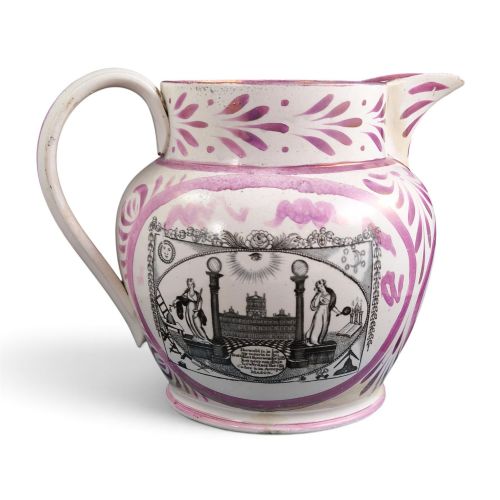
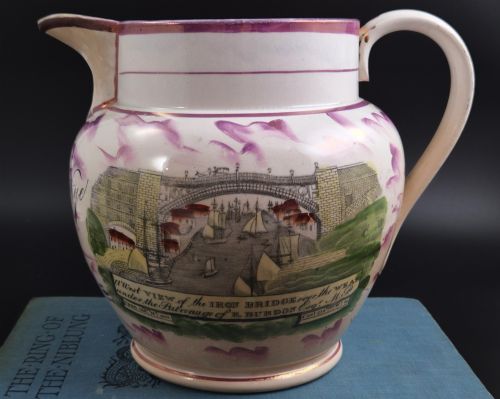
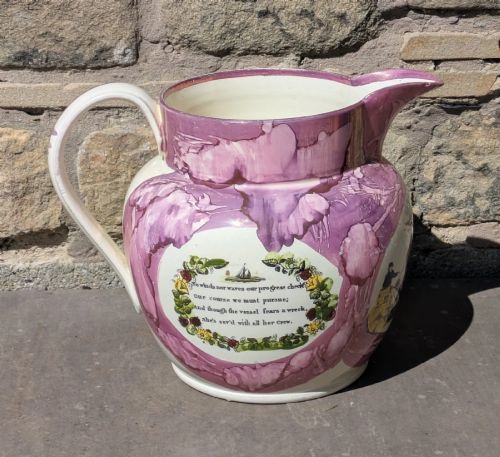
Most examples you will encounter take the form of domestic pitchers featuring transfer-printed decorations in purple or pink. These often display maritime themes, naval vessels such as the Iron Bridge over the Wear, or poetic panels designed to mark personal sentiments.
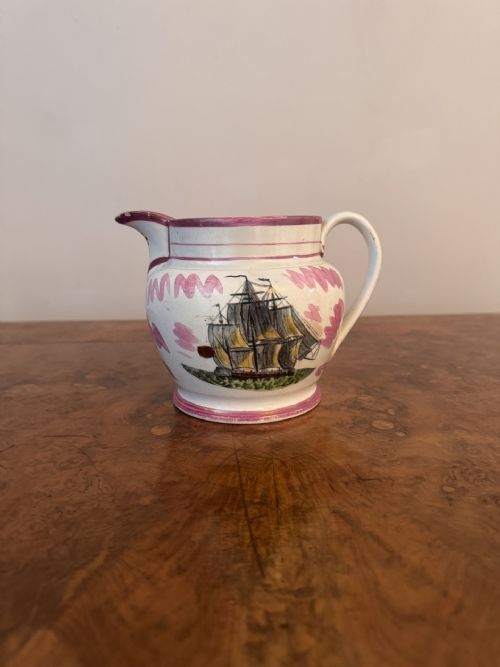
Masonic emblems, boxing scenes, and tall ships also appear frequently across these earthenware bodies. The forms range from standard household jugs to larger commemorative pieces intended for display rather than daily service.
How They Were Made
Potters shaped these vessels from earthenware or pearlware bodies before applying transfer decoration in purple or coloured enamel. The distinctive metallic finish relies on a metallic oxide or lustre glaze applied to the surface during firing to create the characteristic pink sheen.
Splash or marbled effects were achieved by manipulating the glaze during application to create a mottled texture across the ceramic body. Once decorated, the pieces underwent a final kiln firing to fix the metallic sheen and protect the underlying enamel work.
Sailors evidently enjoyed a robust toast, as these jugs frequently paired maritime poetry with images of boxing matches and tall ships.
What Varies in Quality
The distinction between standard jugs and exceptional examples rests upon the clarity of the transfer print and the depth of the metallic glaze. Pieces featuring named subjects, specific dates, or complex multi-panel designs demand closer attention for their artistic execution.
Size and form also determine the standing of a piece within this category, as larger vessels with detailed maritime or Masonic themes require greater skill in both throwing and firing.
The Pink Lustreware Jug Glossary
- Pearlware
- A refined earthenware body developed in the late eighteenth century featuring a subtle blue-tinted glaze that pooled in recesses. It served as a common substrate for early nineteenth-century transfer-printed pottery.
- Transfer-printed
- A decoration technique where an engraved copper plate applied ink to tissue paper, which was then transferred onto the unglazed or bisque ceramic body. This method allowed for intricate pictorial scenes and verses to be reproduced consistently.
- Metallic Glaze
- A thin layer containing metallic oxides applied to pottery to produce an iridescent, reflective surface during reduction firing. It creates the characteristic copper or pink lustre effect seen on these jugs.
- Sunderland Lustre
- A specific regional style of earthenware characterised by a mottled pink or purple metallic glaze, often combined with transfer-printed maritime or moral verses. Many notable examples emerged from potteries situated near the River Wear.
- Enamel
- Opaque coloured glass fused to the ceramic surface over the glaze, used to add hand-painted highlights to transfer-printed scenes. It provided extra colour to details such as flags, rigging, and costume.
Pink Lustreware Jug: Frequently Asked Questions
What is pink lustreware?
Pink lustreware is a type of ceramic decorated with a metallic glaze that creates an iridescent pink or purple sheen. These vessels were widely produced in British potteries during the Georgian and Victorian periods.
Potters used metallic oxides in the glaze to achieve the characteristic reflective finish. The results were often combined with transfer-printed scenes and verses.
How were these jugs used?
Many of these pieces served practical roles in nineteenth-century households for pouring liquids like water, beer, or milk. Larger versions also functioned as commemorative objects or decorative items displayed in parlours.
The inclusion of specific naval scenes, Masonic emblems, and poetic panels suggests they were often given as gifts or used to mark important personal associations.
How do you date a lustre jug?
Dating relies on stylistic clues, ceramic bodies such as pearlware versus later earthenware, and occasional inscriptions or dates written directly onto the piece. Georgian pieces often feature pearlware bodies and hand-coloured transfer work.
Victorian examples frequently display bolder transfer prints and distinct splash lustre techniques. Comparing the decorative motifs helps narrow down the production era.
Why do some jugs have poems?
Makers frequently included moral verses, sailor farewells, and sentimental poetry to appeal to working-class and maritime communities. These inscriptions added personal and emotional value to the vessel.
Such panels were often paired with images of tall ships, bridges, or domestic scenes. They transformed a simple kitchen pitcher into a commemorative keepsake.