


Sunderland Pottery Jug
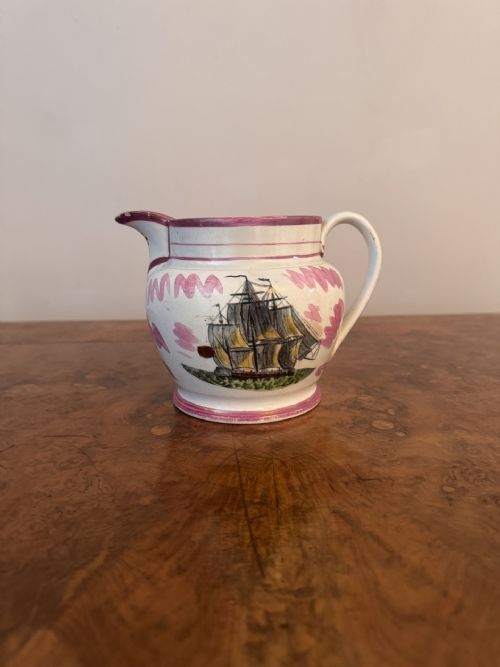
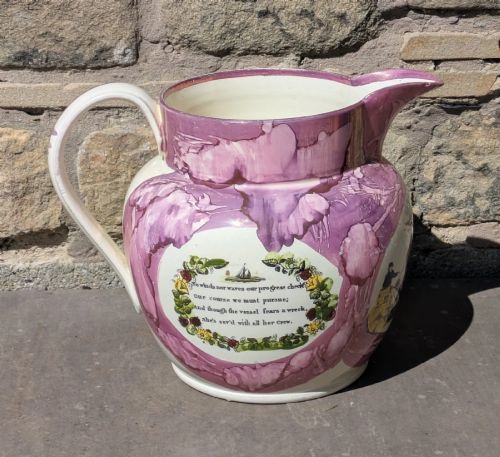
A sunderland pottery jug brings heavy earthenware, striking pink lustre, and maritime transfer prints straight from the North East into your home.
Sunderland Pottery Jug
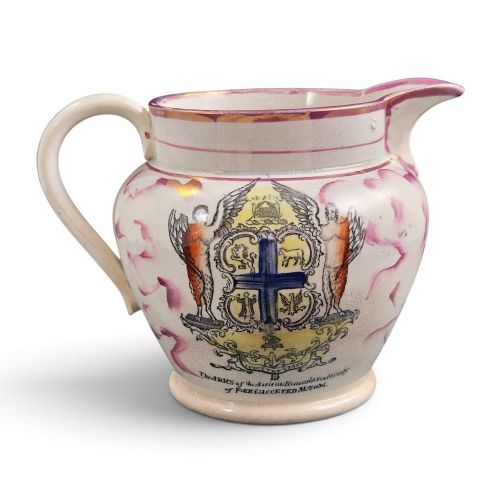
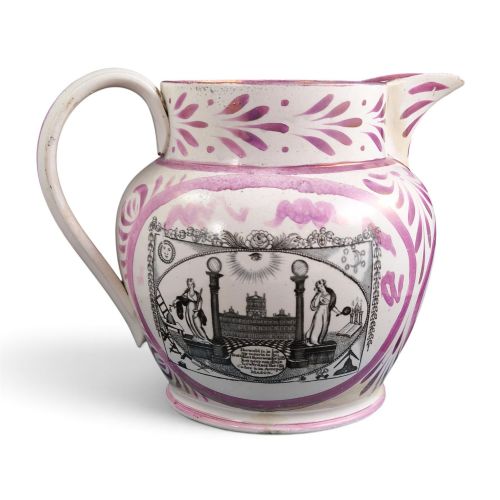
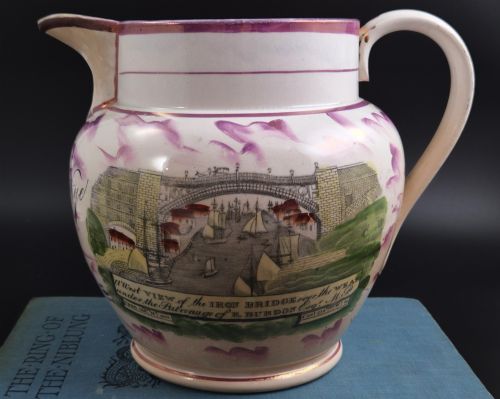
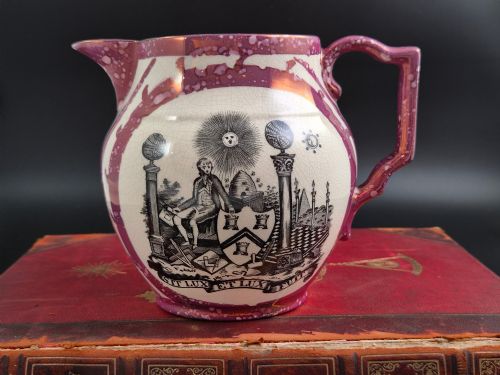
When you search for a sunderland pottery jug, you are looking at substantial ceramic vessels produced in the North East of England during the nineteenth century. These pieces typically showcase transfer-printed imagery celebrating maritime themes, local landmarks, or fraternal societies like Freemasonry. Most examples you will encounter here date from the Georgian and Victorian eras, carrying deep historical resonance.
The most common versions on this page are finished in distinctive pink lustre glaze, often with a mottled or splashed effect. They frequently display specific inscriptions, such as poems, sailors' farewells, or names of ships and individuals. These decorated vessels served as prized presentation pieces or commemorative household items in maritime communities.
How they were made
Potters shaped these jugs from earthenware and pearlware bodies, forming sturdy ceramic vessels capable of daily use. Once shaped, the pieces received transfer-printed designs applied in black or sepia outlines before being hand-coloured with enamel paints.
The signature pink finish relied on metallic oxide and lustre glaze techniques, creating a brilliant metallic sheen when fired in the kiln. Artisans controlled the metallic glaze to achieve either a solid reflective band or the characteristic splash pattern across the surface.
Sunderland Pottery Jug Retail Price Guide 2026
Typical asking prices for sunderland pottery jug among the pieces listed under this phrase on Sellingantiques today, from the lower quarter to the upper quarter. They describe what is for sale here now, not the wider market.
The pieces span the nineteenth century, encompassing Georgian, Victorian, and specific dates between 1800 and 1860.
What varies in quality
Quality rests heavily on the clarity and complexity of the transfer prints, alongside the richness of the pink lustre glaze. Finer examples display crisp depictions of ships, the Iron Bridge over the Wear, or Masonic symbols without blurring or smudging.
The hand-applied enamel colours also separate standard jugs from superior ones, with careful polychrome work adding depth to the transfer outlines. Additionally, well-preserved lustre surfaces retain a deep, iridescent metallic flash rather than a dull or flat appearance.
The Sunderland Pottery Jug Glossary
- Lustre Glaze
- A metallic glaze technique that leaves a thin film of metal on the ceramic surface, creating an iridescent shine. This method is central to the pink splash appearance of many nineteenth-century pieces.
- Pearlware
- A refined earthenware body developed in the late eighteenth century featuring a subtle bluish glaze in the recesses. It forms the foundation of several early nineteenth-century pieces on this page.
- Transfer Printing
- A method of applying pre-printed paper designs onto ceramic surfaces using copper plates and ink. It allowed potteries to mass-produce detailed maritime scenes and poetic panels efficiently.
- Earthenware
- Porous pottery fired at lower temperatures, requiring a glazed surface to become waterproof. It serves as the durable base material for nearly all vessels in this category.
Sunderland Pottery Jug: Frequently Asked Questions
What are sunderland pottery jugs made from?
These pieces are constructed from standard earthenware or refined pearlware bodies. Potters coated these ceramic bases in glazes before firing them in kilns.
Decoration was then applied using metallic oxides and enamel paints to achieve the characteristic pink lustre finish and colourful printed scenes.
How old are these jugs typically?
The examples available generally date from the nineteenth century, spanning both the Georgian and Victorian periods. Most pieces originate from roughly 1800 to 1860.
Specific dates are often confirmed by historical inscriptions, named subjects, or stylistic markers inherent to North East pottery production.
What themes appear on the decoration?
Maritime subjects dominate the imagery, featuring tall ships, clipper ships, and local architecture such as the Iron Bridge over the Wear. You will also find fraternal themes, particularly Masonic symbols.
Many jugs also incorporate moral or sentimental poetry, alongside personal names or specific dates commemorating individuals and events.
How do I care for a lustre jug?
Keep these ceramic vessels away from harsh cleaning chemicals and abrasive scouring pads to protect the delicate enamel colours. Gentle dusting with a dry cloth is usually sufficient for regular maintenance.
Display them securely away from high-traffic edges, as the earthenware bodies remain vulnerable to accidental impacts.