




English Lustreware Jug
These English lustreware jugs combine rich metallic glazes with transfer-printed maritime scenes, poetic panels, and botanical motifs from the Georgian and Victorian eras.
English Lustreware Jug
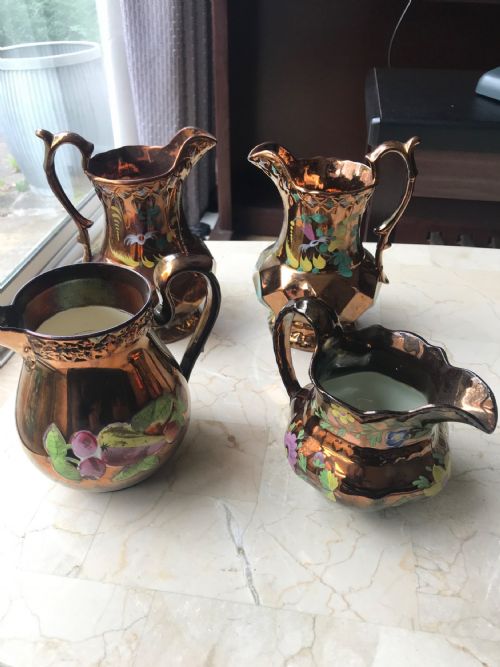
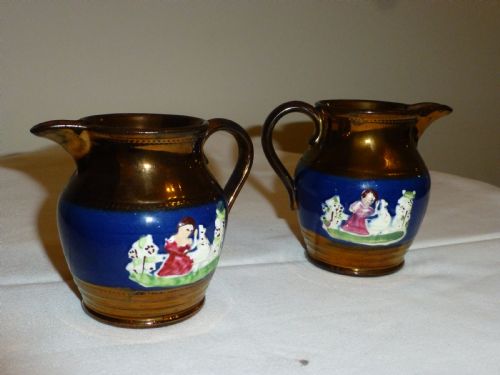
An english lustreware jug is a ceramic vessel finished with a metallic glaze that catches the light with copper, pink, or splash effects. These pieces range from cream jugs to large pitchers made for display and daily service.
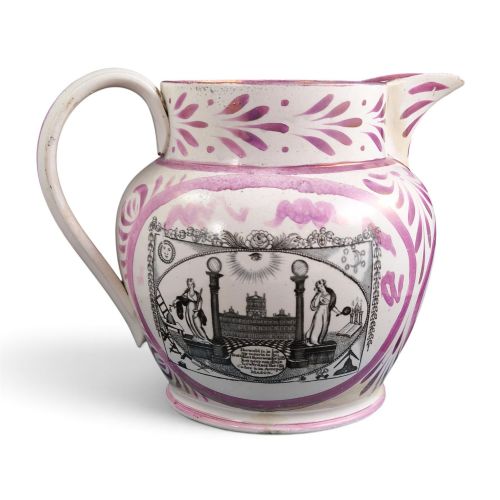
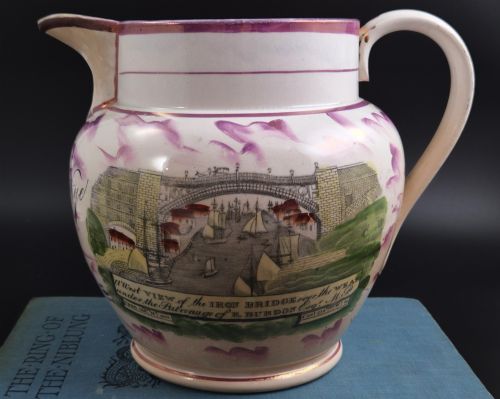
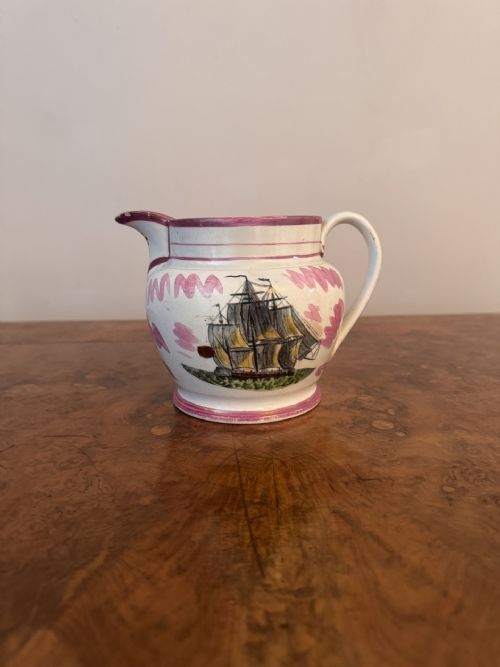
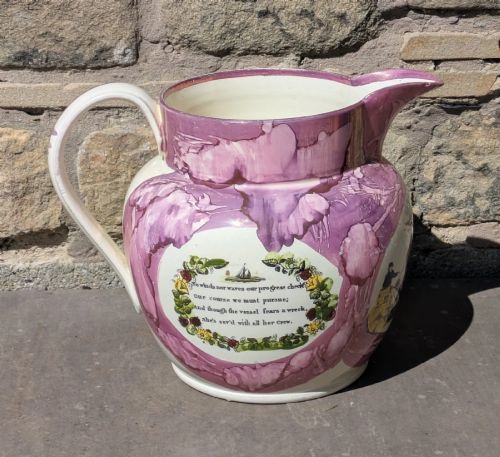
The versions most frequently met on this page include Sunderland pink lustre jugs decorated with tall ships, the Iron Bridge, or Masonic emblems, alongside Staffordshire copper lustre pieces embellished with hand-painted fruit and transfer prints.
Makers and potteries from the Georgian and Victorian periods produced these wares using earthenware, pearlware, and ironstone china. Collectors encounter both modest cream jugs and large commemorative pieces bearing poetic panels or named and dated inscriptions.
How they were made
Potters shaped these vessels from earthenware, pearlware, creamware, or ironstone china before applying hand-painted or transfer-printed decoration. Enamel colours added vibrancy to botanical motifs and maritime themes beneath the final glaze.
The distinctive metallic sheen relied on metallic oxide and lustre glazes applied over the fired ceramic body. Firing in a reducing kiln drew the metals to the surface, creating copper, pink, or splash lustre effects.
Listings feature earthenware, pearlware, and ironstone china bodies decorated with metallic oxide and enamel highlights across Georgian and Victorian periods.
What varies in quality
The standard of an english lustreware jug depends on the crispness of its transfer printing and the richness of the metallic glaze. Rich, even copper or pink lustre surfaces display deeper iridescence and greater control during the firing process.
Design complexity separates standard examples from exceptional ones, particularly when pieces incorporate detailed maritime scenes, named inscriptions, or multi-colour enamel work alongside the lustre finish.
Livesley Powell And Co·Wedgwood
The English Lustreware Jug Glossary
- Lustre Glaze
- A metallic film applied to pottery to create an iridescent, reflective surface. It mimics gold, silver, or copper through the use of metallic oxides.
- Pearlware
- A refined earthenware developed in the late eighteenth century with a bluish-white glaze that pooled in recesses. It served as a popular base for transfer-printed lustre wares.
- Transfer Printing
- A technique of transferring a design from an engraved copper plate onto paper and then onto unglazed or biscuit pottery. This method allowed intricate maritime scenes and poems to be reproduced consistently.
- Copper Lustre
- A metallic finish producing a warm, coppery bronze reflection on earthenware bodies. It was widely used by Staffordshire potteries for jugs and pitchers.
- Pink Splash Lustre
- A mottled or sponged pink lustre effect often associated with Sunderland potteries. It created a textured background resembling marble or foam around printed panels.
English Lustreware Jug: Frequently Asked Questions
What is an English lustreware jug?
An English lustreware jug is a ceramic vessel coated in a metallic glaze that produces a reflective copper, pink, or silver finish. These pieces date primarily from the Georgian and Victorian eras.
Potters decorated them with transfer-printed maritime scenes, poetic inscriptions, or hand-painted botanical motifs, making them both functional tableware and decorative display items.
How do I identify a Sunderland jug?
Sunderland jugs are typically recognised by their distinctive pink splash lustre glaze and transfer-printed imagery. Common subjects include the Iron Bridge over the Wear, tall ships, and Masonic emblems.
Many also feature moral verses or poetic panels on the reverse, often framed by pink lustre bands.
How should I display a lustre jug?
Display these jugs in well-lit cabinets or on shelves where their reflective metallic glazes can catch the light. Positioning them away from direct, harsh sunlight protects the enamel colours and pearlware bodies over time.
Grouping pieces of varying sizes, such as pairing small cream jugs with larger Sunderland pitchers, highlights the range of nineteenth-century ceramic styles.