
Staffordshire Ceramic Pitcher
A staffordshire ceramic pitcher brings character and bold narrative transfer prints straight to a mantel or dresser.
Staffordshire Ceramic Pitcher
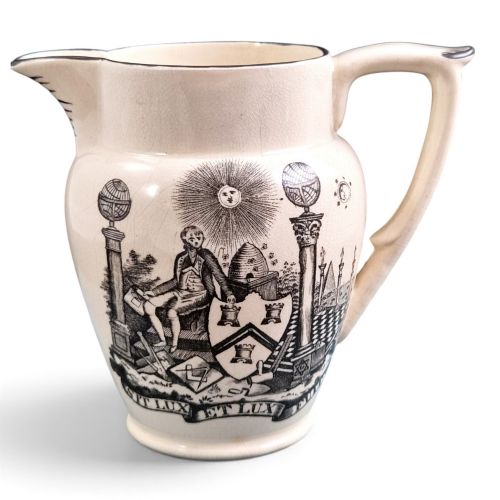
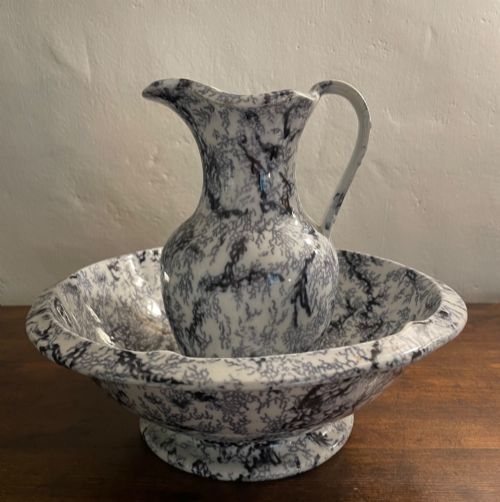
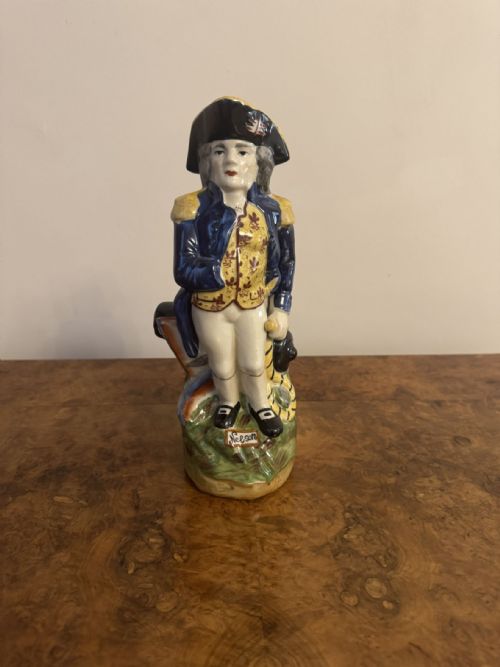
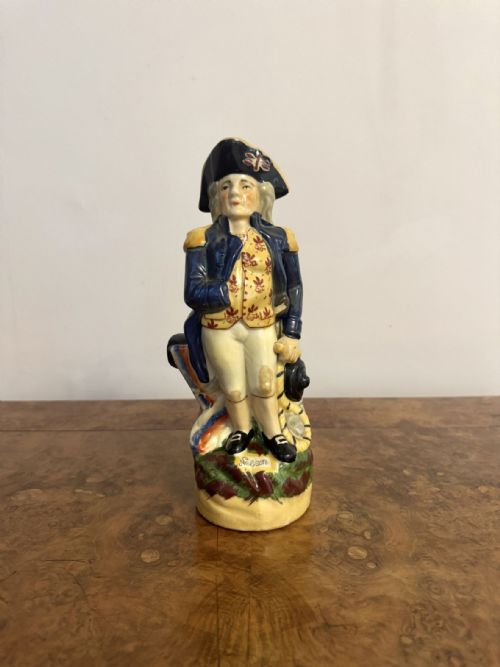
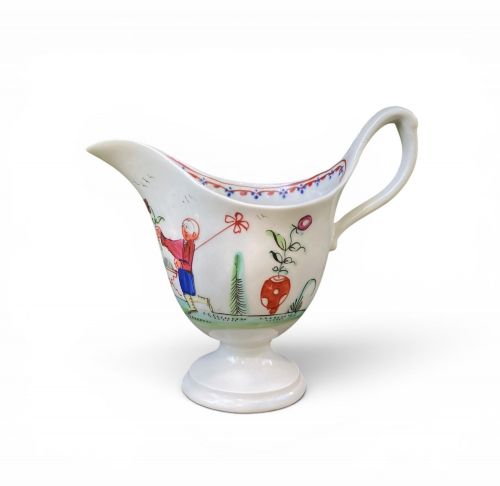
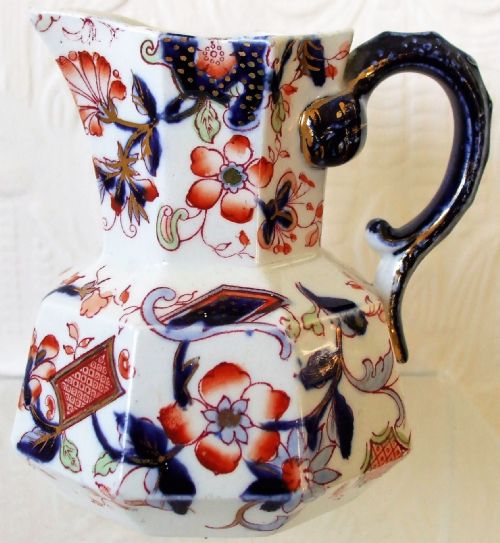
A staffordshire ceramic pitcher encompasses earthenware, creamware, and pearlware vessels created during the Georgian and Victorian periods. You will regularly encounter character jugs, commemorative pieces featuring naval heroes or political fraternities, and domestic milk or water jugs.
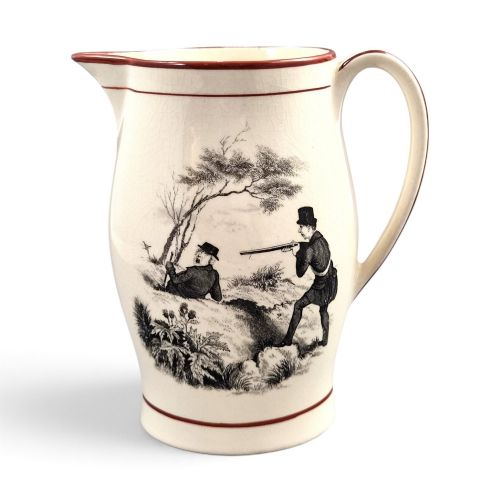
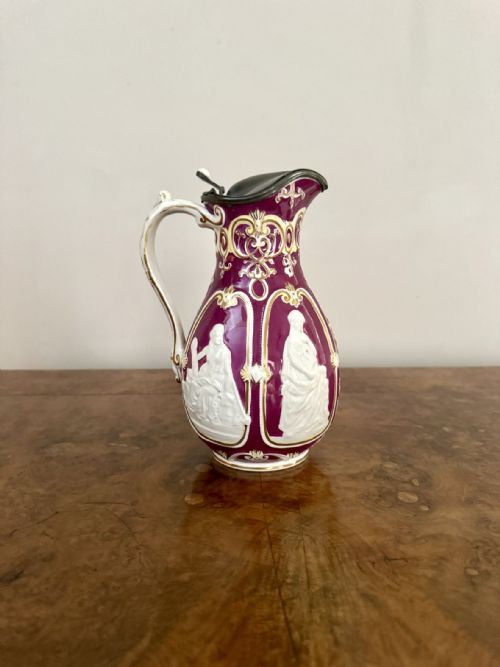
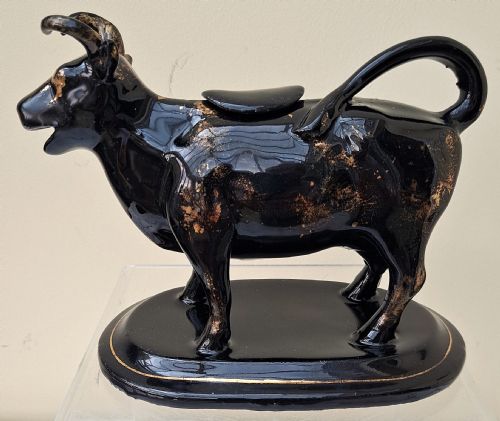
The forms range from small creamers to large one-gallon vessels, often modelled as figural character jugs, cow creamers, or relief-moulded jugs with botanical and hunting scenes. Most examples hail from the nineteenth century, spanning early Georgian transfer-printed wares to later Victorian polychrome designs.
How they were made
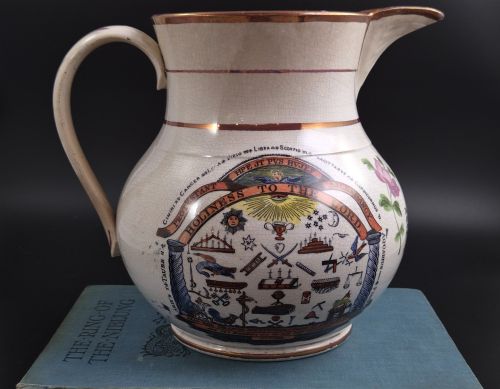
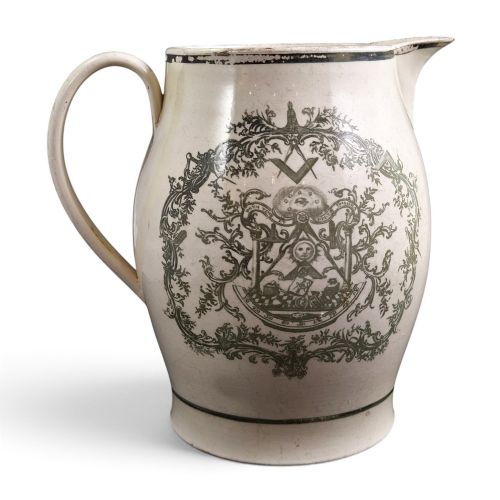
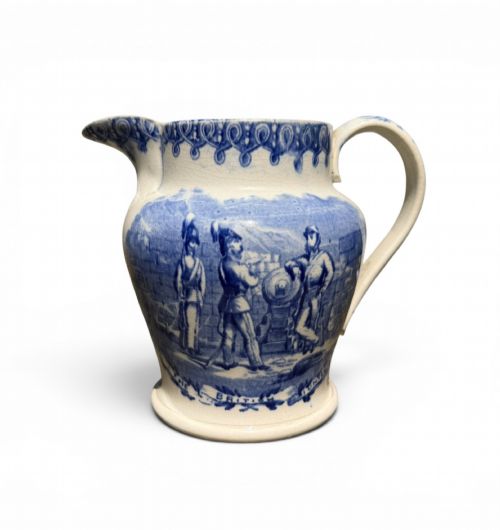
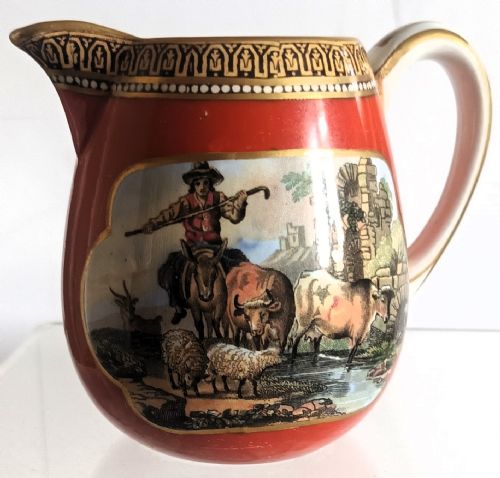
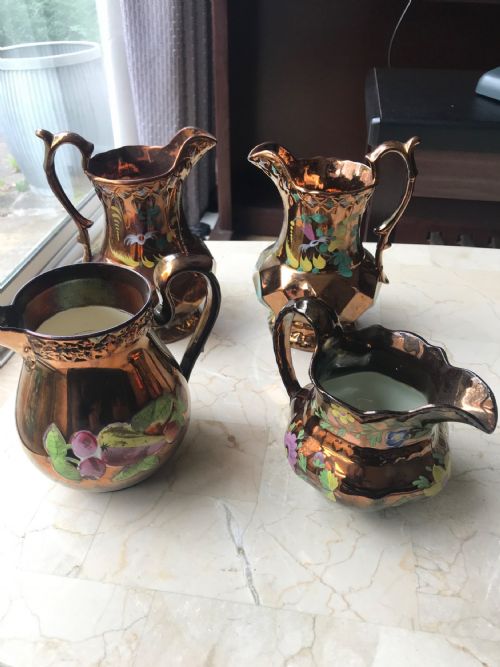
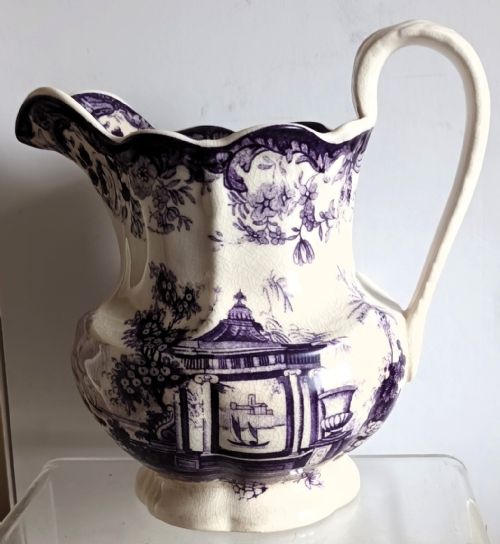
Potters shaped these bodies from earthenware, creamware, pearlware, and porcelain, frequently employing relief moulding or throwing techniques to achieve robust forms. Surface decoration relied heavily on black, blue, or magenta transfer printing, complemented by hand-applied enamel colours, copper lustre, and fluid blue glazes.
Many pitchers received protective clear or tinted glazes before undergoing a secondary kiln firing to set the metallic lustres and enamel details. Specialised vessels like puzzle jugs and pewter-lidded water jugs required precise assembly of hollow channels and applied handles.
Cow creamers dispense milk directly from the animal's mouth, proving that historic tea tables had a wonderfully eccentric sense of humour.
What varies in quality
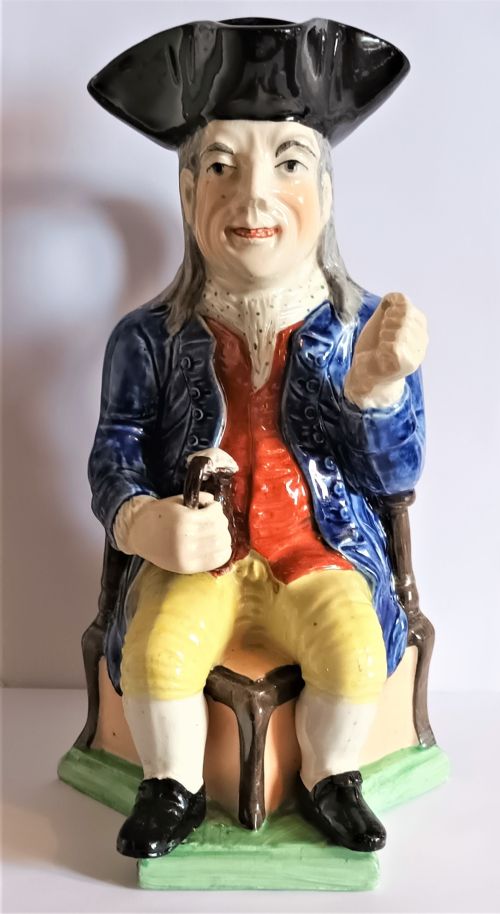
The crispness of the relief moulding and the registration of the transfer print dictate the visual clarity of the decoration. Finer pieces demonstrate careful hand-painting over the glaze and balanced proportions in figural subjects such as toby jugs and cow creamers.
The stability of the ceramic body and the richness of applied copper lustre or enamel pigments distinguish standard utility vessels from exhibition-quality commemorative jugs.
Keeling and Co·Charles Meigh·Jones and Walley·H and R Daniel
The Staffordshire Ceramic Pitcher Glossary
- Creamware
- A refined light-coloured earthenware developed in the eighteenth century, featuring a warm yellow-toned lead glaze. It provided a smooth surface ideal for transfer printing.
- Pearlware
- An improved earthenware body introduced in the late eighteenth century with a bluish tint in the glaze that imitated Chinese porcelain. It frequently carried blue and white or polychrome transfer designs.
- Transfer print
- A decoration method where an engraved copper plate transferred a design onto tissue paper, which was then rubbed onto the ceramic biscuit before glazing. This technique allowed intricate pictorial scenes to be produced rapidly.
- Copper lustre
- A metallic glaze technique that produces a reflective, coppery sheen across the surface of the pottery. It was popular on nineteenth-century jugs and creamers.
- Toby jug
- A pottery jug modelled in the shape of a seated, stout eighteenth-century gentleman holding a mug of beer and a pipe. They often depicted recognizable historical figures or archetypal characters.
Staffordshire Ceramic Pitcher: Frequently Asked Questions
How do I identify an early Staffordshire pitcher?
Look closely at the ceramic body, noting whether it uses creamware, pearlware, or heavier Victorian earthenware. Early pieces from the Georgian era often feature lighter bodies and subtle glaze pooling.
Examine the decorative technique, as transfer printing styles and hand-painted enamel palettes shifted significantly between the eighteenth and late nineteenth centuries.
What were figural jugs used for?
Figural pieces like toby jugs and cow creamers served functional roles at the dining table for serving milk, cream, or small portions of ale. Their playful designs also functioned as conversational display items in domestic interiors.
Makers utilised recognizable characters and topical subjects to engage the owners in contemporary political and social discourse.
Are these pitchers suitable for daily use?
Most antique ceramic pitchers feature historic earthenware bodies that are porous and sensitive to thermal shock. They are best preserved as display pieces rather than utilised for serving hot liquids.
Gentle cleaning with a soft, dry cloth helps protect the delicate enamel details, copper lustre, and transfer-printed surfaces from wear.
How do transfer-printed and plain jugs differ?
Transfer-printed jugs display intricate historical, Masonic, or botanical scenes transferred from engraved copper plates. Plain or relief-moulded jugs rely on sculptural textures, such as cabbage leaf patterns or classical revival motifs, for their visual impact.
Both styles were produced across the Georgian and Victorian periods, utilising similar earthenware and pearlware foundations.