

English Earthenware Jug
These English earthenware jug examples span Georgian creamware to Victorian lustre, offering practical pouring vessels and commemorative pottery rich in maritime and Masonic history.
English Earthenware Jug
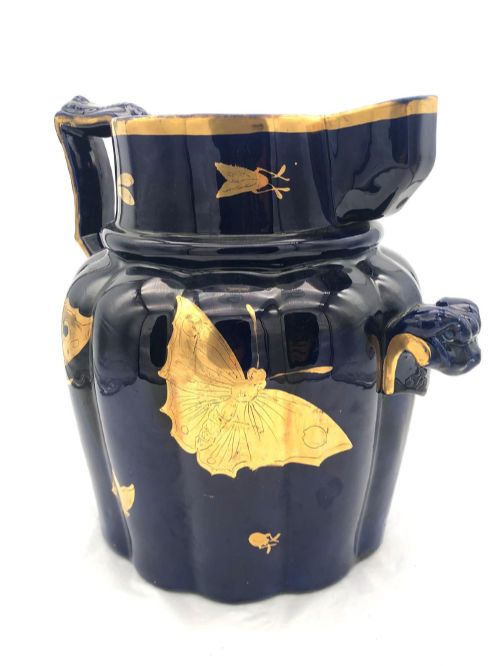
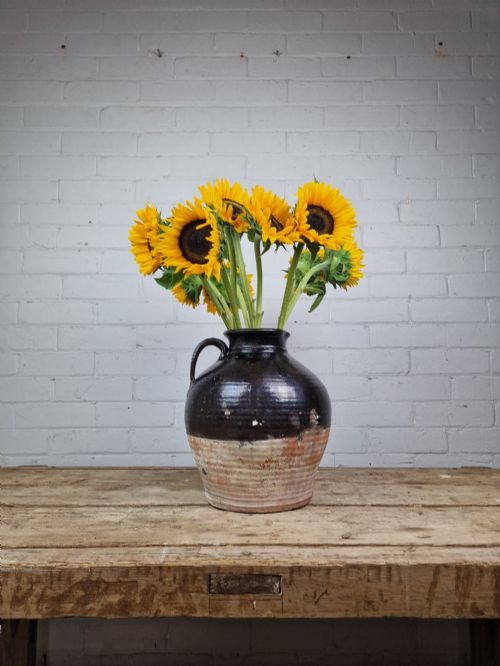
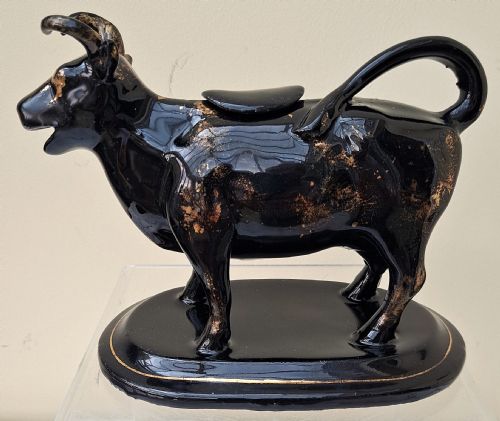
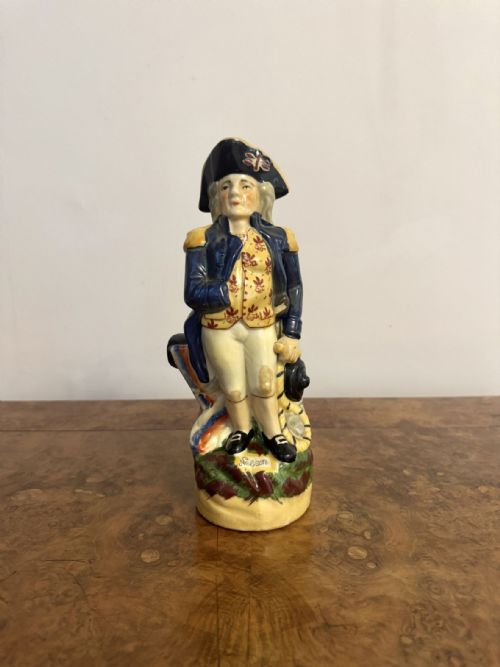
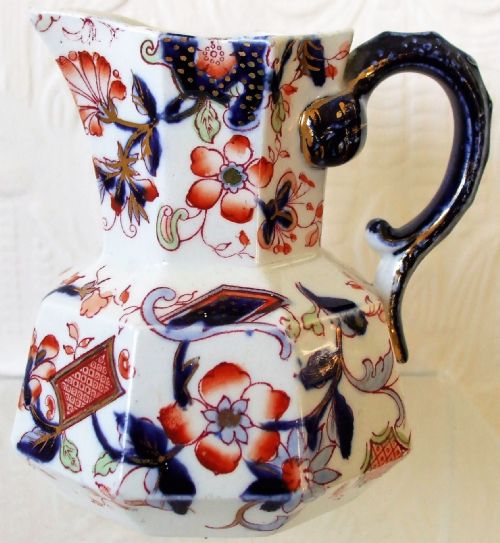
An english earthenware jug serves as a functional pouring vessel or a commemorative display piece originating from Staffordshire, Sunderland, and other regional potteries. Buyers encounter diverse forms ranging from large tavern pitchers and milk creamers to figural toby jugs depicting historical figures like Lord Nelson.
The pieces on this page bridge the late eighteenth, nineteenth, and early twentieth centuries, capturing periods from Georgian neoclassicism to Victorian cottage aesthetics. Makers utilised slipware, creamware, and pearlware to shape domestic items that double as social history documents.
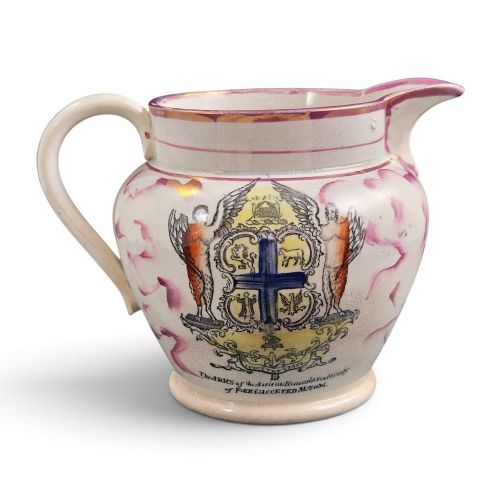
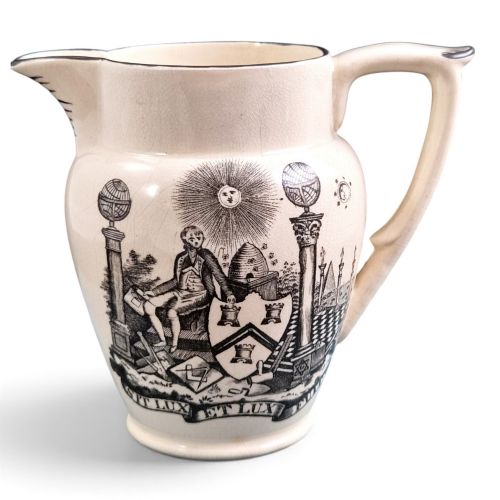
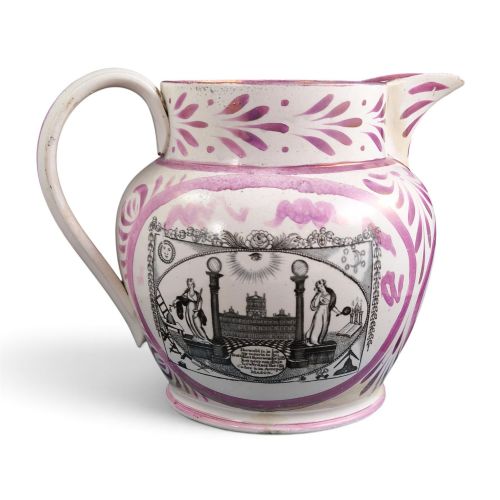
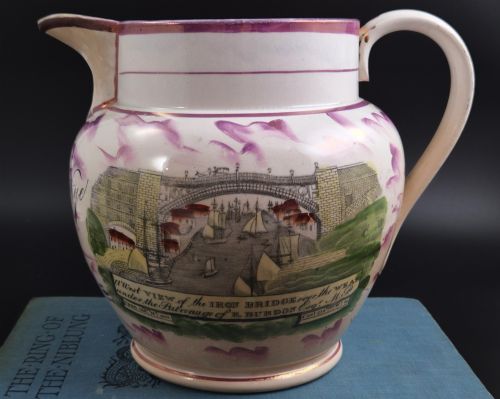
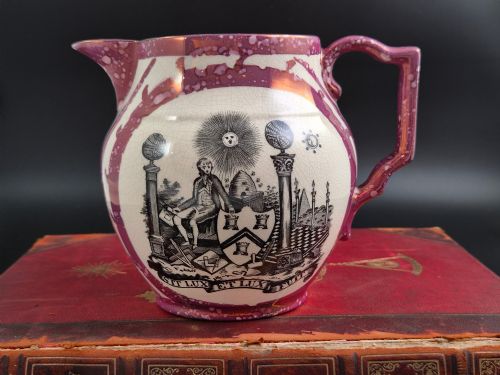
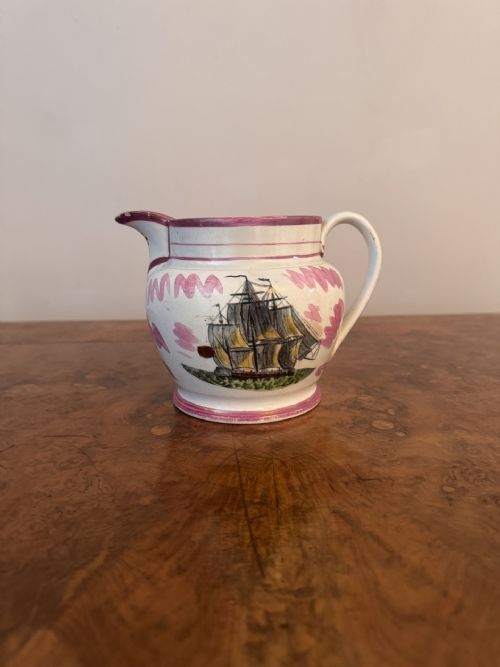
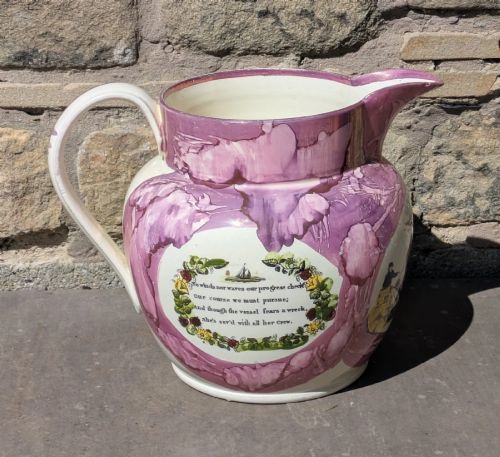
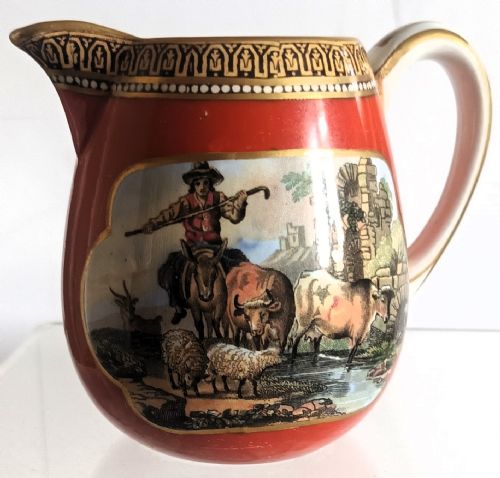
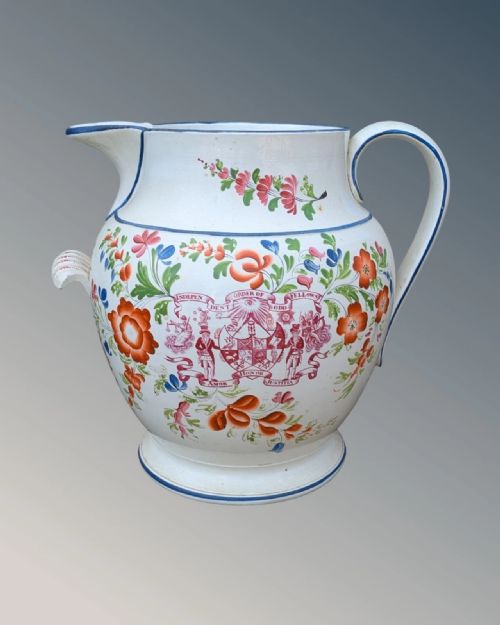
Collector interest centres on decorated surfaces, particularly Sunderland pink lustre, transfer-printed maritime scenes, and Masonic emblems. These vessels record past trades, local architecture such as the Iron Bridge over the Wear, and patriotic themes.
How they were made
Potters shaped local clays on the wheel or pressed them into moulds, producing earthenware bodies that were subsequently fired and glazed. Creamware and pearlware bodies provided smooth, light-coloured grounds suited for intricate decoration.
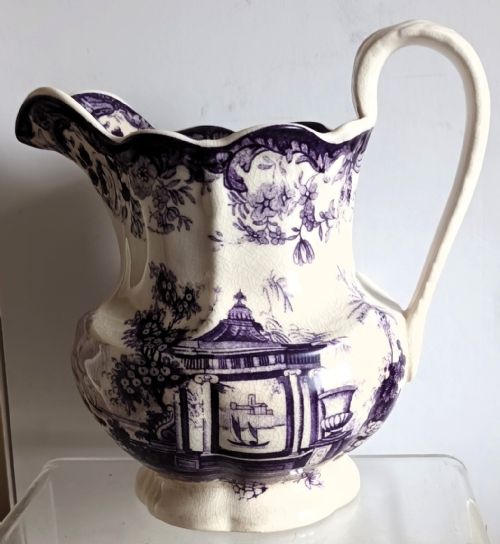
Decoration relied on hand-painting, metallic lustre application, and transfer printing in black, magenta, or blue. Potters applied copper and pink lustre finishes to create distinctive metallic sheens, often combining multiple techniques on a single vessel.
Several jugs affectionately celebrate canine companions with hound handles and cow-shaped creamers.
What varies in quality
The complexity and scale of the decoration dictate distinction, distinguishing everyday tavern pitchers from exhibition-grade commemorative pieces carrying detailed maritime or Masonic prints.
Leeds Pottery·Doulton Lambeth·Keeling and Co·Sunderland Garrison Pottery·Phillips and Bagster
The English Earthenware Jug Glossary
- Creamware
- A refined earthenware with a pale yellowish-cream glaze, developed in eighteenth-century Staffordshire. It gained popularity for its smooth surface and suitability for transfer printing.
- Lustre glaze
- A metallic film applied to pottery to create a reflective, iridescent surface. Sunderland potters utilised pink and purple lustre extensively for cottage and maritime jugs.
- Pearlware
- An improved earthenware introduced by Josiah Wedgwood featuring a bluish-tinted glaze that pooled in recesses. This tint made the underlying ceramic body appear whiter than standard creamware.
- Slipware
- Pottery decorated with slip, a liquid clay mixture applied to the unbaked body before firing. Artisans trailed or combed the slip to create distinctive linear and rustic patterns.
- Transfer printing
- A decoration technique where an engraved copper plate transfers an ink design onto tissue paper, which is then pressed onto the ceramic. This method allowed complex pictorial scenes to be replicated consistently.
English Earthenware Jug: Frequently Asked Questions
What is an english earthenware jug?
An english earthenware jug is a porous ceramic vessel fired at lower temperatures, commonly glazed to hold liquids or serve as decorative tableware.
These pieces encompass utilitarian farmyard creamers, large tavern pitchers, and commemorative Sunderland lustre items from the eighteenth and nineteenth centuries.
How do I date an antique jug?
Dating relies on examining the clay body, glaze characteristics, and the style of transfer printing or hand-painted motifs.
Georgian pieces often feature creamware or pearlware bodies with neoclassical prints, whereas Victorian examples display bolder lustre finishes, figural modelling, or explicit calendar dates.
Were these jugs used daily?
Many examples served practical household functions such as pouring milk, ale, or water at the table. Larger one-gallon vessels handled communal drinking duties in taverns and inns.
Other survivors, particularly highly decorated Masonic or maritime pieces, functioned primarily as display items commemorating clubs or events rather than everyday tools.
What is a toby jug?
A toby jug is a pottery pitcher shaped as a full-bodied human figure, usually a stout, cheerful character holding a mug of beer and a pipe. Eighteenth and nineteenth-century Staffordshire potters produced these depictions of notable personalities and archetypes.
They combine sculpture with functional pouring spouts, often finished with coloured glazes over earthenware bodies.