


Pink Lustre Jug
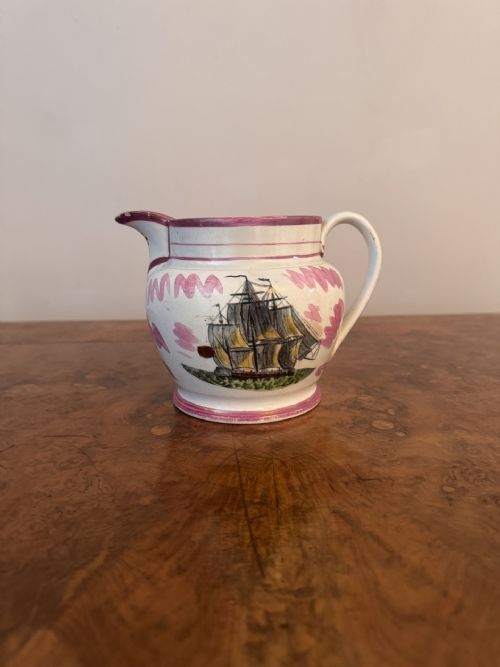
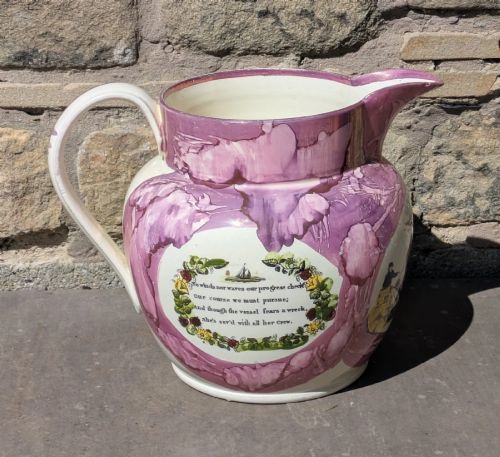
These pink lustre jugs are bold earthenware vessels carrying metallic glaze and transfer prints, prized for their maritime scenes and social history.
Pink Lustre Jug
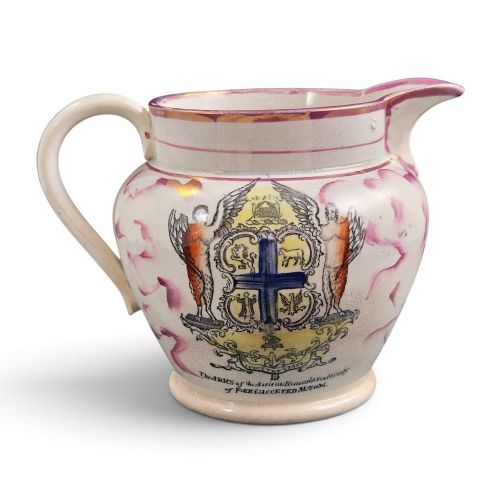
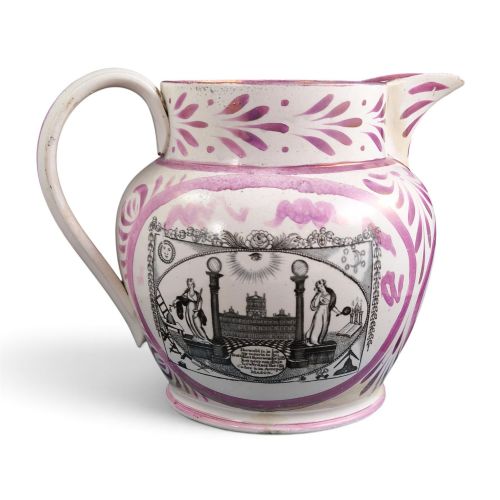
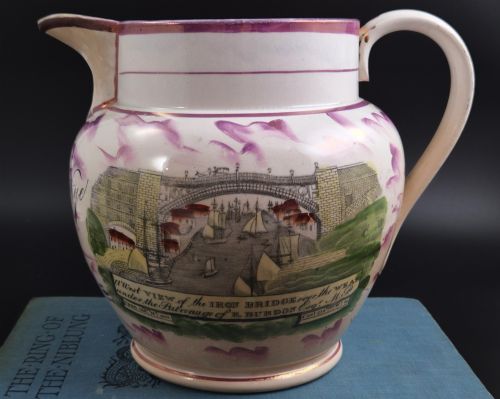
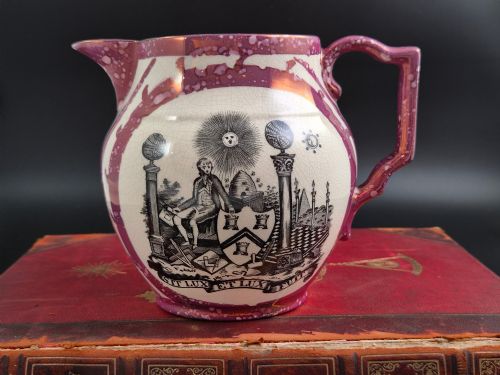
A pink lustre jug is a ceramic vessel decorated with a metallic glaze that creates a distinctive purple or pink sheen, originating primarily from workshops in Sunderland and Staffordshire during the Georgian and Victorian eras. These pieces typically display transfer-printed motifs such as tall ships, masonic symbols, poetic panels, and local landmarks like the Iron Bridge over the Wear.
Buyers browsing this selection encounter various forms, from large presentation pieces to smaller vessels featuring maritime themes, boxing scenes, and naval verses like the Sailors Farewell. The most frequent examples span the early nineteenth century into the Victorian period, reflecting the robust output of northern potteries and regional makers.
Many jugs record historical events and local trades, combining transfer decoration with hand-applied enamel colours over an earthenware or pearlware body. Their enduring appeal lies in this combination of utilitarian form and narrative folk art, capturing the industrial and seafaring spirit of nineteenth-century Britain.
Judging quality
Quality rests upon the clarity and complexity of the transfer printing combined with the depth of the metallic glaze. Superior examples display crisp lines on detailed subjects like masonic emblems or railway openings, paired with a rich, even purple lustre rather than a dull or patchy finish.
The artistic merit of the hand-applied enamel colouring significantly separates ordinary production from finer pieces. Skilful brushwork augmenting the printed scenes elevates the piece, whereas hurried decoration diminishes the visual impact of the vessel.
Sailors departing on long voyages frequently received jugs inscribed with farewell verses, ensuring their memories stayed afloat at sea.
Sunderland Garrison Pottery·Ynysmeudwy
The Pink Lustre Jug Glossary
- Pearlware
- A refined type of earthenware developed in the late eighteenth century featuring a subtle blue-tinted glaze designed to imitate Chinese porcelain. This body provided a smooth white surface ideal for transfer-printed designs.
- Lustre glaze
- A ceramic finish incorporating metallic oxides that leaves a thin, reflective metal film upon firing. Copper oxide yields the pink and purple tones seen on these northern vessels.
- Transfer printing
- A mechanical method of applying detailed designs to ceramics by transferring engraved images from a copper plate via tissue paper. This technique allowed potteries to produce complex maritime scenes and verses consistently.
- Splash lustre
- A decorative technique where droplets or sponged applications of metallic solution create a mottled or speckled pink pattern across the surface. It is particularly characteristic of nineteenth-century Sunderland wares.
Pink Lustre Jug: Frequently Asked Questions
What are pink lustre jugs?
Pink lustre jugs are ceramic vessels made from earthenware or pearlware, decorated with a metallic pink glaze and transfer-printed scenes. They were produced primarily in the nineteenth century across English potteries.
These pieces often celebrate maritime life, local engineering, and fraternal societies, combining utility with narrative folk art.
How were pink lustre jugs used?
These vessels served functional roles in homes and taverns for pouring liquids, as well as acting as commemorative presentation pieces. They marked significant personal events, trades, and community milestones.
Many featured poetic verses or toasts, making them suitable gifts for sailors, masons, and departing friends.
How do you date a pink lustre jug?
Dating relies on stylistic clues, ceramic bodies, and specific historical subjects depicted in the transfer prints, such as railways or named bridges. Pearlware bodies and Georgian costume styles point toward the early decades of the nineteenth century.
Later Victorian examples often feature bolder splash lustre effects and distinct framing around the printed panels.
How do you display a lustre jug?
Displaying these jugs requires stable shelving with adequate lighting to catch the reflective quality of the metallic glaze. Placing them away from direct sunlight protects the hand-applied enamel colours.
Their robust earthenware construction allows them to sit comfortably alongside other nineteenth-century ceramics and folk art.