


Georgian Earthenware Jug
These georgian earthenware jug examples bring robust country character and vibrant transfer printing to the table.
Georgian Earthenware Jug
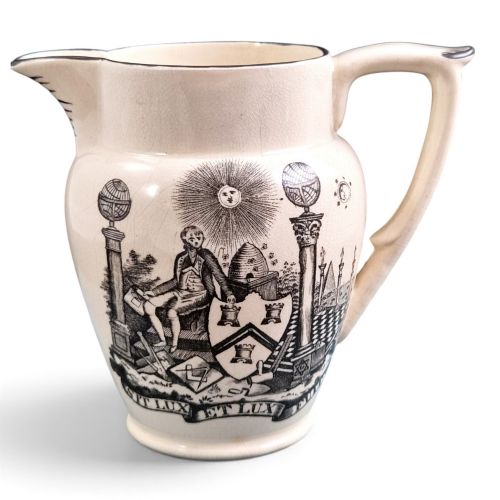
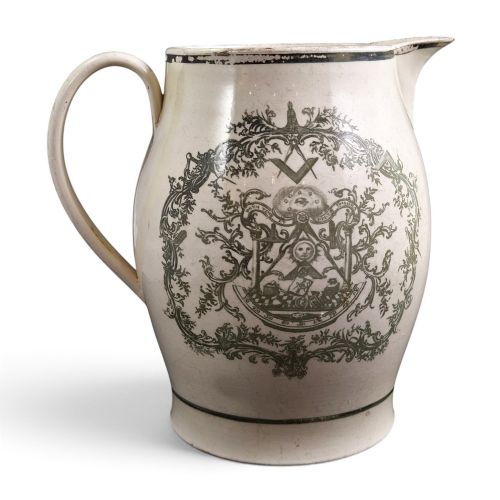
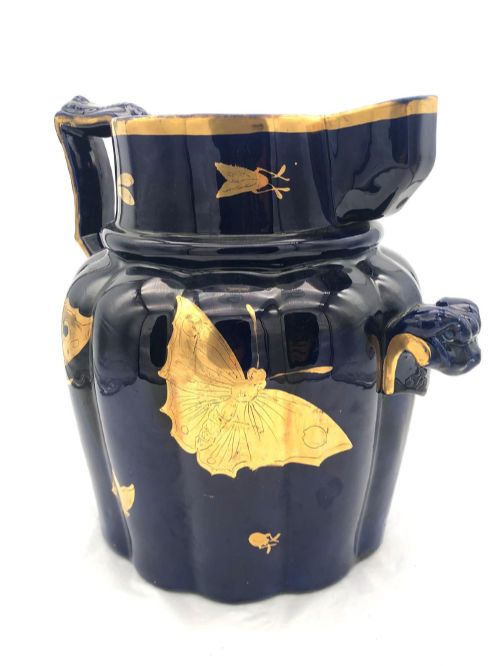
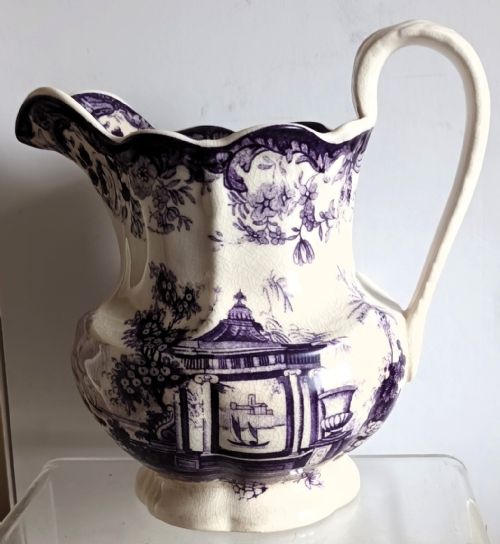
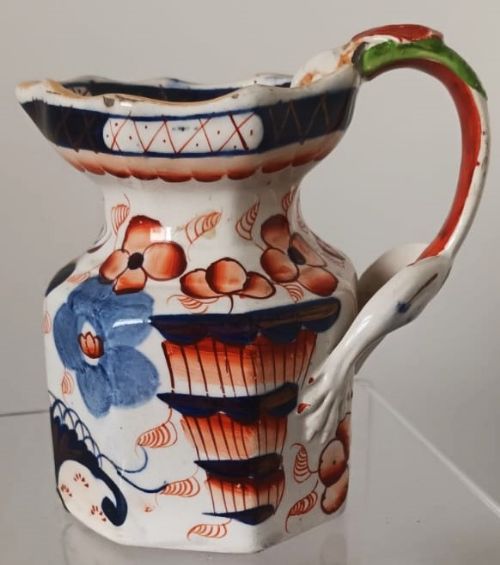
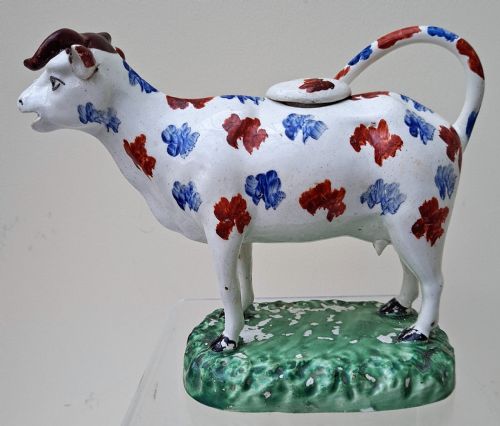
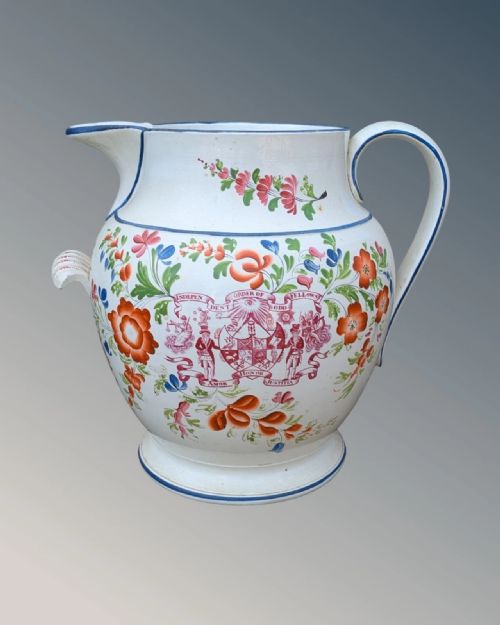
A georgian earthenware jug represents a diverse domestic tradition spanning utilitarian vessels and celebratory commemorative pieces. Collectors searching for a georgian earthenware jug encounter forms ranging from large one-gallon carriers to modest creamers and figural jugs. The selection relies heavily on Staffordshire workshops producing creamware and pearlware decorated with transfer prints or lustre finishes.
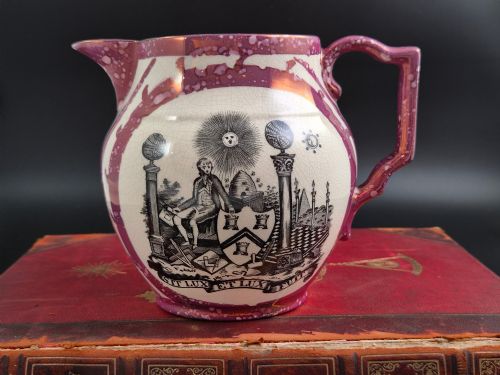
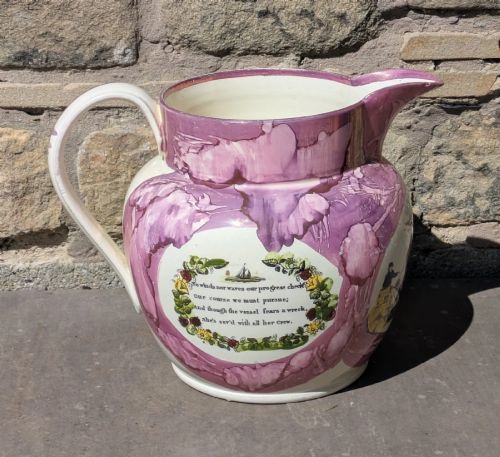
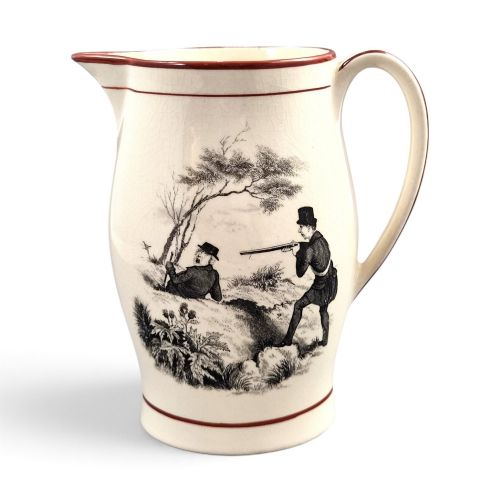
Most items on display bridge the late eighteenth and early nineteenth centuries, encompassing both Georgian and Regency aesthetics. Buyers frequently find robust earthenware bodies featuring maritime themes, masonic emblems, or pastoral transfer scenes in pink lustre and black print. These domestic vessels served practical roles before transitioning into decorative display items.
Distinctions in craftsmanship and artistic merit
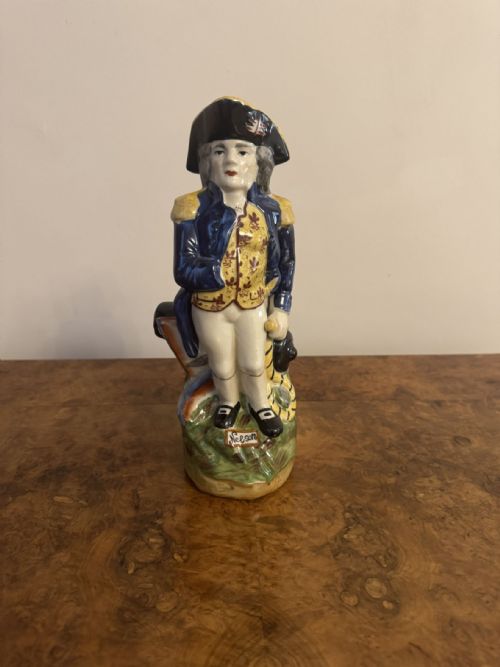
Quality rests in the crispness of the transfer print and the registration of hand-applied enamel colours. Superior pieces display deep, even lustre applications and intricate moulded details rather than blurred outlines or pooling glazes. Well-modelled figural works show sharp facial expressions and careful hand-painting.
The artistic ambition of the subject matter also separates standard domestic items from exceptional display pieces. Elaborate commemorative themes, historical views, and detailed masonic iconography demand greater skill from the decorator. The clarity of the ceramic body and the stability of the handle attachment further define the upper tier of production.
The inventory spans the Georgian, Regency, and Victorian periods, highlighting Staffordshire and Leeds pottery traditions.
The Georgian Earthenware Jug Glossary
- Creamware
- A refined earthenware with a pale yellowish glaze developed in Staffordshire during the eighteenth century. This body provided a smooth canvas for transfer printing and enamel decoration.
- Pearlware
- An improved earthenware body featuring a thin glaze with a bluish tint in the recesses. Potters introduced this material to achieve a whiter appearance closer to Chinese porcelain.
- Transfer printing
- A method of decorating ceramics by pressing a paper design inked from an engraved copper plate onto the fired clay body. This technique allowed complex pictorial scenes to be replicated consistently.
- Lustreware
- Pottery decorated with a metallic film that produces a reflective, iridescent sheen. Sunderland pink splash lustre is particularly common on nineteenth-century jugs.
- Slipware
- Pottery decorated with liquid clay applied to a contrasting clay body before firing. Artisans trailed or combed the slip to create simple geometric and organic patterns.
- Toby jug
- A pottery jug modelled in the form of a stout, jovial person holding a mug of beer or a pipe. These figural pieces often wear eighteenth-century tricorne hats.
Georgian Earthenware Jug: Frequently Asked Questions
How were these jugs used?
These vessels served everyday domestic functions such as pouring milk, water, or beer at the table. Larger examples held liquids for household service or commemorated specific social clubs and maritime events.
Over time, many of these utilitarian containers transitioned into display pieces due to their decorative transfer prints and colourful lustre glazes.
What is creamware?
Creamware is a refined, light-coloured earthenware perfected in Staffordshire during the eighteenth century. Its warm tone provided an ideal surface for black or coloured transfer printing.
Potters used this versatile material for everything from simple milk jugs to large commemorative vessels.
How do I date a jug?
Dating relies on stylistic clues such as the shade of the ceramic body, glaze composition, and the subject matter of the transfer print. Georgian and Regency pieces often feature specific neoclassical motifs, transfer techniques, or commemorative historical dates.
Comparing the moulding style and handle shape with documented factory pieces helps narrow the production window.
Can I use these jugs daily?
Most antique earthenware jugs are best reserved for display rather than active daily service. The porous clay and historic glazes can be sensitive to modern detergents and thermal shock.
Gentle dry dusting or occasional careful washing helps preserve the fragile transfer prints and metallic lustre.