



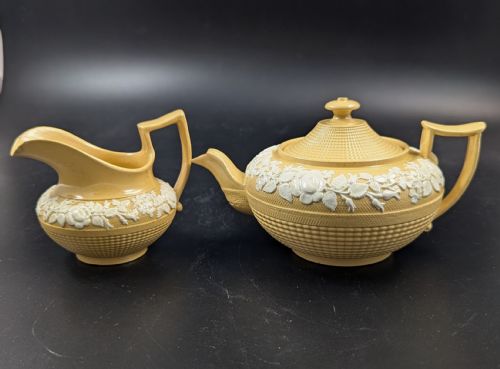


Regency Pottery Jug
A regency pottery jug brings bold transfer prints and rich earthenware forms to a table, combining daily utility with the distinct visual character of the early nineteenth century.
Regency Pottery Jug
A regency pottery jug is a functional pouring vessel shaped during the Georgian and late Georgian periods, spanning the early decades of the nineteenth century. These pieces appear in forms such as pitchers, water jugs, footbath jugs, and matching creamer sets designed for domestic service.
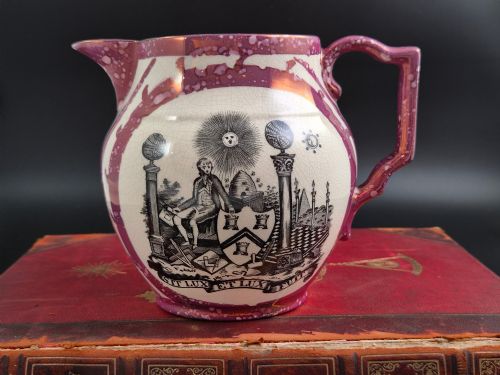
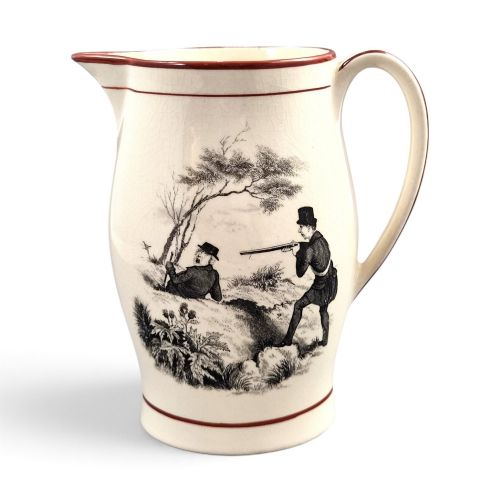
The versions most commonly met on this page include creamware, pearlware, and earthenware bodies decorated with transfer-printed scenes, pink splash lustre, or relief moulding. Originating primarily from English potteries, they reflect the distinctive aesthetic of Grand Regency and 1800s design.
Materials and methods
Potters built these vessels using local earthenware, creamware, buff stoneware, and pearlware clays shaped by hand or moulded to achieve faceted and relief surfaces. The raw forms then received smooth glazes and foundational slips before undergoing high-temperature kiln firing.
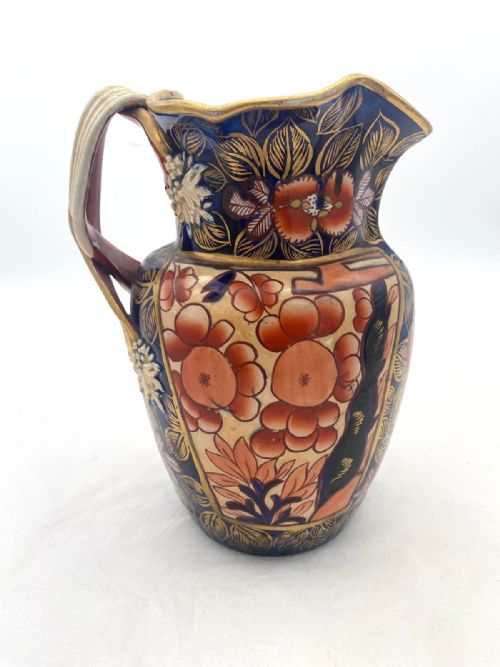
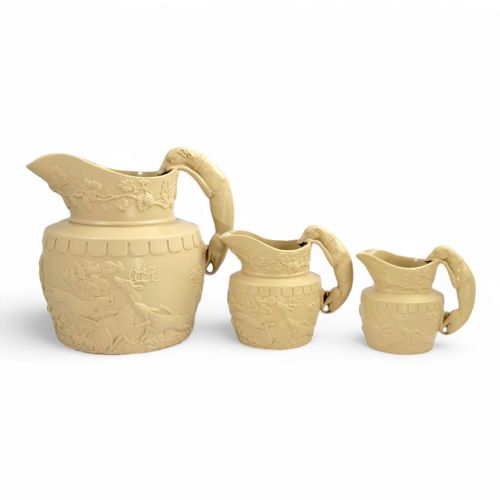
Decoration relied on applied techniques including copperplate transfer printing in blue and white, hand-painted enamel colours, metallic lustres, and delicate applications of gold leaf. Specialised potteries also utilised hound handles and moulded animal or architectural motifs like the schoolhouse pattern.
Observed styles span Georgian, Regency, Grand Regency, and Late Georgian periods across the 1800s.
Judging quality and execution
Quality rests in the crispness of the moulding and the registration of the transfer print, where finer examples maintain sharp lines and clear pictorial detail across complex surfaces. The application of metallic lustre and enamel pigments also distinguishes standard utility wares from exhibition pieces.
The sophistication of the form itself dictates the tier of the piece, from simple creamware jugs to elaborate multi-patterned water jugs featuring marbled finishes or moulded figural handles. Heavier, well-balanced thrown bodies demonstrate superior potter skill during the shaping process.
Mason's Ironstone·Phillips and Bagster·Wedgwood·Spode
The Regency Pottery Jug Glossary
- Creamware
- A refined earthenware body with a pale yellowish-buff glaze developed in Staffordshire during the eighteenth century and widely produced into the nineteenth century.
- Pearlware
- An improved fine earthenware featuring a bluish-white glaze designed to mimic Chinese porcelain, frequently decorated with blue and white transfer printing.
- Transfer-printing
- A mechanical decoration technique where an engraved copper plate transfers a design onto tissue paper and then onto the unglazed or bisque ceramic body.
- Lustre
- A metallic glaze application that creates a reflective, iridescent surface sheen, often seen in pink splash variations on early nineteenth-century earthenware.
- Relief moulded
- A decorative technique where patterns are raised in relief from the body of the vessel using specialised moulds during the shaping stage.
Regency Pottery Jug: Frequently Asked Questions
How do I date a regency pottery jug?
Dating relies on stylistic markers such as the specific shade of creamware, the presence of pink splash lustre, and the subject matter of the transfer prints. Most pieces sit firmly within the broader Georgian and early nineteenth-century timeline.
Pottery marks stamped into the base or distinct regional potting traits further narrow the decade of production, though many domestic examples remain unmarked by their makers.
Were these jugs used daily?
Many of these vessels served practical roles in the dining room and kitchen for holding water, ale, milk, or cream during meals. Their sturdy earthenware and stoneware construction made them suitable for regular household service.
Larger pitchers and footbath jugs handled heavy domestic chores, while smaller creamers formed part of tea service sets used throughout the Georgian era.
What is pink splash lustre?
Pink splash lustre is a decorative ceramic finish created by applying metallic solutions that separate during firing to produce a mottled, pink metallic effect. Potters often combined this technique with Masonic emblems or pastoral scenes.
The resulting surface catches the light and gives the earthenware body a distinctive speckled border that defines many pieces from the early nineteenth century.
How should I display my jug?
Displaying these jugs benefits from placement in well-lit cabinets or open shelving where their transfer-printed scenes and glazed surfaces remain visible. Grouping them by material, such as creamware or yellow ware, creates a cohesive historical arrangement.
Protecting the pieces from direct, harsh sunlight and handling them by the body rather than delicate applied handles helps preserve their historic glazes.