


Splash Lustre Earthenware
Splash lustre earthenware brings tactile maritime colour and transfer-printed ships to any room.
Splash Lustre Earthenware
When you search for splash lustre earthenware, you are looking at nineteenth century British pottery decorated with distinctive metallic finishes that catch the light. The pieces on this page are predominantly jugs and pitchers, alongside occasional decorative bowls originating from the Georgian and Victorian periods.
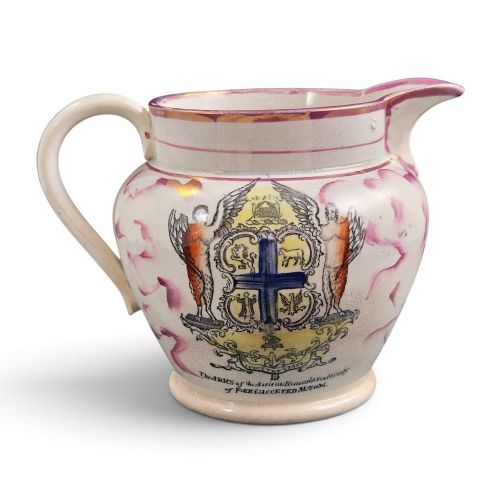
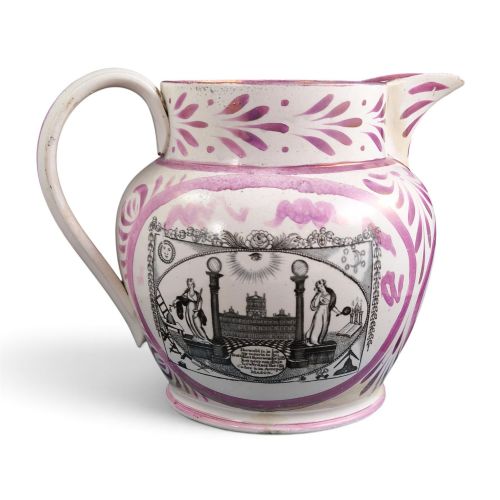
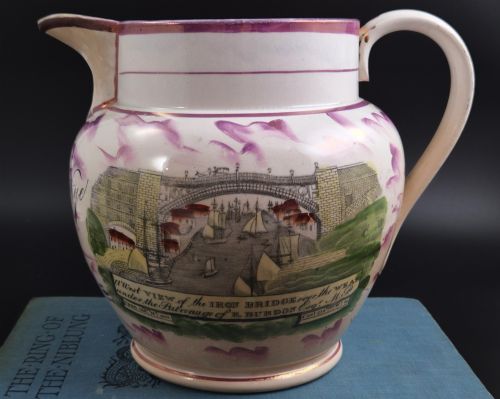
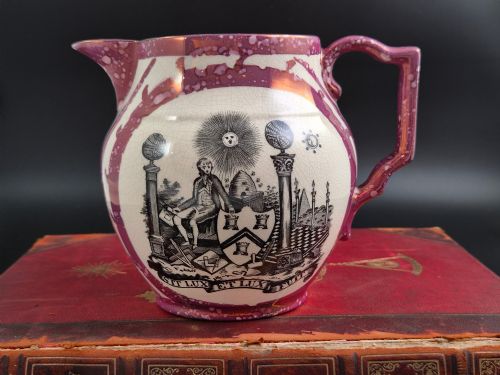
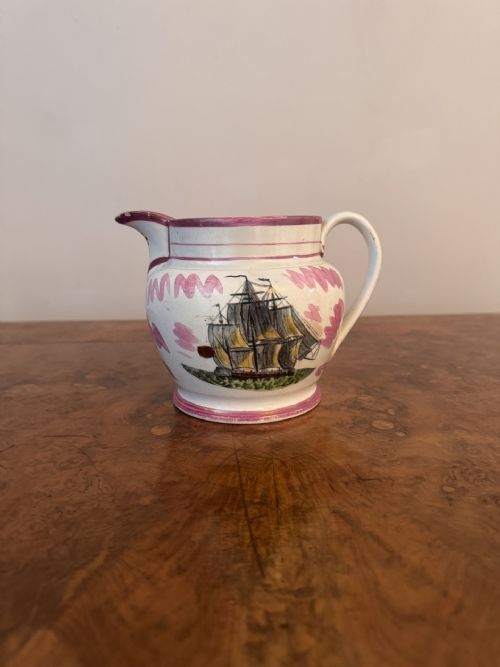
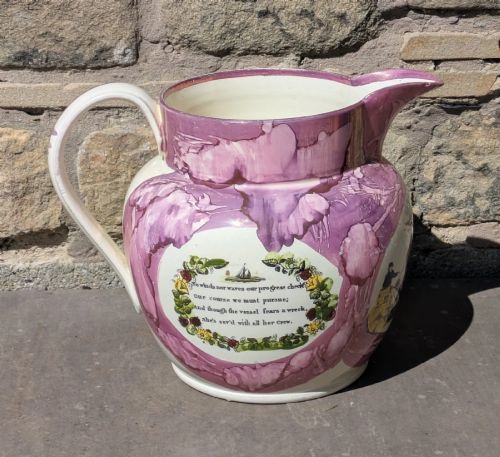
Most examples hail from Sunderland, featuring transfer-printed maritime themes, Masonic symbols, and local landmarks like the Iron Bridge over the Wear. Buyers will most frequently encounter large jugs bearing pink splash lustre effects, often combined with hand-painted enamel highlights.
The forms range from utilitarian vessels adapted for display to commemorative pieces inscribed with names, dates, or traditional verses such as the Dear Jack rhymes. These earthenware objects capture the nautical heritage of northern English potteries.
Materials and construction
The foundation of these pieces is standard English earthenware, shaped into jugs and bowls before receiving a base glaze. Potters then applied transfer prints, usually in black or sepia, depicting ships, arms, or poems.
The characteristic splash lustre effect was achieved by applying metallic oxides, such as platinum or copper, onto the wet glaze so they separated into mottled spots during firing. Enamel colours were often added by hand over the glaze to bring vibrancy to the printed designs.
Metallic and lustre glazes appear alongside hand-applied enamel and transfer-printed maritime motifs.
Assessing quality
Quality in these ceramics rests on the clarity of the transfer print and the richness of the metallic glaze application. Superior examples display dense, well-defined pink speckling that covers the body evenly without dulling the underlying transfer work.
The presence of detailed hand-painted enamel colour over the prints elevates a piece, as does historical provenance indicated by specific naming, dating, or maritime subjects like clipper ships and the Iron Bridge.
The Splash Lustre Earthenware Glossary
- Splash lustre
- A metallic glaze technique where oxides form a mottled, spotted pattern across the ceramic surface during firing.
- Earthenware
- A porous pottery body fired at lower temperatures, requiring a glaze to hold liquids.
- Transfer print
- A method of applying pre-printed paper designs onto ceramic ware using engraved copper plates.
- Enamel
- Opaque, coloured glass fused to the surface of fired pottery for decorative detail.
- Garrison Pottery
- A historical pottery location associated with the production of Sunderland lustre wares.
Splash Lustre Earthenware: Frequently Asked Questions
What are splash lustre jugs?
Splash lustre jugs are nineteenth century earthenware vessels decorated with metallic glazes that create a mottled, spotted finish. They were largely produced in the north of England.
These pieces frequently feature transfer-printed maritime scenes, Masonic emblems, and patriotic verses intended for display rather than daily service.
How do I date Sunderland lustre?
Dating relies on stylistic clues, printed themes, and occasional inscriptions or dates written directly onto the pottery. Most surviving examples span the Georgian and Victorian eras.
Changes in transfer technology and the specific shade of pink lustre also help narrow down the decade of production.
Where were these pieces made?
The majority of these ceramics originate from potteries in Sunderland, taking advantage of the local maritime trade and shipbuilding industries. They reflect the industrial culture of the Wearside region.
Potteries such as the Garrison Pottery produced these wares for sailors, tradesmen, and local communities.
How should I display them?
Display these jugs where natural light can catch the metallic oxides in the glaze. Their reflective pink surfaces stand out well against neutral backgrounds.
Keep them away from direct moisture and handle them carefully by the body rather than the handle due to their age.