


English Splash Lustre
English splash lustre jugs and bowls are striking pieces of ceramic history that bring vibrant metallic colour and maritime heritage into any room.
English Splash Lustre
When you search for english splash lustre, you are looking at nineteenth-century earthenware and pearlware vessels decorated with distinctive metallic oxide finishes. These pieces primarily take the form of jugs, pitchers and decorative bowls originating from the nineteenth century, including Georgian and Victorian periods.
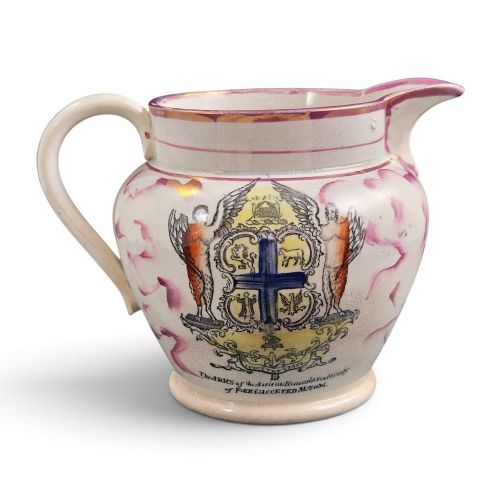
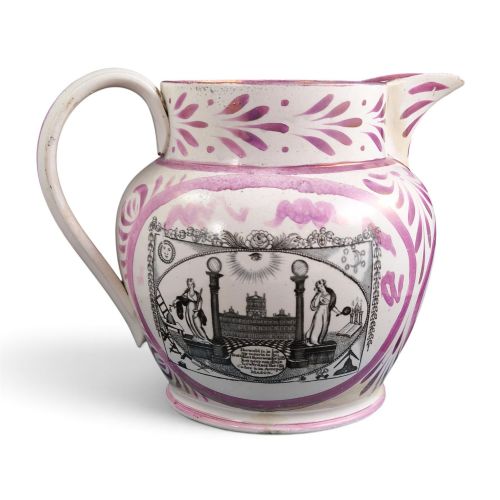
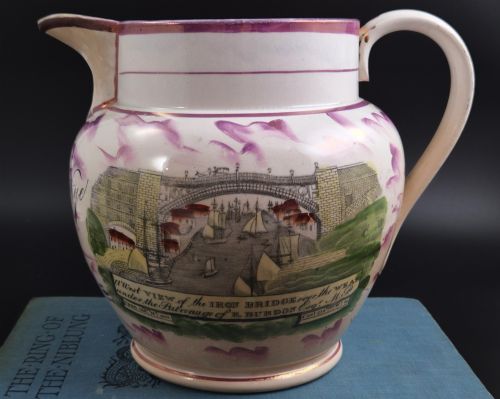
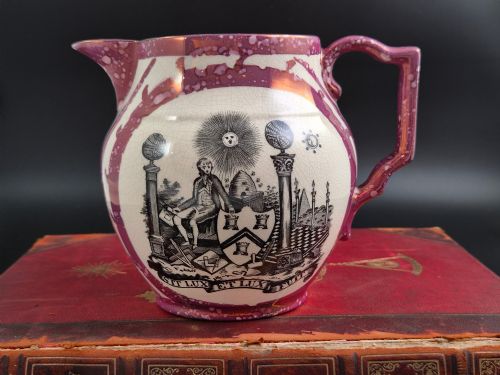
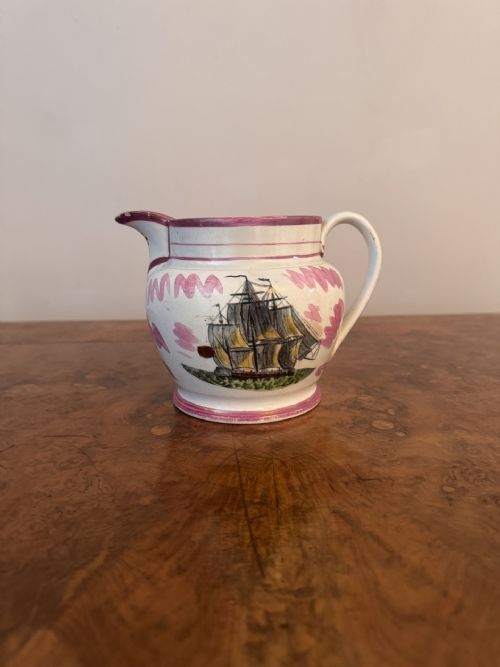
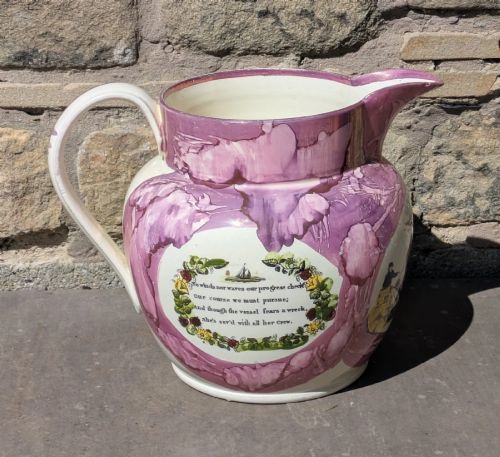
The version you are most likely to meet on this page is the Sunderland pink lustre jug, often featuring maritime themes, masonic symbols or poetic panels. These items celebrate maritime life, local engineering like the Iron Bridge over the Wear, and traditional trades through transfers and hand-coloured details.
The selection ranges from large commemorative vessels to smaller decorative jugs produced by English potteries. Collectors encounter various styles spanning Victorian folk art and grand regency designs, all united by their characteristic pink or metallic glaze decoration.
Materials and manufacture
Potters shaped these items from earthenware and pearlware before applying an initial white or cream glaze as a base. Artisans then transferred prints onto the ceramic surface, depicting ships, poems or armorial bearings.
The distinctive splash effect was achieved using metallic oxides, particularly gold or copper solutions, which separated during firing to create a mottled or speckled appearance. Enamel colours were frequently added by hand over the glaze to highlight the printed details before a final kiln firing.
Listings feature 19th-century earthenware and pearlware decorated with metallic glaze, spanning Georgian and Victorian periods.
Assessing quality and character
Quality in english splash lustre rests upon the clarity of the transfer print and the richness of the metallic glaze. Pieces that retain bold enamel colours and well-defined pink speckling stand apart from simpler examples.
The complexity of the subject matter also influences the piece, with detailed masonic emblems, named inscriptions or specific maritime scenes representing more ambitious potter's work. The crispness of the earthenware moulding beneath the glaze completes the distinction between standard vessels and exceptional survivals.
Garrison Pottery
The English Splash Lustre Glossary
- Splash lustre
- A ceramic decoration technique where metallic oxides are flicked onto the glaze before firing, creating a mottled or speckled finish. This method produces the characteristic pink and purple patterns seen on nineteenth-century jugs.
- Pearlware
- A fine-grained earthenware developed by Josiah Wedgwood in the late eighteenth century, featuring a thin glaze with a slight bluish tinge. It served as a popular body for transfer-printed lustre wares.
- Transfer printing
- A process of applying engravings to ceramics by pressing paper tissue inked with a copperplate design onto the biscuit or glazed surface. This allowed detailed maritime scenes and verses to be reproduced consistently.
- Earthenware
- Porous pottery fired at lower temperatures than stoneware or porcelain, requiring a vitreous glaze to hold liquids. It forms the structural body for the vast majority of these lustre pieces.
English Splash Lustre: Frequently Asked Questions
What are english splash lustre jugs?
These are nineteenth-century ceramic vessels, primarily earthenware and pearlware, decorated with metallic oxide glazes that create a distinctive speckled pink finish. They were largely produced in the north of England.
Potteries adorned them with transfer prints celebrating maritime themes, masonic symbols, local bridges, and sentimental poetry for sailors and their families.
How were these jugs used?
While many served functional roles for pouring liquids in domestic or tavern settings, the larger examples were often commemorative display pieces. They marked significant personal events, club memberships, or safe returns from sea.
The inclusion of detailed armorials and poetic panels suggests they held pride of place on mantlepieces rather than everyday service.
How do I date a lustre jug?
Dating relies on stylistic clues such as the ceramic body, glaze characteristics, and the subject matter of the transfer prints. Pearlware bodies and certain pink tones often point towards the earlier nineteenth century.
Inscribed dates and named subjects provide the most precise chronological markers, alongside stylistic transitions from Georgian elegance to Victorian folk art.
How do I care for antique lustre?
These ceramic pieces require gentle handling and should be kept away from direct sunlight to preserve the vibrant enamel colours. Dust them softly with a dry cloth rather than using chemical cleaners.
Because the metallic lustre glaze can be sensitive to harsh environments, hand washing with mild soap should be avoided unless strictly necessary.