


Sunderland Lustre Pitcher
A sunderland lustre pitcher brings tactile ceramic warmth and maritime narrative straight from the nineteenth-century kilns of the northeast.
Sunderland Lustre Pitcher
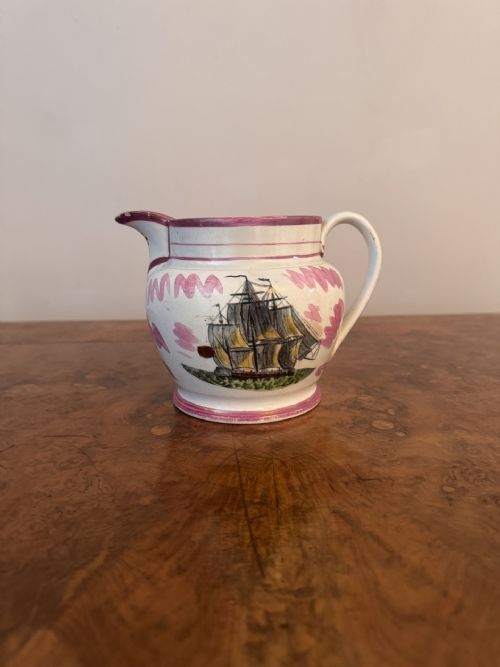
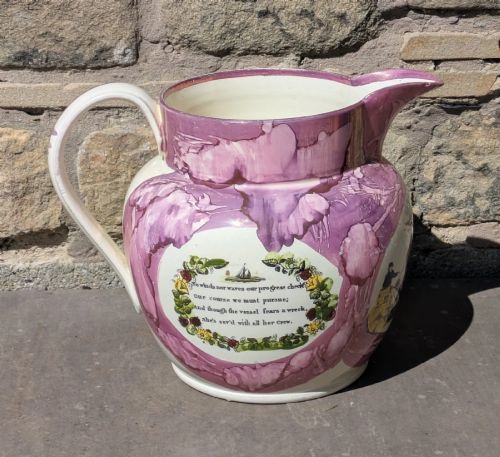
When you search for a sunderland lustre pitcher, you are looking at substantial ceramic jugs decorated with distinct metallic glazes, often featuring copper splash effects and transfer-printed imagery. These robust vessels emerge mainly from nineteenth-century production, spanning the Georgian and Victorian eras.
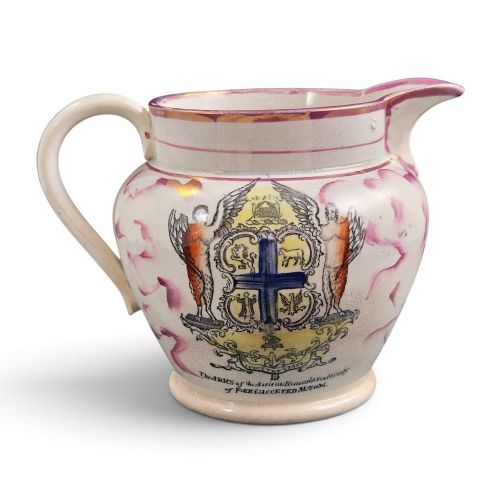
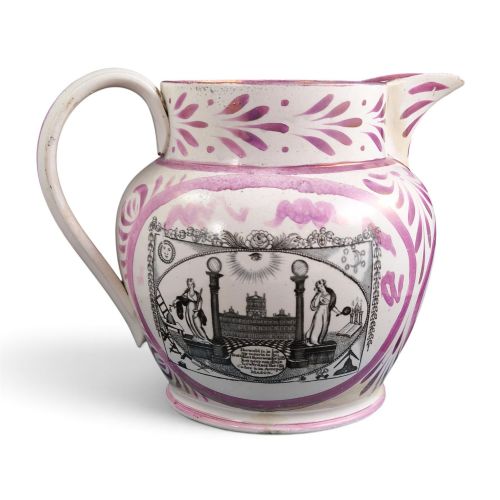
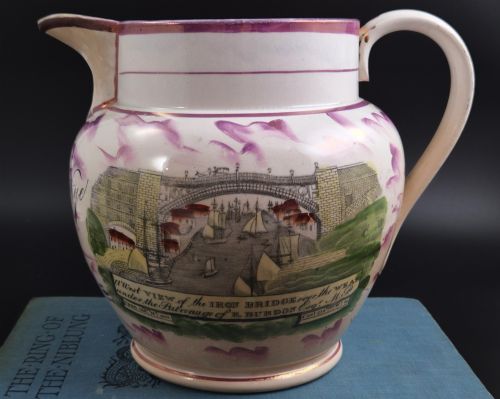
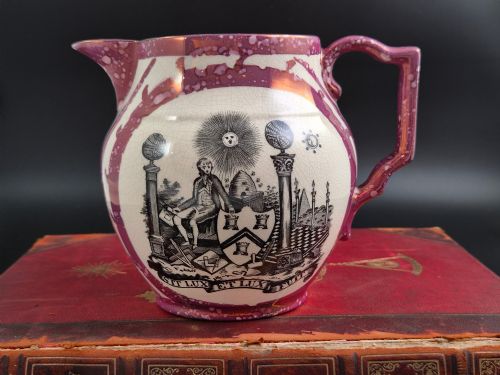
The versions you are most likely to meet on this page display classic maritime themes, masonic symbols, and poetic panels. They take forms ranging from large decorative jugs to taller utility pitchers shaped in earthenware and pearlware.
The style encompasses Victorian folk art and grand regency aesthetics alongside plain coloured variations. Each piece carries the characteristic pink or purple metallic oxide finish that defines the Wearside tradition.
How they were made
Potters shaped these pitchers using earthenware and pearlware bodies, applying an opaque white or cream glaze as a base for subsequent decoration. They achieved the signature mottled appearance by splashing metallic oxides onto the surface before firing.
Makers added intricate detail through enamel colours and black transfer prints depicting ships, bridges, and verses. The characteristic pink lustre effect comes from a thin application of gold or copper solution that reduced during the kiln process to create an iridescent metallic sheen.
Materials recorded across current items include earthenware, pearlware, enamel, and metallic oxide lustre glazes.
What varies in quality
The strength and coverage of the metallic oxide splash set individual examples apart, with richer pinks and denser speckling commanding greater visual presence. Crispness in the transfer printing and careful hand-coloring of the enamel details indicate finer workmanship.
Scale and proportion also define the range, as larger vessels carrying complex triple-print motifs or named subjects demand greater skill from the potter than smaller, plain examples.
Garrison Pottery
The Sunderland Lustre Pitcher Glossary
- Pink lustre
- A metallic glaze containing gold or copper that produces an iridescent pink or purple sheen upon firing. This technique creates the distinctive aesthetic seen across the Wearside pottery tradition.
- Pearlware
- A refined earthenware body perfected by Josiah Wedgwood, featuring a bluish glaze that pools in crevices to mimic Chinese porcelain. It provides a smooth white ground for transfer-printed designs.
- Transfer printing
- A method of applying detailed engravings to ceramics by pressing inked paper onto the bisque or glazed surface. It allowed potters to reproduce complex maritime scenes and poetry with consistency.
- Metallic oxide
- Chemical compounds applied to ceramics to create colour and texture during high-temperature firing. In these pitchers, they produce the characteristic splash effect.
- Earthenware
- Porous pottery fired at lower temperatures than stoneware or porcelain, requiring a glaze to achieve impermeability. It forms the solid structural base for these nineteenth-century vessels.
Sunderland Lustre Pitcher: Frequently Asked Questions
What themes appear on these pitchers?
The decoration frequently celebrates maritime subjects, including clipper ships, tall ships, and the Iron Bridge over the Wear. You will also find masonic symbols, poetic panels, and boxing scenes.
These varied motifs reflect the interests of the sailors, tradesmen, and local communities who originally commissioned or purchased the vessels.
How do I date a sunderland lustre pitcher?
Dating relies on stylistic clues, ceramic bodies like pearlware versus later earthenware, and occasional dated inscriptions on the piece itself. Georgian examples often lean towards pearlware bodies and refined maritime prints.
Victorian pieces frequently display heavier pink splash effects and bolder transfer work. Comparing the specific shade of lustre and the style of lettering helps narrow the period.
How were these jugs used?
While many served functional roles for pouring ale or water at table, their decorative panels suggest they were also displayed as ornamental objects. Commemorative pieces often marked specific personal events, societies, or local engineering achievements.
Their substantial size made them ideal mantelpiece ornaments in nineteenth-century homes and maritime inns.
What is splash lustre?
Splash lustre is a decorative technique where metallic solution is flicked or splattered onto the glazed ceramic body before firing. This creates a mottled, marbled effect across the surface of the pitcher.
The technique requires precise control in the kiln to ensure the metallic oxides develop their characteristic iridescent pink shine.