


Transfer Printed Jug
These transfer printed jug examples span Georgian, Regency, and Victorian periods in earthenware, creamware, pearlware, and stoneware.
Transfer Printed Jug
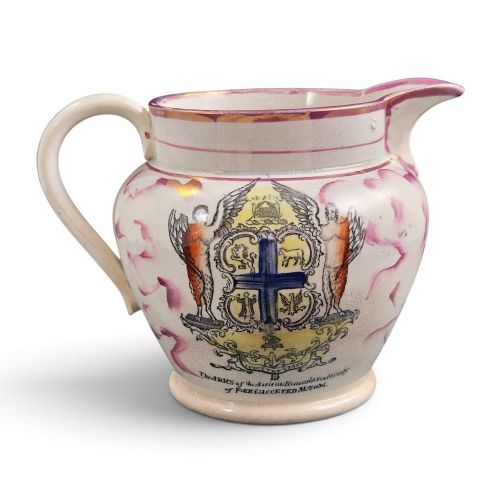
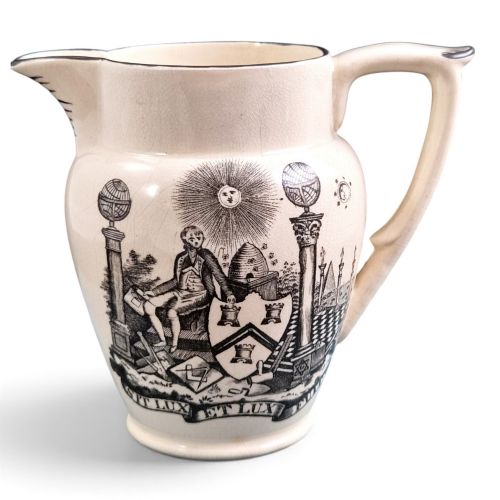
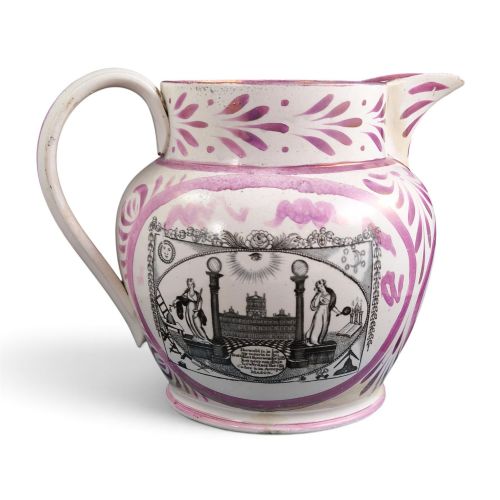
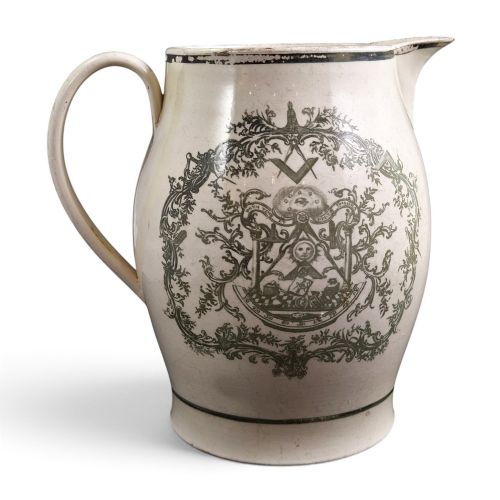
A transfer printed jug brings together utilitarian ceramic forms and detailed applied imagery across periods from the Georgian era through to the Victorian age. You encounter earthenware, creamware, pearlware, and stoneware examples decorated with themes ranging from Masonic symbols and maritime subjects to poetic panels.
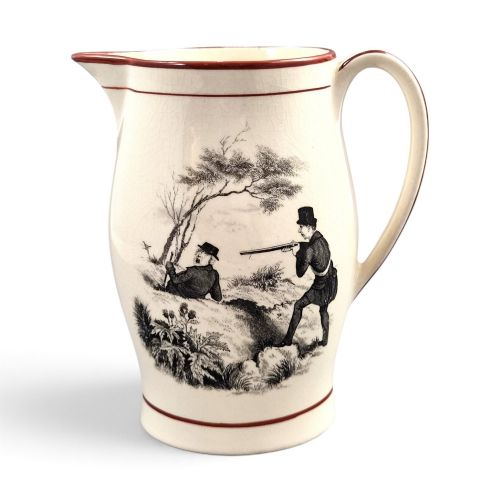
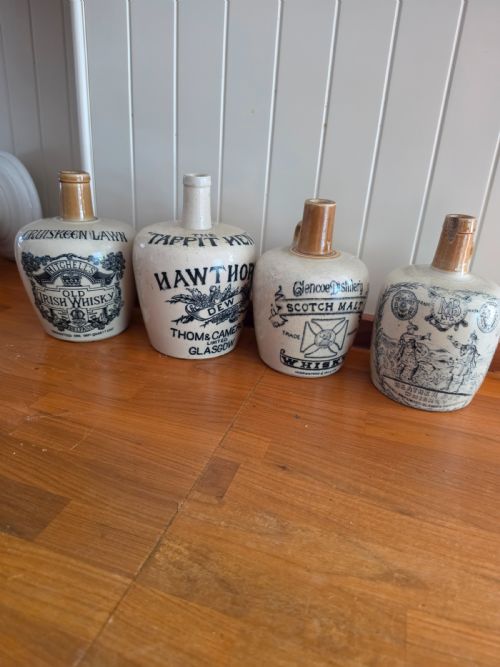
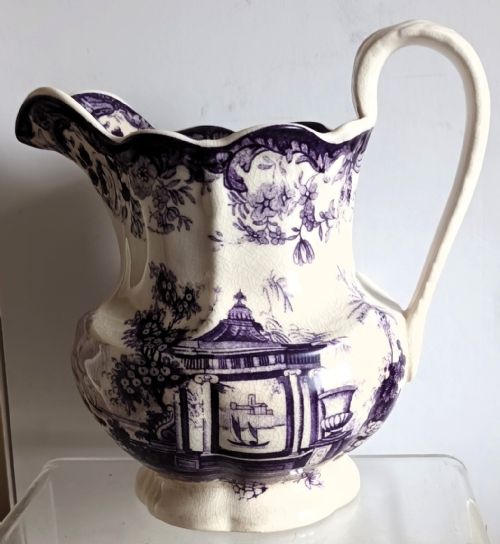
The pieces on this page include large one gallon blue and white pottery jugs alongside smaller decorative vessels and advertising whisky flasks. Makers applied transfer printing to record historical buildings, political figures, clipper ships, and satirical scenes like the lawcourt.
Geographic origins span English potteries, including Sunderland and Staffordshire, as well as Scottish works such as Port Dundass. Surviving examples demonstrate how domestic vessels served as canvases for commemorative, patriotic, and narrative designs.
How transfer printed jug bodies and glazes were made
Potters formed the bodies of a transfer printed jug using ceramic materials such as creamware, pearlware, stoneware, and standard earthenware. These bodies provided a stable base for the subsequent application of glaze and transfer-printed decoration.
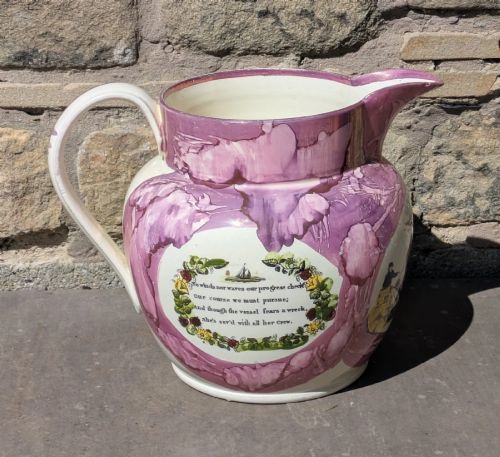
Decoration relied on copperplate transfer printing, applying ink or colour onto the ceramic surface before firing. Potters frequently added metallic glazes, pink lustre accents, or light olive-green washes to enhance the printed motifs.
Object forms range from standard jugs and pitchers to large one gallon containers, flagons, and advertising flasks.
What varies in quality across a transfer printed jug
The clarity and precision of the copperplate transfer print dictate the visual success of the piece, with sharper impressions holding more detail in complex scenes like clipper ships or architectural views. Faint or blurred lines indicate a worn plate or a hurried application during production.
The application of secondary embellishments, such as hand-painted pink lustre highlights or rich glaze finishes, distinguishes standard utilitarian vessels from highly decorative parlour pieces. The weight and consistency of the ceramic body, whether sturdy stoneware or refined creamware, further define the character of each vessel.
Baggerley & Ball·Sunderland Garrison Pottery·Port Dundass
The Transfer Printed Jug Glossary
- Transfer printing
- A method of applying designs to pottery by engraving a copper plate, pulling the image on tissue paper, and transferring it onto the ceramic body before glazing. This technique allowed intricate pictorial scenes to be produced consistently across multiple vessels.
- Creamware
- A refined earthenware developed in Staffordshire during the eighteenth century, noted for its pale yellow or cream-coloured glaze. It provided a smooth, light background ideal for black or coloured transfer prints.
- Pearlware
- An improved earthenware body introduced by Josiah Wedgwood around 1779, featuring a thin glaze with a slight bluish tinge in the recesses to mimic Chinese porcelain. It served as a popular ground for early nineteenth-century transfer-printed decoration.
- Pink lustre
- A metallic glaze finish containing gold, fired to produce a shimmering pink or purple sheen often used to frame panels on Sunderland jugs. Potters applied it with brushwork or sponging techniques.
- Stoneware
- A dense, impermeable pottery fired at high temperatures, frequently utilised for heavy-duty containers, flagons, and advertising whisky flasks. Its durability made it suitable for commercial and storage purposes.
Transfer Printed Jug: Frequently Asked Questions
What periods do these jugs come from?
The pieces span the Georgian, Regency, and Victorian eras, with dates ranging from around 1800 through to the late nineteenth century.
Most examples are documented with specific production windows recorded by dealers, reflecting changes in ceramic bodies from creamware to pearlware and stoneware.
What themes appear on the transfer prints?
Motifs include Masonic symbols, maritime views of clipper ships, poetic panels, and architectural subjects like the Boston State House.
Other designs feature commemorative portraits of royalty, advertising text, and comedic or satirical narratives.
How do I distinguish creamware from pearlware?
Creamware displays a warm, pale yellow or cream-coloured glaze that suited the early transfer-printed designs of the Georgian period.
Pearlware exhibits a subtle bluish pooling of the glaze, particularly around handles and bases, introduced to create a whiter appearance.
Were these jugs used for daily pouring?
Many examples served utilitarian functions as liquid containers, pitching vessels, or large one gallon jugs for household and tavern use.
Others functioned as commemorative or decorative display pieces, advertising flasks, or Masonic lodge items rather than everyday tableware.
Where were these ceramics manufactured?
Production centres include Staffordshire potteries and Sunderland potteries in England, alongside Scottish facilities such as Port Dundass.
Regional styles often reveal themselves through specific glaze combinations, such as the distinctive pink lustre associated with Sunderland.