


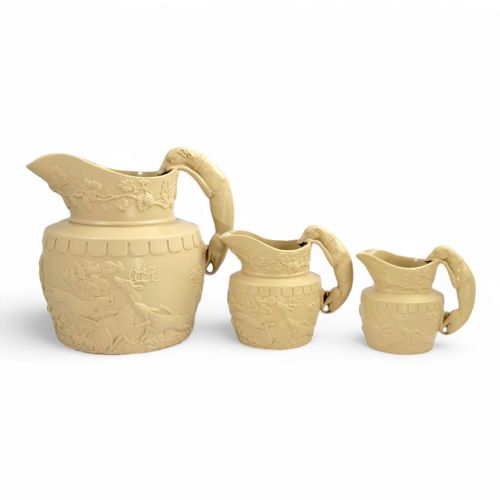


Regency Earthenware Pitcher
These regency earthenware pitcher examples bring bold transfer prints and rich metallic glazes straight to the table, offering a striking centrepiece for any traditional interior.

Regency Earthenware Pitcher
A regency earthenware pitcher represents a utilitarian vessel elevated by the decorative ambitions of the Georgian period and early nineteenth century. Collectors find robust ceramic jugs, footbath jugs, and water vessels spanning the Georgian, late Georgian, and regency eras.
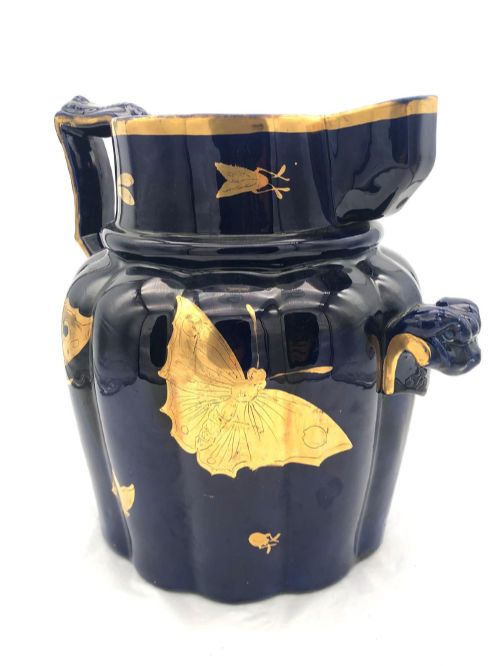
The pieces appearing on this page showcase varied forms, from faceted bodies to classical shapes fitted with hound handles. Makers utilised creamware, pearlware, and yellow ware as canvases for narrative scenes and vibrant colour palettes.
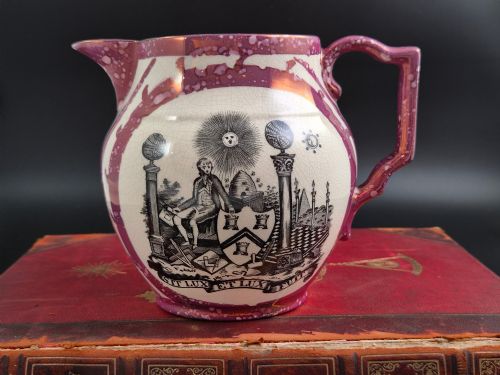
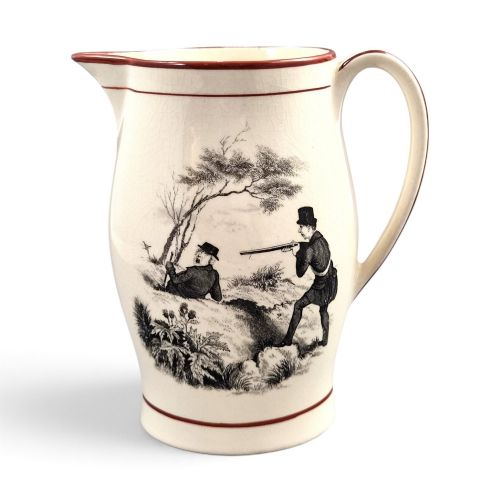
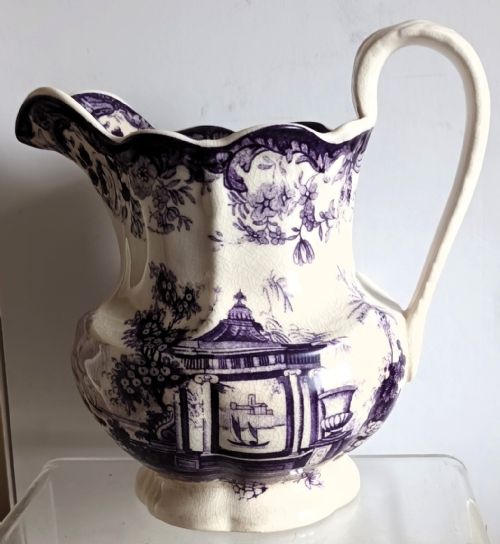
Most specimens originate from English potteries working around eighteen hundred to eighteen thirty, capturing domestic scenes, Masonic symbols, and sporting prints. Buyers encounter both large display jugs and smaller pouring vessels decorated with pink splash lustre or blue and white transfer printing.
How they were made
Potters shaped earthenware, creamware, and pearlware bodies either on the wheel or within moulds to achieve sharp facets and sculptural details such as hound handles. Once formed, the pieces received hand-applied transfer prints or painted motifs beneath a transparent glaze.
Makers introduced metallic glazes, pink lustre effects, and gold gilding during secondary firings to catch the light. Enamel colours were brushed onto transfer-printed outlines, combining mechanical precision with individual brushwork.
Several pitchers feature hound handles where the hound's paws desperately clutch the rim as if about to leap into the drink.
What varies in quality
Quality rests upon the crispness of the transfer print and the registration of hand-applied enamel colours within the design. Superior examples display deep, clear impressions and rich, unblemished lustre surfaces that remain bright.
The modelling of applied elements, such as sculptural handles and faceted bodies, separates standard utility ware from ambitious display pieces. Stronger potting weight and balanced proportions distinguish the finer workshops of the period.
Phillips & Bagster·Wedgwood·Spode
The Regency Earthenware Pitcher Glossary
- Creamware
- A refined earthenware body with a pale yellowish straw-coloured glaze developed during the eighteenth century. It provided a smooth surface suited to fine transfer printing.
- Pearlware
- An improved earthenware body containing a small amount of cobalt in the glaze to neutralise the natural yellowish tone. This created a bluish-white appearance that imitated Chinese porcelain.
- Lustre
- A metallic pottery glaze that produces an iridescent, reflective surface sheen. Pink and copper variations were popular during the regency period.
- Transfer printing
- A decoration technique where an engraved copper plate transfers a design onto tissue paper, which is then pressed onto the ceramic surface before firing. This allowed complex pictorial scenes to be replicated consistently.
- Footbath jug
- A large vessel designed for washing feet or holding water for domestic ablutions. These impressive forms often doubled as decorative display pieces in grand interiors.
Regency Earthenware Pitcher: Frequently Asked Questions
What is a regency earthenware pitcher?
A regency earthenware pitcher is a ceramic pouring vessel produced in England during the early nineteenth century. These jugs feature distinctive transfer-printed scenes, lustre glazes, and robust earthenware bodies.
Potters decorated these vessels with subjects ranging from sporting scenes to Masonic emblems. They served both practical domestic functions and display purposes in Georgian homes.
How do I date a regency pitcher?
Dating relies on identifying material changes, such as the transition from creamware to pearlware, alongside stylistic cues from the Georgian and regency periods. Transfer print subjects and palette choices also offer reliable clues to the decade of manufacture.
Pottery marks, where present, help narrow the timeframe, while handle styles and glaze compositions provide further chronological context for the piece.
Were these pitchers used daily?
Many pitchers served active roles in the Georgian household for carrying water, milk, or beer. Larger footbath jugs handled more demanding domestic chores.
Despite their practical origins, decorated examples often spent time displayed on sideboards or mantelpieces. Their survival in good condition suggests owners valued them as decorative objects.
How do I care for antique earthenware?
Antique earthenware requires gentle hand washing in warm water using mild soap. Avoid soaking the ceramic, as moisture can penetrate old glaze crazing.
Keep pieces away from direct sunlight and sudden temperature changes to protect the fragile enamels and metallic lustre surfaces from fading or damage.